West Virginia: A History

West Virginia

John Alexander Williams

2001
239pp
PB  978-0-937058-56-5
$19.95

Summary

John Alexander Williamss West Virginia: A History is widely considered one of the finest books ever written about our state. In his clear, eminently readable style, Williams organizes the tangled strands of West Virginia's past around a few dramatic events—the battle of Point Pleasant, John Browns insurrection in Harpers Ferry, the Paint Creek labor movement, the Hawks Nest and Buffalo Creek disasters, and more. Williams uses these pivotal events as introductions to the larger issues of statehood, Civil War, unionism, and industrialization. Along the way, Williams conveys a true feel for the lives of common West Virginians, the personalities of the states memorable characters, and the powerful influence of the land itself on its own history.

Contents

  • 1. Point Pleasant
  • 2. Harpers Ferry
  • 3. Droop Mountain
  • 4. Tug Fork
  • 5. Paint Creek
  • 6. Hawks Nest
  • 7. Buffalo Creek
  • 8. Montani semper . . .
  • Epilogue: Back to Blair Mountain
  • Acknowledgments
  • Index
  •  
  • Original Maps by Harold Faye West Virginia Contemporary
  • Creation of West Virginia: Counties and Railroad Lines

Author

John Alexander Williams received his doctorate in history from Yale University in 1966, having studied with the eminent American historian, C. Vann Woodward. He taught at the University of Notre Dame and the University of Illinois at Chicago before joining the Department of History at West Virginia University in 1972. He is now professor of history at Appalachian State University in Boone, NC, having also directed the Center for Appalachian Studies for seven years. He is also the author of West Virginia and the Captains of Industry, a West Virginia University Press classic.

EmailFacebookInstagramPinterestTwitter

West Virginia and the Captains of Industry

West Virginia and the Captains of Industry

John Alexander Williams

2003
352pp
PB  978-0-937058-78-7
$19.95

Summary

The first period of the twentieth century—that stretch of years beginning in the 1870s and ending with the United States’ entry into World War I—is known as the Gilded Age. This was the era of the “Robber Barons” and the origin of modern America. These were the years in which developments in coal, steam, oil, and gas forged our national infrastructure. West Virginia and the Captains of Industry show how the excesses of the Gilded Age and the latitude our government accorded industrialists of the time created an impact on the fragile economy of our new state that accounts for much of the political and economic landscape of modern West Virginia. Gracefully written and thoroughly researched, West Virginia and the Captains of Industry has become a classic work of West Virginia history since its first publication by the West Virginia University Press in 1975. Anyone interested in the history of our state must read this revised edition; then again, so must anyone interested in the future of West Virginia.

Contents

  • Acknowledgements
  • 1. The New Dominion
  • 2. The Politics of Coal
  • 3. "The Great Cake Walk"
  • 4. The Choice of the People?
  • 5. The Boundless Resources
  • 6. Reation and Reform
  • 7. Years of Jubilee
  • Appendix
  • Notes
  • Essay on Sources
  • Index
  • Maps
  •  West Virginia Counties and Cities
  •  West Virginia Railroads, ca. 1890–1910
  • Photographs
  •  Johnson Newlon Camden
  •  Henry Gassaway Davis
  •  Stephen Benton Elkins
  •  Nathan Bay Scott

Author

John Alexander Williams received his PhD in history from Yale University in 1966, having studied with the eminent American historian, C. Vann Woodward. He taught at the University of Notre Dame and the University of Illinois at Chicago before joining the Department of History at West Virginia University in 1972. He is now professor of history at Appalachian State University in Boone, NC, having also directed the Center for Appalachian Studies for seven years.

EmailFacebookInstagramPinterestTwitter

The Cross and Culture in Anglo-Saxon England

The Cross and Culture in Anglo-Saxon England

Edited by
Karen Jolly, Catherine Karkov, and Sarah Larratt Keefer
2007
356pp
PB  978-1-933202-23-5
$44.95

Summary

As Volume One in the Sancta Crux/Halig Rod series, this collection of new research offers fascinating glimpses into how the way the cross, the central image of Christianity in the Anglo-Saxon period, was textualized, reified, visualized, and performed. The cross in early medieval England was so ubiquitous it became invisible to the modern eye, and yet it played an innovative role in Anglo-Saxon culture, medicine, and popular practice. It represented one of the most powerful relics, emblems, and images in medieval culture because it could be duplicated in many forms and was accessible to every layer of society. The volume speaks to critical issues of cultural interpretation for Anglo-Saxonists, medievalists of all disciplines, and those interested in cultural studies in general.

Contents

  1. Abbreviations
  2. Acknowledgements
  3. Introduction
      Karen Louise Jolly, University of Hawai'i at Ma¯noa
      Catherine E. Karkov, University of Leeds
      Sarah Larratt Keefer, Trent University
  4. Dedication: George Hardin Brown
      Rosmary Cramp, Durham University
  5. Reading and Speaking the Cross
    • Bede and the Cross
        George Hardin Brown, Stanford University
    • Preaching the Cross: Texts and Contexts from the Benedictine Reform
        Joyce Hill, University of Leeds
    • At Cross Purposes: Six Riddles in the Exeter Books
        Jill Frederick, Minnesota State University, Moorhead
  6. The Cross as Image and Artifact
    • In Hoc Signo: The Cross on Secular Objects and the Process of Conversion
        Carol Neuman de Veguar, Ohio Wesleyan University
    • The Cross in the Grave: Design or Devine?
        Gale R. Owen-Crocker and Win Stephens, University of Manchester
    • A Chip Off the RoodL The Cross on Early Anglo-Saxon Coinage
        Anna Gannon, Lucy Cavendish College, Cambridge University
    • Crosses and Conversion: The Iconography of the Coinage of Viking York ca. 900
        Mark Blackburn, Fitzwilliam Museeum, Cambridge
  7. Performing the Cross
    • The Performance of the Cross in Anglo-Saxon England
        Sarah Larratt Keefer, Trent University
    • Hallowing the Rood: Anglo-Saxon Rites for Consecrating Crosses
        Helen Gittos, University of Kent
    • Prayers and/or Charms Addressed to the Cross
        R.M. Liuzza, University of Tennessee, Knoxville
    • Reading the Cross in Anglo-Saxon England
        William Schipper, Memorial University, St. John's Newfoundland
  8. Contributors
  9. Index

Author

Karen Louise Jolly is Associate Professor in the Department of History at the University of Hawaii at Manoa. She currently has a book in progress titled Pastoral Care and Liturgical Experimentation in Tenth Century Northumbria: Aldred’s Additions to the Durham Ritual.

Catherine E. Karkov is a professor at the School of Fine Art, Art History and Cultural Studies at the University of Leeds in England.

Sarah Larratt Keefer is a professor at Trent University in Ontario, Canada. Her primary area of interest lies in Anglo-Saxon England, between AD 600 and 1100.

EmailFacebookInstagramPinterestTwitter

The Smokeless Coal Fields of West Virginia: A Brief History
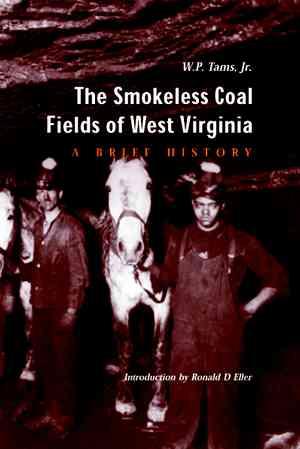

The Smokeless Coal Fields of West Virginia

W. P. Tams
Introduction by Ronald D. Eller

2002
106pp
PB  978-0-937058-55-8
$19.95
PDF  978-1-933202-75-4
$19.95
PDF  (120 Days)
$10.00

Purchase the Kindle Edition at Amazon

Summary

The Smokeless Coal Fields of West Virginia: A Brief History first appeared in 1963, a little book by a man with no training as either a writer or a historian. Since then, this volume has become an essential sourcebook, consulted and quoted in nearly every study of coal field history. The surprising impact and durability of the book are due to both the information in it and the personality behind it. Through the first half of the twentieth century, William Purviance Tams lived coal. Rising from a young coal engineer to a senior coal baron, Tams stood at the center of Southern West Virginia industrialization. When he sold his company in 1955, Tams was the last of the old owner-operators, men with no personal or financial interest outside of coal. Tams wrote a book which could only have come from an ultimate insider. The everyday work of mining coal is here—laying track, blasting, and loading the coal. So is the everyday business of coal, from sinking shafts and ventilating the work area, to administering a town and keeping the workers happy.

Tams gives the financial details of the volatile business, and offers capsule biographies of the other major developers of the Southern West Virginia coal fields. It was a passion for Tams. He never married and tended his business and his town with paternal care. After retirement, this industrial baron spent his final decades in a modest bungalow in his little coal-camp community, watching the town he had built fade back into the mountains. It is W. P. Tams’s passion and attitude, as much as his place at the center of history, which make The Smokeless Coal Fields of West Virginia worth reading nearly forty years after its first publication. Tams’s 1963 account of his career, The Smokeless Coal Fields of West Virginia, offers a unique perspective on the business and the life of coal mining. The book is especially valuable for its account of the daily life and work of the miners, engineers, and families in the mines and in the mining towns. Our reprint of this fascinating and important book combines Tams’s original work with a new introduction by Ronald D. Eller, author of Miners, Millhands, & Mountaineers.

Contents

  • Introduction (by Ronald D Eller)
  • Preface
  • Introduction
  • Location and Early Development
  • Finances and Organization
  • Work in the Mines at the Turn of the Century
  • The Gulf Smokeless Coal Company
  • Personalities in Smokeless Coal Fields
  • Place Names in the Smokeless Coal Fields
  • Statistical Table
EmailFacebookInstagramPinterestTwitter

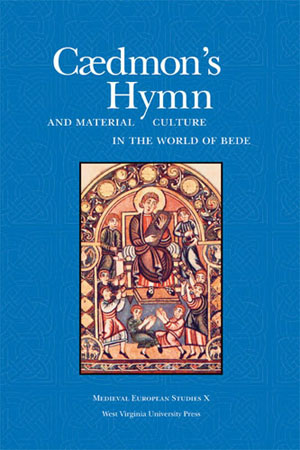
Cædmon's Hymn and Material Culture in the World of Bede

Cædmon's Hymn and Material Culture in the World of Bede

Edited by
Allen J. Frantzen and
John Hines

2007
265pp
PB  978-1-933202-22-8 
$44.95

Summary

The essays in this book use the nine-line poem known as Cædmon’s Hymn as a lens on the world of Bede’s Ecclesiastical History. A cowherd who is given a divine gift, Cædmon retells the great narratives of Christian history in the traditional form of Anglo-Saxon verse. An immense amount has been written about this episode, much of it concentrating on the hymn’s significance in the history of English literature. Relatively little attention, however, has been paid to what the story of Cædmon and his hymn might tell us about the material, as well as the textual, culture of Bede’s world. The essays in this collection seek to connect Cædmon’s Hymn to Bede’s material world in various ways. Each chapter begins with the hymn and moves from the text to the worlds of scientific thought, settlements and social hierarchy, monastic reform, and ordinary things. The connections explored here are a sampling of the material concerns Cædmon’s Hymn raises.

Contents

  • Preface
  • Abbreviations
  • Material Differences: The Place of Cædmon's Hymn in the History of Anglo-Saxon Vernacular Poetry
       Daniel P. O'Donnell, University of Lethbridge
  • Literary Contects: Cædmon's Hymn as a Center of Bede's World
       Scott DeGregorio, University of Michigan Dearborn
  • Cædmon's Created World and the Monastic Encyclopedia
       Faith Wallis, McGill University
  • All Created Things: Material Contexts for Bede's Story of Cædmon
       Allen J. Frantzen, Loyola University Chicago
  • Cædmon's World: Secular and Monastic Lifestules and Estate Organization in Northern England, A.D. 650-900
       Christopher Loveluck, University of Nottingham
  • Changes and Exchanges in Bede's and Cædmon's World
       John Hines, Univeristy of Cardiff
  • Bibliography
  • Index

Author

Allen J. Frantzen is Professor of English at Loyola University Chicago and has been a Loyola University scholar since 2000. He is also the founding director of the Loyola Community Literacy Center.

John Hines is Professor at Cardiff University in Great Britain. He is currently working on a major and interdisciplinary cultural history of Anglo-Saxon England to provide a substantial and comprehensive discussion of life and conditions in the period from the Anglo-Saxon settlements to the Norman Conquest.

EmailFacebookInstagramPinterestTwitter

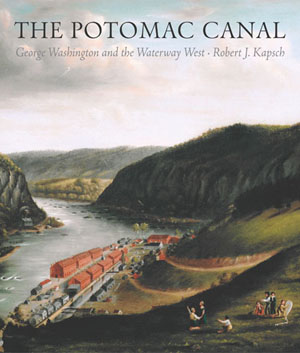
The Potomac Canal: George Washington and the Waterway West

The Potomac Canal

Robert J. Kapsch
2007
374pp
PB  978-1-933202-18-1
$39.95


Summary

2008 Recognition of Excellence, AIGA 50 Books/50 Covers Competition
2007 ForeWord Magazine Finalist in History
2007 ForeWord Magazine Silver Winner in History
2007 Winner, AIGA 50 Books/50 Covers Competition
2008 Washington Book Publishers Book Design and Effectiveness Second Place Award, Illustrated Cover or Jacket and Illustrated Text

The Potomac Canal: George Washington and the Waterway West is a history of a new nation’s first effort to link the rich western agricultural lands with the coastal port cities of the east. The Potomac Canal Company was founded in 1785, and was active until it was overtaken by the Chesapeake and Ohio Canal Company in 1828. During its operation, the canal system was used to ship flour from mills in the foothills of Appalachia to the tidewater of the Chesapeake, where the flour was shipped to the Caribbean as trade for sugar and other goods. This trade soon became the basis of agricultural wealth in West Virginia’s eastern panhandle and throughout the Appalachian Piedmont. Coal was also shipped via the canal system from the upper reaches of the Potomac River to workshops at Harpers Ferry and beyond. This industrial trade route laid the foundation for what would eventually become the Chesapeake and Ohio Canal and the Baltimore and Ohio Railroad.


Contents

  • Chapter 1 - Early Proposals for a Potomac River Navigation · 1754-1775
  • Chapter 2 - George Washington and the Early Development of the Potomac River
                          Navigation · 1784-1790
  • Chapter 3 - Building the Little Falls and Great Falls Bypass Canals · 1791-1802
  • Chapter 4 - The Shenandoah River Navigation · 1790-1890
  • Chapter 5 - Other Canals of the Potomac River Basin · 1802-1828
  • Chapter 6 - Workers of the Potomac Company · 1785-1828
  • Chapter 7 - Operating the Potomac River Navigation · 1802-1828
  • Chapter 8 - Maintaining the Potomac River Navigation · 1810-1828
  • Chapter 9 - The Demise of the Potomac River Company · 1820-1828
  • Endnotes
  • Bibliography
  • Index

Author

Robert J. Kapsch, PhD, Hon. AIA, ASCE, holds doctorates in American studies, engineering, and architecture, as well as master’s degrees in historic preservation and management. For fifteen years, Dr. Kapsch was chief of the Historic American Buildings Survey/Historic American Engineering Record, the U.S. government’s premier documentation program. He is the author of several books on historic architecture and engineering, including Canals, an illustrated history of American canals.

Reviews

"This beautiful coffee-table book with a plethora of full-color illustrations tells this story with academic acumen, aesthetic acuity, and great vitality."
George Brosi, Appalachian Heritage

"This new volume is a beautiful book, but it is so much more. . . .I recommend his work as a most reliable place to start understanding the Potomac project or early canals in general."
John Lauritz Larson, The Journal of Southern History

"Here it is at long last: the definitive work on what the National Park Service and the 1803 company logo call the Patowmack Canal. . . .It fills a serious gap in the history of American canals and should be of interest to social, political, business, and labor historians; historians of technology; industrial archaeologists; and those interested in the Early Republic."
John Austen, The Journal of the Society for Industrial Archeology

"Beautifully illustrated with architectural drawings of the canal and numerous paintings of the surrounding countryside, Kapsch's book serves as a rich source of primary material on both the early history of canal building in America and the Potomac River valley."
August Nigro, West Virginia History: A Journal of Regional History

EmailFacebookInstagramPinterestTwitter

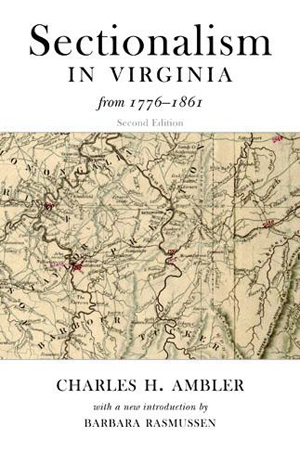
Sectionalism in Virginia from 1776 to 1861, 2nd Edition

Sectionalism in Virginia from 1776 to 1861

Charles H. Ambler
With a new Introduction by Barbara Rasmussen
2008
444pp
PB  978-1-933202-21-1
$34.95
PDF  978-1-935978-16-9
$33.99

Summary

This 1910 study of sectionalism in Virginia illustrates how the east and west of Virginia were destined to separate into two states. Barbara Rasmussen, professor of Public History and Director of Cultural Resource Management at West Virginia University writes a new introduction to Sectionalism in Virginia, setting Ambler’s classic grand achievement into the context of its production by creating an historical process for studying West Virginia history.

Contents

  1. Introduction to the Second Edition
  2. List of Maps
  3. Preface
  4. Introduction
  5. Revolution, Confederation, and the Constitution, 1776–90
  6. The Era of Good Feeling and the Rise of the National Republican Party, 1817–28
  7. The Constitutional Convention of 1829–30
  8. Internal Improvement, Negro Slavery, and Nullification, 1829–33
  9. Parties in the Whig Period, 1834–50
  10. The Reform Convention of 1850–51
  11. Sectionalism in Education and the Church, 1830–61
  12. History of Political Parties, 1851–61
  13. Bibliography
  14. Index

Author

Charles H. Ambler was born in Ohio on August 12, 1876. Throughout his life he lived in Pleasants County, West Virginia, where he was sheriff from 1900 to 1901. He also lived in Ashland, Virginia, and Morgantown, West Virginia. While living in Morgantown, Ambler was a member of the West Virginia House of Delegates from 1951 to 1954. He was also a member of the Freemasons, Maccabees, Phi Beta Kappa, Sigma Nu, and Tau Kappa Alpha.

EmailFacebookInstagramPinterestTwitter

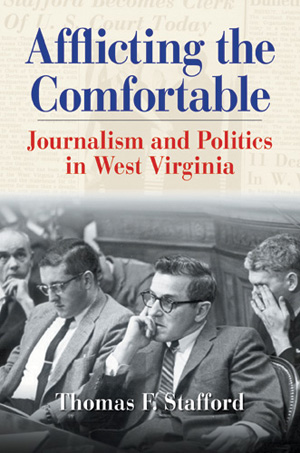
Afflicting the Comfortable

Afflicting the Comfortable

Thomas F. Stafford
2005
350pp
HC/J  978-1-933202-04-4
$29.95
PDF  978-1-935978-07-7
$28.99


Summary

"Government corruption was not invented in West Virginia. But there are people who contend that West Virginia officials have done more than their share over the years to develop state-of-the-art techniques in vote theft, contract kickbacks, influence peddling and good old-fashioned bribery, extortion, fraud, tax evasion and outright stealing."  New York Times

While investigating  the Invest Right scandal, Thomas Stafford, a former journalist for the Charleston Gazette, found himself in a very precarious position. As a reporter he felt obligated to tell the whole truth, and he believed in the need to serve the public and those West Virginians who were being abused by a political machine. In Afflicting the Comfortable, Stafford relates such tales of the responsibility of journalism and politics in coordination with scandals that have unsettled the Mountain State over the past few decades. His probing would take him from the halls of Charleston to the center of our nation's ruling elite. Guided by his senses of duty, right, and fairness, he plunged head first into the misdeeds of West Virginia's politicians. His investigations would preface the downfall of a governor and an adminstration that robbed the state and the citizens of West Virginia for many years.

Contents

  • Foreword by Ronald L. Lewis
  • Preface
  • Acknowledgments
  • Introduction
  •  
  • Part One
    1. Depression Politics
    2. A New Battlefront
    3. Editorial Influence
    4. A Byrd's Eye View
    5. A Man For Another Season
    6. Political Shake-Up
    7. "One Brief, Shining Moment"
  • Part Two
    1. He Never Used the Broom
    2. "Run It Up the Flagpole"
    3. The Ripple Effect
    4. Uncharted Territory
    5. A Sense of Passion
    6. "I've Got a Proposition"
    7. The Threat of Libel
    8. Striking Gold
    9. Going to Press
    10. A Promise Curtailed
    11. "It Wasn't Any Pleasure"
    12. Storm Warnings
    13. The Party Faithless
  • Part Three
    1. The Strength of Their Convictions
    2. Why?
    3. Judicial Remedy
    4. Moore Controversies
    5. A Lifetime Commitment
    6. Third Time Around
    7. Three Words Again
  • Part Four
    1. Caperton's Inheritance
    2. Once Too Often
  • Afterword
  • Index

Reviews

"Like a mason building a house brick by brick, Tom Stafford builds his case in great detail, showing a half-century of plundering and incompetence by others given high public trust, including at least one individual whose wrongs may yet end up costing the state as much as a billion dollars."
John Olesky, journalist and editor for forty-three years

"As a member of the elite of West Virginia society, with access to the powerful, Stafford offers readers a unique insider's look into the events of his day, at times struggling with the social ostracism he and his family faced because of his reporting."
Sharon Hatfield, author Never Seen the Moon: The Trials of Edith Maxwell

EmailFacebookInstagramPinterestTwitter

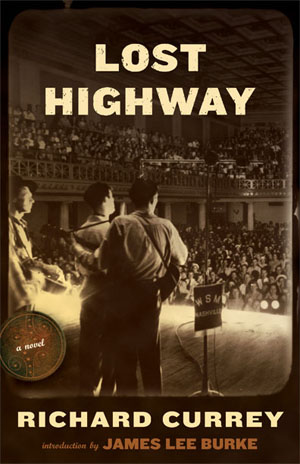
Lost Highway, 2nd Edition

Lost Highway

Richard Currey
Introduction by James Lee Burke
2005
245pp
PB  978-0-937058-96-1
$16.95
CD  978-0-971780-15-6
$28.95

Summary

Richard Currey's Lost Highway has attracted a legion of admirers since its initial publication in 1997. The book depicts the epic struggle of an ordinary person living his dreams and following his passion. Lost Highway is the story of Sapper Reeves, a gifted country musician from the small town of Maxwell, West Virginia. Sapper’s story covers the events of more than half a century, from his birth in a poor coal mining town through his travels on the back roads of Appalachia in search of recognition and respect. Along the way, Sapper’s embattled love for his wife and struggle to come to terms with his combat-wounded son form the basis of his artistic and personal redemption.

Contents

  • Foreword
  • Interstate 40 East, Tennessee, June 15, 1997
  • Part I
  •   Winter 1947—Summer 1950
  •   Winter 1950—Autumn 1952
  •   Spring 1953—Autumn 1955
  • Part II
  •   Winter 1961
  •   Spring 1961—Summer 1965
  •   Summer 1966—Winter 1967
  •   Spring 1968
  • Part III
  • Summer 1968
  • Interstate 79 North, West Virginia, June 16, 1997

Author

Richard Currey was born in Parkersburg, West Virginia. He served from 1968 to 1972 in the U.S. Navy, and afterwards attended Howard University in Washington, D.C. In 1980 he published his first book, Crossing Over: A Vietnam Journal, which went on to earn a Pulitzer Prize nomination. Currey’s international breakthrough came with his first novel, Fatal Light, short-listed for the 1988 PEN/Hemingway Award for Best First Novel. A winner of the Vietnam Veterans of America's Excellence in the Arts Award, Fatal Light was published in twelve languages. Lost Highway has been hailed as a definitive work of Appalachian fiction.

Reviews

"Currey has an unerring eye for detail, for the everyday wonders of life."
Edvins Beitiks, The San Francisco Chronicle

"Lost Highway is a book to linger over, full of passages worth re-reading, moments flashing with life, and, like a good country song, filled with spaces where we see our lives reflected."
The Boston Globe

"This enthralling narrative spanning a half—century in the life of a country musician traces the years and miles that divide father and son, husband and wife: the same years that, ironically, will serve to reconcile them in the end. Lost Highway takes us someplace better than we could have planned for ourselves—our task is to grow enough to recognize it. The book's hero Sapper Reeves calls his songs 'small legends of the miles.' Lost Highway, too, is a legend of the miles—and no small one."
The Seattle Times

"Outstanding...Currey strums the language in Lost Highway, capturing with haunting poignance the nuances of hillbilly dialects, rough-edged roadhouses, and the deafening silences of estrangement. And Currey never falls into cliche: his powerfully wrought images serve as a barrier to sentimentality in a novel that travels down long emotional backroads and hills of desperation, where endurance rides shotgun for melancholy...this exceptional paean to American music echoes with the full, smoky vocals of Currey's lyricism."
Kansas City Star

"This novel by the much—praised Currey is as eloquently piercing and deeply American as a classic folk ballad...told in haunting prose that allows Lost Highway to emerge on the page like music itself."
Publisher's Weekly

"When Richard Currey writes fiction, he speaks the truth. The poetry of his language, his wisdom, his compassion, sets us free. His journeys into the human heart are tiny miracles ... and when we finish Lost Highway we do so with a mysterious sense of revelation. The final chapters of this novel stir the heart and mind in ways only the best fiction can achieve."
Dallas Morning News

"Richard Currey's Fatal Light, one of the best novels written about the Vietnam War, revealed the same unerring eye for detail and the everyday wonders of life that Currey brings to his second novel Lost Highway... Currey's writing has a dignity and a studied understatement that is missing in most contemporary novels."
San Francisco Chronicle

"Richard Currey is one of those gems whose writing, like Venus in the night sky, seems to shine brighter than others. The more you read Lost Highway, the more his writing takes on a mesmerizing glow..."
Albuquerque Journal

EmailFacebookInstagramPinterestTwitter

Going

Going

Kevin Oderman
2006
263pp
PB  978-1-933202-13-6
$16.95
PDF  978-1-935978-19-0
$15.99

Purchase the Kindle Edition at Amazon

Summary

In Granada, a boy in a dress begs in the white alleys of the old town. A vulnerable runaway, he turns to an American painter who is living in the city for protection, Madeleine James. The boy also meets Madeleine's new friend, poet Cy Jacobs. Although the two adults mean to help the boy, they unwittingly expose him to more peril. Soon, all the characters in the story have been scraped on the touchstone of hard realities and made to show their mettle, be it base or gold. This novel, at times somber and at times flaring with intensity, calls up indelibly the difficulties of making a good life—or a good death—in a world in which we are all, in one way or another, going.

2006 ForeWord Magazine Book of the Year Award Finalist

Author

Kevin Oderman, professor of English and Creative Writing at West Virginia University, is the author of the prize-winning collection of literary essays How Things Fit Together and a critical book on Ezra Pound, Ezra Pound and the Erotic Medium. He has twice taught abroad as a Senior Fulbright Lecturer, first in Thessaloniki, Greece, and subsequently in Lahore, Pakistan. Going is his first novel.

Reviews

"Going is a brilliant novel—a deft, contemplative thriller that probes five lives united by art, chance, and exile. The story’s great themes are erotic, artistic integrity, and death. Its genders are crossed or at war, its night streets and romances equally treacherous, its wit delightfully dark. Yet the engagements with art are profound. And the climax—a stunner—is suffused with justice and light."
David James Duncan, author The River Why and The Brothers K

EmailFacebookInstagramPinterestTwitter