The Power of Words: Anglo-Saxon Studies Presented to Donald G. Scragg on his Seventieth Birthday

The Power of Words

Edited by
Jonathan Wilcox and
Hugh Magennis

2006
436pp
PB  978-1-933202-15-0 
$44.95

Summary

The Power of Words: Anglo-Saxon Studies Presented to Donald G. Scragg on his Seventieth Birthday edited by Jonathan Wilcox and Hugh Magennis will find its place on the same shelf with these and other such valuable tomes in the discipline. This is a complex and carefully edited book, that showcases the work of some of Professor Scragg’s best students and most admiring professional friends. The contents range from several studies in homiletic literature, one of Professor Scragg’s own passions, to other of his pursuits, including editing theory and orthography. These are not, however, derivative essays that recommend a single adjustment in a reading or to a source study; instead, they are studies that do what Professor Scragg himself did: they observe clues to larger realities, and they point the way to a broader comprehension of our discipline and its several methodologies.

Contents

  • List of Figures
  • List of Abbreviations
  • Introduction
      Jonathan Wilcox, Univeristy of Iowa
  • Donald G. Scragg: A Tribute
      Joyce Hill, University of Leeds
  • Homiletic and Religious Literature
    • Ælfric and Heroic Literature
        Hugh Magennis, Queen's University Belfast
    • Reading "The Story of Joseph" in MS Cambridge, Corpus Christi College 201
        Daniel Anlezark, University of Sydney
    • Text as Image in Ælfwine's Prayerbook
        Catherine E. Karkov, Miami University, Ohio
    • Confessional Discourse in an Old English Life of St. Margaret
        Jill A. Frederick, Minnesota State University
    • Latin Sermons and Lay Preaching: Four Latin Sermons from Post-Reform Canterbury
        Thomas N. Hall, University of Notre Dame
    • Who Read Gregory's Dialogues in Old English?
        David F. Johnson, Florida State University
    • The Life and Times of Old English Homilies for the First Sunday in Lent
        Elaine Treharne, University of Leicester
  • Words, Texts, and Traditions
    • Acribes of the Mind: Editing Old English, in Theory and in Practice
        R.M. Liuzza, University of Tennessee-Knoxville
    • "Þær weard hream ahafen": A Note on Old English Spelling and the Sound of The Battle of Maldon
        Richard Dance, University of Cambridge
    • "Ealde Udwitan" in the Battle of Brunanburh
        Kathryn Powell, DePaul University
    • The Interests of Compounding: Angelcynn to Engla land in the Anglo-Saxon Chronicle
        Jacqueline A. Stodnick, University of Texas at Arlington
    • Beowulf and the Queen's Cup: Determining the Danish Succession
        Stephen O. Glosecki, University of Alabama at Birmingham
    • "Kinge Athelston That Was a Worthy Kinge og England": Anglo-Saxon Myths of the Freemasons
        Andrew Prescott, University of Sheffield

Author

Jonathan Wilcox is Professor of Anglo-Saxon language and literature at the University of Iowa’s Department of English.

Hugh Magennis is Professor of Old English literature at Queen’s University, Belfast.

Reviews

"Donald G. Scragg has been actively shaping the field of Anglo-Saxon studies for more than forty years now. Since his first appointment at the University of Manchester in 1963… Don has been pursuing the intertwined activities of teaching and research, introducing students to the joys of Old English literature and philology in the classroom."
Jonathan Wilcox

EmailFacebookInstagramPinterestTwitter

The Postmodern Beowulf: A Critical Casebook

The Postmodern Beowulf

Edited by
Eileen A. Joy and Mary K. Ramsey
2007
772pp
PB  978-1-933202-08-2
$44.95

Summary

This work includes twenty-four essays including a preface, introduction, afterword, and sections containing seminal methodological pieces by such giants as Edward Said and Michel Foucault, as well as contemporary applications to Beowulf and other Old English and Germanic texts focusing on historicism, psychoanalysis, gender, textuality, and post-colonialism.

Contents

  1. Preface
    • After Everything, The Post Modern "Beowulf"
        Eileen A. Joy
  2. Introduction
    • Liquid Beowulf
        Eileen A. Joy and Mary K. Ramsey
  3. History/Historicism
    • Critical Contexts
    • The World, the Text, and the Critic
        Edward Said
    • In Transit: Theorizing Cultural Appropriation in Medieval Europe
        Claire Sponsler
    • "Beowulf" Essays
    • Beowulf and the Ancestral Homeland
        Nicholas Howe
    • Writing the Unreadable Beowulf
        Allen J. Frantzen
    • Locating Beowulf
        John D. Niles
  4. Ethnography/Psychonalysis
    • Critical Contexts
    • Ethnicity, Power and the English
        John Moreland
    • Landscapes of Conversion: Guthlac's Mound and Grendel's Mere as Expressions of Anglo-Saxon National-Building
        Alfred K. Siewers
    • "Beowulf" Essays
    • Beowulf and the Origins of Civilization
        James W. Earl
    • Enjoyment of Violence and Desire for History in Beowulf
        Janet Thormann
    • The Ethnopsychology of In-Law Feud and the Remaking of Group Indentity in Beowulf: the Cases of Hengest and Ingeld
        John M. Hill
  5. Gender/Identity
    • Critical Contexts
    • The Ruins of Identity
        Jeffery J. Cohen
    • Regardless of Sex: Men, Women, and Power in Early northern Europe
        Carol J. Clover
    • "Beowulf" Essays
    • Men and Beowulf
        Clare A. Lees
    • Beowulf's Tears of Fatherhood
        Mary Dockray-Miller
    • Voices from the Margins: Women and Textual Enclosure in Beowulf
        Shari Horner
  6. Text and Textuality
    • Critical Contexts
    • What is an Author?
        Michel Foucault
    • The Textuality of Old English Poetry
        Carol Braun Pasternack
    • "Beowulf" Essays
    • Swods and Sighns: Dynamic Semeiosis in Beowulf
        Gillian Overing
    • Hrothgar's Hilt and the Reader in Beowulf
        Seth Lerer
    • "As I Once Did With Grendel": Boasting and Nostalgia in Beowulf
        Susan Kim
  7. Postscript: Philology and Postcolonialism
    • Post-Philology
        Michelle R. Warren
  8. Afterword
    • Reading Beowulf with Original Eyes
        James W. Earl

Author

Eileen Joy is Professor of English and Literature at Southern Illinois University Edwardsville. Joy has a PhD in English from the University of Tennessee-Knoxville and an MFA and BA in creative writing and English from Virginia Commonwealth University.

Mary K. Ramsey is Assistant Professor of English at Southeastern Louisiana University.

Reviews

“Most of us are not looking to find adventure in Beowulf, much less the meaning of life. What we are looking for at this moment is the sort of knowledge that might proceed from a radical defamiliarization of this far-too-familiar text, setting it free from centuries of encrusted ideologies. In the case of Beowulf, I think, such a radical defamiliarization will reveal a radical strangeness in the poem. Freed from its roles in all our grand narratives, Beowulf stands apart, an unexpected singularity. It is, not to put too fine a point on it, weird.”
James W. Earl, University of Oregon

EmailFacebookInstagramPinterestTwitter

Old English Literature in its Manuscript Context

Old English Literature in its Manuscript Context

Edited by
Joyce Tally Lionarons
2004
264pp
PB  978-0-937058-83-1
$44.95
PDF  978-1-935978-38-1
$43.99
PDF  (120 Days)
$20.00

Summary

In Old English Literature in its Manuscript Context, editor Joyce Tally Lionarons has developed a multifaceted collection examining the issues facing the textual transmission of Anglo-Saxon writings. Eight established scholars consider the ideas of textual identity, authorship and translation, and editorial standards and obligations. This work also features a scholarly exchange of ideas and photographs of the original Anglo-Saxon manuscripts, making this essential reading for anyone interested in the history of Old English literature. The essays published in this text were originally composed at an NEH summer seminar conducted by Paul Szarmach and Timothy Graham at the Parker Library of Corpus Christi College, Cambridge in 1997.

Contents

  • Foreword
      Paul E. Szarmach & Timothy Graham
  • Introduction
      Joyce Tally Lionarons
  • Nostalgia and the Rhetoric of Lack: The Missing Exemplar for Corpus Christi College, Cambridge, Manuscript 41
      Sharon M. Rowley
  • Anglo-Saxon Orthodoxy
      Nancy M. Thompson
  • Textual Appropriation and Scribal (Re)Performance in a Composite Homily: The Case for a New Edition of Wulfstan’s De Temporibus Anticristi
      Joyce Tally Lionarons
  • Multilingual Glosses, Bilingual Text: English, French, and Latin in Three Manuscripts of Ælfric’s Grammar
      Melinda J. Menzer
  • Three Tables of Contents, One Old English Homiliary in Cambridge, Corpus Christi College MS 178
      Paul Acker
  • The Boundaries Between Verse and Prose in Old English Literature
      Thomas A. Bredehoft
  • Glastonbury and the Early History of the Exeter Book
      Robert M. Butler
  • Parker’s Purposes Behind the Manuscripts: Matthew Parker in the Context of his Early Career and Sixteenth-Century Church Reform
      Nancy Basler Bjorklund
  • Index of Manuscripts
  • General Index

Author

Joyce Tally Lionarons is a professor in the Department of English at Ursinus College in Pennsylvania. She has been the president of the Delaware Valley Medieval Association and has served on the Executive Board of the Southeastern Medieval Association. She has also been a bibliographer in Studies in the Age of Chaucer and a member of the Editorial Board for Journal of Patristric, Medieval, and Renaissance Studies.

Reviews

"This volume makes a considered contribution to scholarship in the areas of textual and manuscript studies."
Elaine Treharne, Florida State University

EmailFacebookInstagramPinterestTwitter

Transnational West Virginia
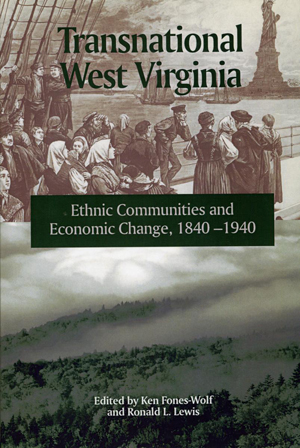

Transnational West Virginia

Ken Fones-Wolf and
Ronald L. Lewis

2002
325pp
PB  978-0-937058-76-3
$27.95

Summary

West Virginia is one of the most homogeneous states in the nation, with among the lowest ratios of foreign-born and minority populations among the states. But as this collection of historical studies demonstrates, this state was built by successive waves of immigrant labors, from the antebellum railroad builders to the twentieth-century coal miners. Transnational West Virginia offers a new understanding of how laborers and their communities shape a region’s history. Transnational West Virginia includes essays and studies on immigrant networks, such as Irish workers along the B&O Railroad, Wheeling Germans in the Civil War era, Swiss immigration to West Virginia, and European Jews in Southern West Virginia. This work also covers Belgian glassworkers in West Virginia, black migration to Southern West Virginia, Italians in the Upper Kanawha Valley, Italian immigration to Marion County, Wheeling Iron and the Welsh, West Virginia and immigrant labor to 1920, Monongalia miners between the World Wars, and West Virginia rubber workers in Akron. Transnational West Virginia is the first volume in the West Virginia and Appalachia series.

Contents

  • List of Tables
  • Introduction: Networks Large and Small
  • Section I: Antebellum Roots
    1. Matthew Mason, “Paddy vs. Paddy: Labor Unrest and Provincial Identities along the Baltimore and Ohio Railroad, 1849–1951”
    2. Ken Fones-Wolf, “Caught between Revolutions: Wheeling Germans in the Civil War Era”
  • Section II: Niche Communities
    1. Elizabeth Cometti, “Swiss Immigration to West Virginia, 1864–1884: A Case Study”
    2. Deborah R. Weiner, “From Shtetl to Coalfield: The Migration of East European Jews to Southern West Virginia”
    3. Ken Fones-Wolf, “Craft, Ethnicity, and Identity: Belgian Glassworkers in West Virginia, 1898–1940”
  • Section III: Immigrant Coal Miners
    1. Joe William Trotter Jr., “Black Migration to Southern West Virginia”
    2. Frederick A. Barkey, “‘Here Come the Boomer ‘Talys’: Italian Immigrants and Industrial Conflict in the Upper Kanawha Valley, 1903–1917”
    3. William B. Klaus, “Uneven Americanization: Italian Immigration to Marion County, 1900–1925”
  • Section IV: Representations of Ethnic Work Communities
    1. Anne Kelley Knowles, “Wheeling Iron and the Welsh: A Geographical Reading of Life in the Iron Mills
    2. Kenneth R. Bailey, “Strange Tongues: West Virginia and Immigrant Labor to 1920”
    3. Ronald L. Lewis, “Americanizing Immigrant Coal Miners in Northern West Virginia: Monongalia County Between the World Wars”
  • Epilogue: Leaving West Virginia
    1. Susan Johnson, “West Virginia Rubber Workers in Akron”
  • About the Contributors
  • Index

Reviews

“ . . . a truly worthy book.”
George Brosi, Appalachian Heritage

“ . . . a sophisticated analysis of an Appalachian region, one that carries on the work of rewriting regional history within larger interpretive arenas.”
Robert Weise, Journal of Appalachian Studies
EmailFacebookInstagramPinterestTwitter

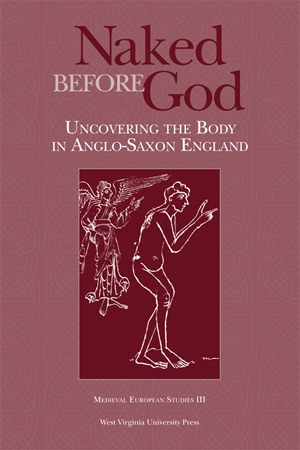
Naked Before God: Uncovering the Body in Anglo-Saxon England

Naked Before God

Edited by
Benjamin C. Withers and Jonathan Wilcox
2003
328pp
PB: 978-0-937058-68-8
$45.00
PDF  978-1-935978-37-4
$44.99
PDF  (120 Days)
$20.00

Summary

At different times and in different places, the human form has been regarded in different ways. The Ancient Greeks thought it was the most admirable subject for art, whereas early Christians often viewed it as lascivious in our post-lapsarian state. With illustrations taken from manuscripts, statuary and literary, this is a fascinating collection of essays with much that will be new to scholars and general readers alike.

Contents

  1. List of Illustrations
  2. List of Abbreviations
  3. Acknowledgments
  4. Forward: Uncovering the Body in Anglo-Saxon England
      Benjamin C. Withers, Indiana University South Bend
  5. Introduction: Medieval Bodies Then and Now: Negotiating Problems of Ambivalence and Paradox
      Suzanne Lewis, Stanford University
  6. The Wanton Hand: Reading and Reaching Into Grammars and Bodies in Old English Riddle 12
      Sarah L. Higley, University of Rochester
  7. The Key to the Body: Unlocking Riddles 42-46
      Mercedes Salvador, Universidad de Sevilla
  8. The Body as Text in Early Anglo-Saxon Law
      Mary P. Richards, University of Delaware
  9. The Sacrificial Synecdoche of Hands, Heads, and Arms in Anglo-Saxon Heroic Story
      John M. Hill, United States Naval Academy
  10. Nudity on the Margins: The Bayeux Tapestry and Its Relationship to Marginal Architectural Sculpture
      Karen Rose Mathews, University of Washington
  11. The Donestre and the Person of Both Sexes
      Susan M. Kim, Illinois State University
  12. Exiles from the Kingdom: The Naked and the Damned in Anglo-Saxon Art
      Catherine E. Karkov, Miami University, Ohio
  13. Breasts and Babies: The Maternal Body of Eve in the Junius 11 Genesis
      Mary Dockray-Miller, Lesley University
  14. Penitential Nakedness and the Junius 11 Genesis
      Janet S. Ericksen, University of Minnesota—Morris
  15. Naked in Old English: The Embarrassed and the Shamed
      Jonathan Wilcox, University of Iowa
  16. Index

Author

Benjamin Withers of Indiana University at South Bend and Jonathan Wilcox of University of Iowa have assembled one of the most talented groups of young scholars in the field of early medieval studies and asked them to present and explore the evidence for how the human form was regarded by the English before the Norman Conquest.

Reviews

"Naked Before God introduced a refreshing sense of possibilities that are offered by focusing on the multivalence of the body. This is a timely, lively and eclectic collection; the essays complement each other and offer a good variety of perspectives. This is an attractive volume by virtue of the range of—and emphasis on—illustration, and because it provides the reader with some real and provocative choices of interpretations of key texts and images of the period."
Clare Lees, King’s College, University of London

EmailFacebookInstagramPinterestTwitter

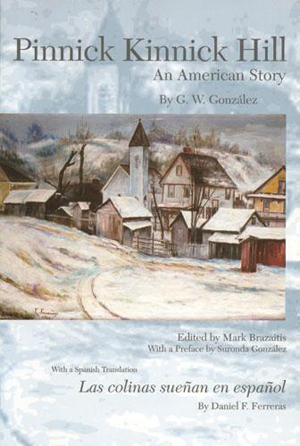
Pinnick Kinnick Hill: An American Story

Pinnick Kinnick Hill

G.W. González
2006
246pp
PB  978-1-933202-14-3
$22.95
PDF  978-1-935978-28-2
$21.99

Summary

Nearly a century ago, hundreds of families journeyed from Spain to the United States, to search for a better life in the growing zinc-industry towns of Harrison County, West Virginia. As they created a new culture and a new home in this strange land, they added another thread to the rich fabric of our nation. Writing from his perspective as a first-generation son of this immigrant community, González recounts his childhood memories of his neighborhood, where these immigrants raised their families, worked in the often insufferable conditions of the zinc factories, and celebrated "romerias" and feast days with their neighbors.

Author

Gavin W. "Bill" González was born in 1909 in Anmoore, West Virginia, the son of immigrants from Asturias, Spain. The Gonzálezes and their neighbors built a lively community centered around a place called Pinnick Kinnick Hill. Though Gavin González eventually moved away from his childhood home, he never forgot West Virginia, often taking his children and grandchildren on pilgrimages to Pinnick Kinnick Hill. Only after his death in 1988 did the family discover that he had written a memoir recounting the stories of his youth. The book is partly a memoir, partly a history, and partly a novel, all combined in a sometimes heartwarming and sometimes bittersweet celebration of how one small Spanish community survived and then prospered in the ethnic cauldron that was America. Published in side-by-side English and Spanish, Pinnick Kinnick Hill: An American Story is a story of struggle and disappointment, but ultimately one of resilience, cooperation, and one man’s discovery of America.

Reviews

"Pinnick Kinnick Hill is part novel, part memoir. It's a history lesson and a love song. And while the book is published in both English and Spanish (the same narrative in Spanish appears on each facing page), the book really only has one universal language shared by immigrant families everywhere: the language of love, sacrifice, discipline, and devotion."
Jim Bissett, The Dominion Post

"...a welcome addition to the growing literature on Appalachian immigration."
Jerry Bruce ThomasJournal of Appalachian Studies 

"...pure Americana, rich indeed in its evocation of a time long gone by...."
Stephen GoodeThe Washington Times

EmailFacebookInstagramPinterestTwitter

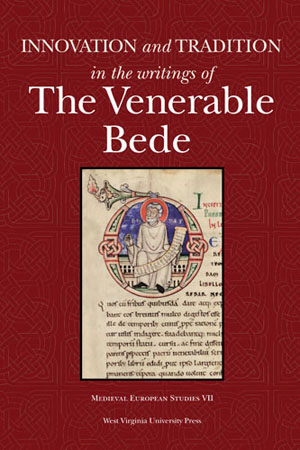
Innovation and Tradition in the Writings of the Venerable Bede

The Venerable Bede

Edited by
Scott DeGregorio
2006
287pp
PB: 978-1-933202-09-9
$44.95
PDF: 978-1-935978-29-9
$43.99
PDF (120 days)
$20.00
 

Summary

Works prior to this book focused on Bede as not only a European, but also as an English scholar, historian, scientist, or a biographer of saints, and have used a traditional approach towards his explanation of the Bible. Bede's interpretation of his work, its continuous progress, and the reasons behind his hurried appointment to an authority almost as high as the Church Fathers are all topics examined within the text. Essays are by Roger Ray, Faith Wallis, Calvin B. Kendall, George Hardin Brown, Scott DeGregorio, Arthur G. Holder, Lawrence T. Martin, Walter Goffart, and Joyce Hill.

Contents

  • Acknowledgments
  • List of Abbreviations
  • Introduction: The New Bede
  • Who Did Bede Think He Was?
      Roger Ray
  • Bede And The Ordering Of Understanding
      Alan Thacker
  • Si naturam quaeras: Reframing Bede’s “Science”
      Faith Wallis
  • The Responsibility of Auctoritas: Method and Meaning in Bede’s Commentary on Genesis
      Calvin B. Kendall
  • Bede’s Neglected Commentary on Samuel
      George Hardin Brown
  • Footsteps of his Own: Bede’s Commentary on Ezra-Nehemiah
      Scott DeGregorio
  • Christ as Incarnate Wisdom in Bede’s Commentary on the Song of Songs
      Arthur G. Holder
  • Bede’s Originality in his Use of the Book of Wisdomin his Homilies on the Gospels
      Lawrence T. Martin
  • Bede’s History in a Harsher Climate
      Walter Goffart
  • Carolingian Perspectives on the Authority of Bede
      Joyce Hill
  • Bibliography
  • Contributors

Author

Scott DeGregorio is Professor of Medieval Renaissance, Classical, and Biblical Literature at the University of Michigan-Deerborn. Besides Innovation and Tradition, he has also been involved with Bede: On Ezra and Nehemiah and Bede, the Monk, as Exegete: Evidence from the Commentary on Ezra-Nehemiah, among others.

Reviews

"Innovation and Tradition in the Writings of the Venerable Bede demonstrates the vitality of current scholarship and testifies to a remarkable unity in diversity of critical perspectives on Bede the exegete, "scientist," social reformer, and pedagogue, as well as historian. The Bede who emerges from these new essays was a leading light not only of early England, but also of medieval European culture at large."
Christopher A. Jones, Ohio State University

"This collection of essays (together with an excellent, up-to-date bibliography running to over thirty pages) is testament to the strength and vitality of Bedan studies."
Deborah McGrady, Speculum

EmailFacebookInstagramPinterestTwitter

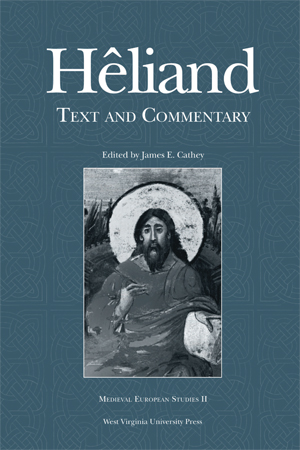
Hêliand: Text and Commentary

Hêliand

Edited by
James E. Cathey
2002
360pp
PB 978-0-937058-64-0
$44.95
PDF 978-1-933202-82-2 
$43.99
PDF (120 days)
$20.00

Summary

James E. Cathey's Hêliand: Text and Commentary is a simply unique, wonderfully encompassing, and helpful text, and nothing quite like it exists anywhere in the world. The commentary portion of the book consists of an interweaving of interpretation and philological consideration. This work presents the reader with explanatory commentary that encompasses both the scientific and the poetic and treats them both with equal felicity. The volume also contains something that is exceptionally valuable and cannot be found in English: a compact and serviceable grammar of Old Saxon and an appended glossary that defines all of the vocabulary found in this edited version of the Hêliand.

Contents

  • Preface
  • Introduction
  • The Historical Setting of the Hêliand
    • The Saxons
    • The Early Missions
    • The Arian and Moslem Threats
    • The English Mission
    • Charlemagne and Europe
    • Charlemagne and the Saxons
    • Consolidation of Power
    • Semantic Hurdles to the Task of Conversion
  • The Work
    • Hêliand Verse
    • The Dating of the Hêliand and the Prefatio
    • The Manuscripts
    • The Fitten
  • A Comparison of the 'M' vs 'C' Manuscripts
  • Excerpts from the text of the Hêliand
    • Introduction
    • Elizabeth's Child
    • The Birth of John
    • Mary's Child
    • The Birth of Jesus
    • Signs of Jesus' Birth
    • Jesus in the Temple
    • The Three Wise Men
    • Herod's Threat
    • The Flight to Egypt
    • John the Baptist
    • The Baptism of Christ
    • The Tempting of Christ
    • Jesus Returns to Galilee
    • The Sermon on the Mount
    • Admonitions
    • Hearing the Sermon
    • Swearing Oaths
    • The Lord's Prayer
    • Lilies of the Field
    • Pearls before Swine
    • Bad Tree - Bad Fruit
    • The Narrow Gate
    • A House upon Sand
    • Lambs among Wolves
    • Entering Heaven
    • Water to Wine
    • Reward and Punishment
    • Raising the Dead
    • Calming the Storm
    • The Sower and the Seed
    • Interpretation
    • The Wheat in the Field
    • Herodias' Daughter Dances
    • The Death of John
    • Jesus Walks on Water
    • Saint Peter's Keys
    • The Transfiguration
    • Fishing for Coins
    • The Rich Man and Lazarus
    • Workers in the Vineyard
    • Going to Jerusalem
    • The Blind Men
    • Entering Jerusalem
    • A Thane's Duty
    • Judgment Day
    • Raising Lazarus
    • Jesus as Threat
    • Apocalypse
    • Washing Feet
    • Jesus Identifies the Betrayer
    • Jesus in Gethsemane
    • The Capture of Christ
    • Peter Denies His Lord
    • The Fate of a Bad Thane
    • Pilate
    • The Death of Judas
    • Christ before Pilate
    • Christ before Herod
    • The Second Hearing before Pilate
    • Pilate's Offer
    • Satan's Attempt and Pilate's Wife
    • Pilate's Soldiers Take Jesus
    • The Crucifixion
    • The Death of Jesus
    • The Burial
    • The Resurrection
  • Commentary to the Readings
  • References
    • A Brief Outline of Old Saxon Grammar
    • The Sound Systems of Primitive Germanic and Old Saxon
    • Old Saxon Reflexes of Germanic Vowels
    • Strong Noun Declension
    • Weak Noun Declension
    • Pronouns
    • Adjective Declensions
    • Comparison of Adjectives
    • Adverbs
    • Numerals
    • Verbal Types
    • Verb Conjugations
  • Glossary

Author

James E. Cathey is Professor Emeritus of German and Scandinavian studies at the University of Massachusetts Amherst. His research interests include Germanic linguistics, Scandinavian languages, Finnish, and Old Saxon. He teaches several classes in these areas at the university, along with Swedish.

Reviews

"As someone who has taught the Hêliand and had to go to unheard of lengths of photocopying to bring together diverse and difficult to find texts, I cannot tell you how genuinely helpful Cathey's work will be. It will be the version for students in North America, and quite probably abroad as well."
G. Ronald Murphy, Georgetown University

"...a useful addition to texts available for budding philologists."
Tom Shippey, The Times Literary Supplement

"As a means of introducing students to this fascinating world and challenging text, Cathey's study should prove to be valuable, and one may hope that its publication will indeed contribute to growth in the interest of English speakers for the Old Saxon world."
John M. Jeep, Speculum

EmailFacebookInstagramPinterestTwitter

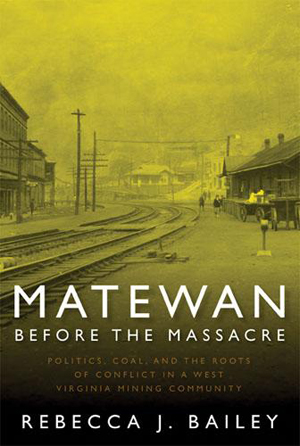
Matewan Before the Massacre: Politics, Coal, and the Roots of Conflict in a West Virginia Mining Community

Matewan Before the Massacre

Rebecca J. Bailey
2008
224pp
PB  978-1-933202-28-0
$27.95
PDF  978-1-935978-03-9
$26.99

Purchase the Kindle Edition at Amazon

Summary

On May 19, 1920, gunshots rang through the streets of Matewan, West Virginia, in an event soon known as the “Matewan Massacre.” Most historians of West Virginia and Appalachia see this event as the beginning of a long series of tribulations known as the second Mine Wars. But was it instead the culmination of an even longer series of proceedings that unfolded in Mingo County, dating back at least to the Civil War. Matewan Before the Massacre provides the first comprehensive history of the area, beginning in the late eighteenth century continuing up to the Massacre. It covers the relevant economic history, including the development of the coal mine industry and the struggles over land ownership; labor history, including early efforts of unionization; transportation history, including the role of the N&W Railroad; political history, including the role of political factions in the county’s two major communities—Matewan and Williamson; and the impact of the state’s governors and legislatures on Mingo County.

2008 ForeWord Magazine Book of the Year Award Finalist

Contents

  1. May 19, 1920 1
  2. “Bleeding Mingo”: 1895–1911
  3. The Progressive Era?
  4. The Williamson-Thacker Coalfield Falls Behind
  5. World War I and The Rise of Class Tensions
  6. The Massacre: Before and After
  7. Conclusion: The Matewan Myth
  8. Bibliography
  9. Index

Author

Rebecca “Becky” Bailey’s family roots are in McDowell and Mercer Counties in West Virginia. She first learned about Matewan through stories her coal miner grandfather told about witnessing Sid Hatfield’s murder. Later, when she came to West Virginia University to study public history, she was hired to help collect oral histories in Matewan and Mingo County. She wrote Matewan Before the Massacre because she could not let the story go.

Reviews

"A close-up history of economic and political factions struggling for control of the southern West Virginia coalfields. You couldn’t create fiction with this much drama."
Ronald L. Lewis, author Transforming the Appalachian Countryside

"[Bailey] has saved from oblivion the massacre's local social, economic, and political context."
Paul Salstrom, The Journal of Southern History

"Bailey's study contributes to the breadth of work in Appalachian studies that is recontextualizing the complexities and nuances of Appalachian communities."
Erica LiesOral History Review

"...fascinating."
Steve FesenmaierThe Charleston Gazette

"Rebecca J. Bailey's book makes early twentieth-century Mingo County come alive and emphasizes the significance of local history."
Ginny YoungWest Virginia History

EmailFacebookInstagramPinterestTwitter

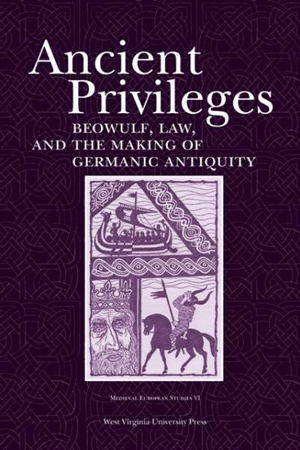
Ancient Privileges: Beowulf, Law, and the Making of Germanic Antiquity

Ancient Privileges

Stefan Jurasinski
2006
183pp
PB  978-0-937058-98-5 
$45.00
eBook  978-1-935978-33-6
$43.99
eBook  (120 Days)
$20.00


Summary

One of the great triumphs of nineteenth-century philology was the development of the wide array of comparative data that underpins the grammars of the Old Germanic dialects, such as Old English, Old Icelandic, Old Saxon, and Gothic. These led to the reconstruction of Common Germanic and Proto-Germanic languages. Many individuals have forgotten that scholars of the same period were interested in reconstructing the body of ancient law that was supposedly shared by all speakers of Germanic. Stefan Jurasinski's Ancient Privileges: Beowulf, Law, and the Making of the Germanic Antiquity recounts how the work of nineteenth-century legal historians actually influenced the editing of Old English texts, most notably Beowulf, in ways that are still preserved in our editions. This situation has been a major contributor to the archaizing of Beowulf. In turn, Jurasinski's careful analysis of its assumptions in light of contemporary research offers a model for scholars to apply to a number of other textual artifacts that have been affected by what was known as the historische Rechtsschule. At the very least, it will change the way you think about Beowulf.

Contents

  • Abbreviations
  • Preface
  • Introduction: “The Forests of Germany”: Legal History and the Inheritance of Philology
  • Jakob Grimm, Legal Formalism, and the Editing of Beowulf
  • “Public Land,” Germanic Egalitarianism, and Nineteenth-Century Philology
  • The Ecstasy of Vengeance: Nineteenth-Century Germanism and the Finn Episode
  • Feohleas Gefeoht: Accidental Homicide and the Hrethel Episode
  • Conclusions: Law and the Archaism of Beowulf
  • Works Cited

Author

Stefan Jurasinski is Associate Professor and Director of Graduate Studies in the Department of English at SUNY Brockport. With R.D. Fulk, he is the editor of The Old English Canons of Theodore (forthcoming from the Early English Text Society). He is currently at work on a monograph entitled Secular Law and the Old English Penitentials as well as a collaborative edition of The Laws of Alfred and Ine.

Reviews

"This is a book of distinction. It is sober, lucid, precise, and illuminating. Even those with little interest in Old English may learn from its comments on the psychology of scholars, for whom inertia is so potent, and the echoing of one’s predecessors so very soft an option. Ancient Privileges, therefore, is an outstanding achievement, greatly to the credit of its author and of West Virginia University."
Yearbook of English Studies

"This summary of Jurasinski’s arguments cannot do justice to the range of his evidence from the murky territory of nineteenth-century scholarship. Jurasinski proves himself to be a worthy successor of Allen Frantzen in challenging the appeals to consensus and authority that Frantzen believes have undermined much current writing about this poem."
Journal of English and Germanic Philology

"Jurasinski makes a major contribution to Beowulf studies with the publication of his monograph, Ancient Privileges."
Year’s Work in English Studies

"This book will make a notable contribution to the fields of Beowulf studies, Anglo-Saxonism, legal history, and nineteenth-century intellectual history."
Lisi Oliver, author The Beginnings of English Law

EmailFacebookInstagramPinterestTwitter