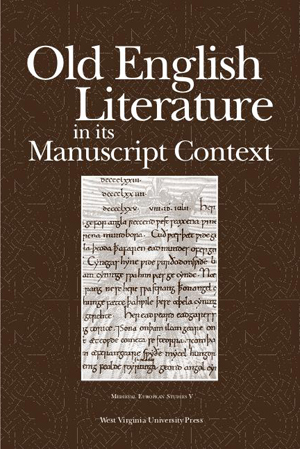
Spring Wildflowers of West Virginia, 3rd edition

Spring Wildflowers of West Virginia

Earl L. Core
2005
224pp
PB  978-0-937058-95-4
$16.95

Summary

Originally published in 1948, this is the germinal text on nearly 250 species of spring wildflowers found in West Virginia. Common or English names and scientific or Latin names are given for each species. The descriptions are in two sections: The first description includes the meaning of the name of the flower, uses, habitats, and ranges in West Virginia. Secondly, the plant itself is described in deep detail to help in identification. Each description is accompanied by a facing page detailed line drawing. This book is a must have for those interested in the beauty and science of West Virginia's spring flora. 

Author

Earl L. Core co-wrote the four-volume Flora of West Virginia. He received his bachelor's and master's degrees from West Virginia University and his doctorate from Columbia. He was a biology professor at WVU where the 75-acre arboretum managed by the university bears his name.

The illustrator, William A. Lunk, received his doctorate at the University of Michigan and went on to become curator of their University Museums.

EmailFacebookInstagramPinterestTwitter

The Search for Origins in the Twentieth-Century Long Poem: Sumerian, Homeric, and Anglo-Saxon

The Search for Origins in the Twentieth-Century Long Poem

Joe Moffett
2007
178pp
PB  978-1-933202-12-9
$39.95

Summary

In this new, scholarly text—an ambitious study of contemporary poetics—Joe W. Moffett deciphers the twentieth-century long poem, searching for a better understanding of why long-poem writers are preoccupied with a search for origins.

Moffett focuses on issues like postcolonialism, nation, modernism, and postmodernism. He conceptualizes his theories by using what he calls “originiary moments”: historical periods or specific events from which a poet contends our culture descends. These moments enlighten and inspire the modern poet to use origin or “source” as a way to examine present culture and social conditions. The poems also encourage modern readers to question, revise, and repudiate. Moffett organizes his argument by arranging specific examples into three categories of originary moments: Sumerian, Homeric, and Anglo-Saxon.

According to Moffett, the long poem is appealing because it “lacks strict conventions that govern other genres.” Using a wide variety of poems to support his arguments, Moffett asks many stimulating questions and also provides provocative answers.

Questions of when and where It All Began have been off the critical agenda for some time now, embargoed by poststructuralism. Undeterred, Joe Moffett boldly revisits the search for cultural origins, which preoccupied major poets throughout the twentieth century. Capacious in his scope, eclectic in his choices, Moffett rounds up unusual subjects, including long poems by Armand Schwerner, Derek Walcott, Geoffrey Hill, and Judy Grahn, with excursions into Charles Olson, Seamus Heaney, and others. Nowhere will you find clearer, more intelligent, or better-informed readings of these poems than Moffett’s.

Contents

  • "Returning to the Origin and Bringing Something Back" in the Twentieth-Century Long Poem
  • Charles Olson's The Maximus Poems and Armand Shwerner's The Tablets: From Late Modernist to Postmodernist Long Poem
  • "Master, I Was the Freshest of All Your Readers": Postcolonialism and Postmodern Self-Reflexivity in Derek Walcott's Omeros
  • Narrating the Origins of the Nation: Geoffrey Hill's Mercian Hymns and "An Appology for the Revival of Christian Architecture in England"
  • "A New Myth of Origin": Judy Grahn's A Chronicle of Queens and Popular culture
  • Conclusions: Origins and the Modern/Postmodern Divide
  • Bibliography
  • Index
EmailFacebookInstagramPinterestTwitter

Clash of Loyalties

Clash of Loyalties

John W. Shaffer

2002
264pp
PB 978-0-937058-73-2
$39.95

Summary

As a border county in a border state, Barbour County, West Virginia, felt the full terror and tragedy of the Civil War. The wounds of the Civil War cut most bitterly in the border states, that strip of America from Maryland to Kansas, where conflicting loyalties and traditions ripped apart communities, institutions, and families. Barbour County, in the mountainous Northwest of (West) Virginia, is a telling microcosm of the deep divisions which both caused the war and were caused by it. By examining and interpreting long-ignored documents of the times and the personal accounts of the people who were there, Clash of Loyalties offers a startling new view of America’s most bitter hour. Nearly half of the military-age men in the county served in the armed forces, almost perfectly divided between the Union and the Confederacy. After West Virginia split with Virginia to rejoin the Union, Confederate soldiers from the regions could not safely visit their homes on furlough, or even send letters to their families. The county’s two leading political figures, Samuel Woods and Spencer Dayton, became leaders of the fight for and against secession, dissolved their close personal friendship, and never spoke to one another again. The two factions launched campaigns of terror and intimidation, leading to the burning of several homes, the kidnapping of a sheriff, the murder of a pacifist minister, and the self-imposed exile of many of the county’s influential families. The conflicting loyalties crossed nearly all social and economic lines; even the county’s slave owners were evenly divided between Union and Confederate sympathies. With a meticulous examination of census and military records, geneologies, period newspapers, tax rolls, eyewitness accounts, and other relevant documents, Clash of Loyalties presents a compelling account of the passion and violence which tore apart Barbour County and the nation.

Contents

  • List of Tables
  • Introduction
  • Borderland County
  • Wellsprings of Loyalty
  • Dark Clouds Gather
  • Patterns of Enlistment
  • War in the Mountains
  • Keep the Home Fires Burning
  • Strangers in a Strange Land
  • Let Malice Go
  • Appendix A
  •   Notes on Sources and Methods
  • Appendix B
  •   Immigration into Barbour
  • Appendix C
  •   Birthplaces of Barbour's Soldiers, their Fathers, and their Grandfathers
  • Appendix D
  •   Chronology of Enlistments
  • Endnotes
  • Bibliography
  • Index

Author

John W. Shaffer earned a PhD in history from UCLA. He has taught at California State University at Chico. He is the author of Family and Farm: Agrarian Change and Household Organization in the Loire Valley, 1500–1900, as well as numerous articles in journals and books. Shaffer is currently vice president of United Mercantile Agencies in San Francisco.

Reviews

“[A] fascinating study . . .
C. Stuart McGehee, West Virginia History

“ . . . to my knowledge no Civil War scholar to date has documented patterns of local conflict so meticulously, and those seeking to understand Appalachia’s Civil War will find in this monograph an effective model for continued exploration.”
Robert Tracy McKenzie, Journal of Appalachian Studies

EmailFacebookInstagramPinterestTwitter

The Blackwater Chronicle
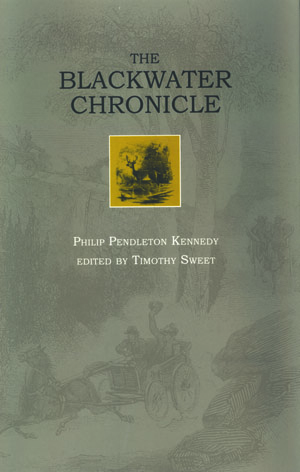

Blackwater Chronicle

Philip Pendleton Kennedy
Edited by Timothy Sweet

2002
211pp
PB  978-0-937058-66-4
$18.95

Summary

This wilderness travelogue about the exploration of Canaan Valley, West Virginia, was originally published in 1853. With appeal far beyond its time and region, first editions of this chronicle reached New York, London, and even Germany. This often humorous and always fascinating story reveals Kennedy’s journey into an unexplored territory.

Contents

  • Preface
  • Introduction
  • Getting under Way
  • In which the Expedition dances a Hornpipe on the Top of a Mountain
  • The Coxkneys explained by the Prior of St. Philips, from the Top of the Allegany
  • Winston and its Catellan—Mr. Edward Towers
  • The Blackwater Invasion determined upon
  • The Dale on the Potomac—and a Somewhat particular Description of the Array
  • The March into the Canaan
  • The Lodge in the Wilderness
  • The Blackwater Founr—A Great Number of Trout taken—Mr. Butcut fries some Fish
  • The Blackwater Villa
  • The Falls of the Blackwater
  • How we got out of the Canaan—and in Spite of our Teeth
  • The Return to Winston—“Bootless Home and Weather-beaten Back.”

Author

Philip Pendleton Kennedy resided in the present-day eastern panhandle of West Virginia, where he socialized, hunted and fished, and dabbled at writing. The Blackwater Chronicle is his only major published work.

Reviews

“Philip Pendleton Kennedy’s account of this adventure makes for enjoyable reading today. More than this, however, the book provides both an interesting glimpse into antebellum American literary culture and an important record of the Canaan wilderness before it was despoiled by economic exploitation. These qualities make The Blackwater Chronicle a work of lasting value.”
Timothy Sweet, professor of English, West Virginia University
EmailFacebookInstagramPinterestTwitter

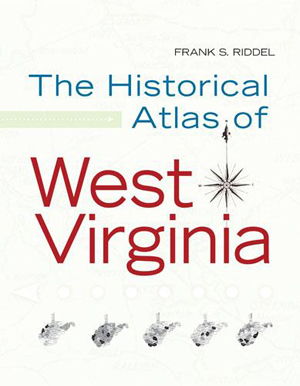
The Historical Atlas of West Virginia

The Historical Atlas of West Virginia

Frank S. Riddel

2008
256pp
HC/J  978-1-933202-27-3
$29.95

Summary

Few reference works are as valuable to  scholars and non-scholars as an historical atlas. The Historical Atlas of West Virginia is important title for libraries, schools, and every West Virginian who wants to understand how historical forces are mapped onto the state’s terrain. Frank Riddel’s The Historical Atlas of West Virginia is copiously illustrated with maps, tables, and charts depicting everything from geological deposits and strata that have fed the state’s industries to the settlement patterns of the immigrants who settled in West Virginia. Using federal and state statistics, it also includes revelations from the national census figures since 1790.

2008 ForeWord Magazine Book of the Year Award Finalist
2008 Southeastern Library Association Southern Book Competition, Honorable Mention for Typographical Design

Contents

  1. Preface
  2. About the Author
  3. GEOGRAPHY
    1. West Virginia’s Location
    2. Latitude, Longitude, and Size of West Virginia
    3. West Virginia within the Appalachian Region
    4. West Virginia’s Borders
    5. Physical Subdivisions of West Virginia
    6. Land Relief in West Virginia
    7. Major Rivers in West Virginia
    8. Natural Wonders in West Virginia
    9. State and National Parks and Forests in West Virginia
  4. HISTORY
    1. The Adena and Hopewell Heartland
    2. Early Woodland Sites in West Virginia, 1000 B.C.–A.D. 1
    3. Early Middle Woodland Sites in West Virginia, A.D. 1–A.D. 500
    4. Late Middle Woodland Sites in West Virginia, A.D. 500–A.D. 1000
    5. Late Prehistoric Cultures in West Virginia, 1000–1700
    6. Major Indian Tribes and Their Approximate Locations during the Late Prehistoric and Early Historic Periods
    7. Major Indian Trails in West Virginia
    8. Hunting Areas of Predominant Tribes in West Virginia Early in the 18th Century
    9. Territorial Provisions of the Virginia Charter of 1606
    10. Territorial Provisions of the Virginia Charter of 1609
    11. The Exploration of Western Virginia, 1650–1673
    12. The Exploration of Western Virginia, 1674–1749
    13. The Exploration of Western Virginia, 1750–1752
    14. The Fairfax Proprietary: Granted in 1649 and Defined by Surveys in 1736 and 1746
    15. The Great Land Companies of Colonial Virginia
    16. European Claims East of the Mississippi, 1713–1763
    17. Frontier Defenses in Western Virginia, 1750–1792
    18. Virginia and Conflict between France and Great Britain, 1753–1763
    19. European Possessions after the French and Indian War, 1763–1776
    20. Settlement in West Virginia by 1763
    21. Pontiac’s Rebellion, 1763–1764
    22. The Royal Proclamation of 1763: A Barrier to Settlement beyond the Mountains
    23. The Indian Boundary Line, 1768–1771
    24. Land Schemes in Western Virginia: Indiana and Vandalia
    25. Dunmore’s War—1774
    26. An Effort to Create a New State in Western Virginia: Westsylvania
    27. The American Revolution in Western Virginia
    28. The New Nation—1783
    29. The Virginia-Pennsylvania Boundary Dispute
    30. Western Land Claims and Cessions, 1776–1802
    31. The Reduction of Virginia’s Land Claims, 1632–1863
    32. Reducing the Indian Threat to Western Virginia, 1793–1795
    33. Settlement in West Virginia by 1800
    34. The Civil War in West Virginia—1861
    35. The Civil War in West Virginia—1862
    36. The Civil War in West Virginia—1863
    37. The Civil War in West Virginia—1864
    38. The Civil War in West Virginia—1865
    39. Counties Represented at the First Wheeling Convention—May 1861
    40. Results of the Virginia Referendum on Secession in the Counties that became the State of West Virginia—May 23, 1861
    41. Counties Represented at the Second Wheeling Convention—June 1861
    42. Boundaries of the Proposed State of ‘Kanawha’
    43. Results of the Referendum on the New State Ordinance—October 24, 1861
    44. Boundaries of West Virginia Adopted by the Constitutional Convention (November 26, 1861–February 18, 1862)
    45. Boundaries of West Virginia when Admitted to the Union—June 20, 1863
    46. West Virginia’s Capitals
    47. The West Virginia Mine Wars, 1912–1913 and 1919–1921
    48. Absentee Ownership in West Virginia
  5. THE EVOLUTION OF COUNTIES
    1. Western Virginia Counties, 1734–1742
    2. Western Virginia Counties, 1743–1753
    3. Western Virginia Counties, 1754–1771
    4. Western Virginia Counties, 1772–1775
    5. Western Virginia Counties, 1776–1778
    6. Western Virginia Counties, 1779–1782
    7. Western Virginia Counties, 1783–1791
    8. Western Virginia Counties, 1792–1800
    9. Western Virginia Counties, 1801–1810
    10. Western Virginia Counties, 1811–1820
    11. Western Virginia Counties, 1821–1830
    12. Western Virginia Counties, 1831–1840
    13. Western Virginia Counties, 1841–1850
    14. Western Virginia Counties, 1851–1863
    15. West Virginia Counties, 1863–Present
    16. West Virginia County Seats
  6. THE DEVELOPMENT OF TRANSPORTATION
    1. Principal Roads in Western Virginia in 1800
    2. Principal Roads in Western Virginia in 1835
    3. Principal Roads in Western Virginia during the Civil War
    4. Principal Roads in West Virginia in 1955
    5. Principal Roads in West Virginia in 2008
    6. Railroads in West Virginia in 1863
    7. Railroads in West Virginia in 1893
    8. Railroads in West Virginia in 1920
    9. Railroads in West Virginia in 2000
    10. Locks and Dams in West Virginia
    11. Public Airports in West Virginia
  7. NATURAL RESOURCES AND EXTRACTIVE INDUSTRIES
    1. Salt Deposits in West Virginia
    2. Major Lumber-Producing Counties in West Virginia
    3. Oil Deposits in West Virginia
    4. Natural Gas Deposits in West Virginia
    5. Coal Deposits in West Virginia
  8. EDUCATION
    1. Academies Established in Western Virginia prior to the Civil War
    2. Institutions of Higher Education in West Virginia
  9. POPULATION, 1790–2000
    1. Western Virginia’s Population in 1790
    2. Western Virginia’s Population in 1800
    3. Western Virginia’s Population in 1810
    4. Western Virginia’s Population in 1820
    5. Western Virginia’s Population in 1830
    6. Western Virginia’s Population in 1840
    7. Western Virginia’s Population in 1850
    8. Western Virginia’s Population in 1860
    9. West Virginia’s Population in 1870
    10. West Virginia’s Population in 1880
    11. West Virginia’s Population in 1890
    12. West Virginia’s Population in 1900
    13. West Virginia’s Population in 1910
    14. West Virginia’s Population in 1920
    15. West Virginia’s Population in 1930
    16. West Virginia’s Population in 1940
    17. West Virginia’s Population in 1950
    18. West Virginia’s Population in 1960
    19. West Virginia’s Population in 1970
    20. West Virginia’s Population in 1980
    21. West Virginia’s Population in 1990
    22. West Virginia’s Population in 2000
  10. LEGISLATIVE, JUDICIAL, AND CONGRESSIONAL DISTRICTS
    1. West Virginia House of Delegates Districts
    2. West Virginia State Senate Districts
    3. West Virginia Judicial Circuits
    4. West Virginia Congressional Districts (Apportionment of 1863)
    5. West Virginia Congressional Districts (Apportionment of 1882)
    6. West Virginia Congressional Districts (Apportionment of 1901)
    7. West Virginia Congressional Districts (Apportionment of 1915)
    8. West Virginia Congressional Districts (Apportionment of 1934)
    9. West Virginia Congressional Districts (Apportionment of 1951)
    10. West Virginia Congressional Districts (Apportionment of 1961)
    11. West Virginia Congressional Districts (Apportionment of 1971)
    12. West Virginia Congressional Districts (Apportionment of 1982)
    13. West Virginia Congressional Districts (Apportionment of 1992)
    14. West Virginia Congressional Districts (Apportionment of 2002)
  11. Appendix A: Governors of West Virginia
  12. Appendix B: United States Senators from West Virginia
  13. References
  14. Index

Author

Frank S. Riddel is originally from St. Mary’s, WV, and holds undergraduate and master’s degrees from Marshall University and a doctoral degree from the Ohio State University. He has co-authored two books published by the West Virginia Historical Education Foundation, West Virginia Government and American Government: The USA and West Virginia. He is currently an emeritus professor of history at Marshall University where he continues to teach West Virginia history.

Reviews

The Historical Atlas of West Virginia is a significant contribution to the literature on the state of West Virginia. . . . In all, a handsome and useful work . . . whose maps will be used by generations to come for a better understanding of our state.”
Kenneth C. Marris, West Virginia History

“ . . . fills a major gap in West Virginia historiography.”
West Virginia Archives & History News

EmailFacebookInstagramPinterestTwitter

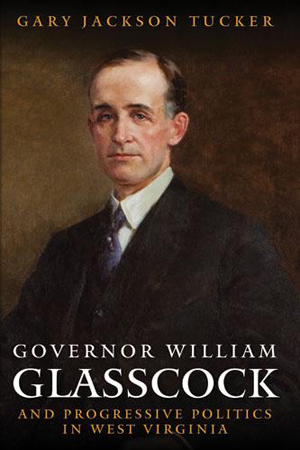
Governor William Glasscock and Progressive Politics in West Virginia

Governor William Glasscock and Progressive Politics in West Virginia

Gary Jackson Tucker
December 2008
205pp
PB  978-1-933202-35-8
$27.95
PDF  978-1-935978-15-2
$26.99

Summary

From 1909 to 1913, Governor William Glasscock served the state of West Virginia as an ardent progressive and reformer. In his inaugural address he proclaimed government "the machinery invoked and devised by man for his benefit and protection” and good government the guarantor of the happiness, prosperity, success, and welfare of the people. Governor William Glasscock and Progressive Politics in West Virginia recounts the life and work of West Virginia’s thirteenth governor. Born during the Civil War, Glasscock witnessed a country torn by sectional, fratricidal war become a powerful industrial nation by the turn of the twentieth century. Author Gary Jackson Tucker demonstrates how Glasscock, along with others during the Progressive Era, railed against large and powerful political and economic machines to enact legislation protecting free and fair elections, just taxation, regulation of public utilities, and workmen’s compensation laws. Never hesitating to use the power of the state to stand firm against racism and mob rule, and placing his own personal safety in jeopardy, Glasscock won the praise and admiration of average people. Glasscock’s four years in office took his own health and financial security from him, but left behind a better government—a good government—for the people of West Virginia.

Contents

  1. Foreword
  2. The Origins of a Young Reformer
  3. Mountain State Politics
  4. The Evolution of a Progressive Governor
  5. Settling Into Office
  6. The 1910 Crash of the Republican Party
  7. The Runaway Legislature of 1911
  8. Divided Republicans Prepare for the War of 1912
  9. Governor Glasscock and Violence in West Virginia
  10. The 1913 Legislature: One Last Chance
  11. Epilogue
  12. Bibliography
  13. Index

Author

Gary Jackson Tucker hold as PhD in History from  West Virginia University. Retired from the Wood County, West Virginia public school system, he presently teaches history at West Virginia University-Parkersburg.

Reviews

"An excellent contribution to Appalachian studies. Rather than a view of the region as a product of colonial settlers and isolation by the mountain terrain, the region is placed at the center of the many social conflicts that accompanied the industrialization process. At the forefront of modern scholarship, the book emphasizes the diversity of the region rather than its homogeneity."
Arthur G. Neal, Journal of American Culture

"West Virginians who wish to understand their history should read Gary Jackson Tucker's excellent book, which is both a biography and a political history of the Progressive Era in West Virginia. This book relates the battles for dominance between Progressive politicians and men of privilege and wealth. Tucker provides the background to understand current debates on issues, which were first argued in the West Virginia Legislature 100 years ago."
Dr. Kenneth Bailey, The State Journal

"Gary Jackson Tucker has written the definitive political biography of William E. Glasscock, West Virginia's seventh Republican governor. Tucker's research is impeccable, his prose is lively, and the narrative is tightly focused..."
Rand Dotson, The Journal of Southern History

"Although not published during the heated 2009 political season, Gary Jackson Tucker's examination of Governor Glasscock (1909-1913) sheds light on the historical origins and shortcomings of progressive politics in the state. By limiting his study to West Virginia state politics and the reform governor at the precise moment of deep-seated, changing political viewpoints, Tucker has helped reinvigorate the field of Progressive Era historiography."
William Hal Gorby, Appalachian Journal

EmailFacebookInstagramPinterestTwitter

Culture, Class, and Politics in Modern Appalachia: Essays in Honor of Ronald L. Lewis

Culture, Class, and Politics

Edited by
Jennifer Egolf,
Ken Fones-Wolf, and
Louis C. Martin

2009
384pp
PB  978-1-933202-39-6
$27.95
PDF  978-1-935978-14-5
$26.99
PDF  (120 Days)
$10.00

Purchase the Kindle Edition at Amazon


Summary

Culture, Class and Politics in Modern Appalachia takes stock of the field of Appalachian studies as it explores issues still at the center of its scholarship: culture, industrialization, the labor movement, and twentieth-century economic and political failure and their social impact. A new generation of scholars continues the work of Appalachian studies’ pioneers, exploring the diversity and complexity of the region and its people. Labor migrations from around the world transformed the region during its critical period of economic growth. Collective struggles over occupational health and safety, the environment, equal rights, and civil rights challenged longstanding stereotypes. Investigations of political and economic power and the role of social actors and social movements in Appalachian history add to the foundational work that demonstrates a dynamic and diverse region.

Contents

  • Louis C. Martin and Ken Fones-Wolf
      Preface
  • Dwight B. Billings
      Introduction: Writing Appalachia: Old Ways, New Ways, and WVU Ways
  • Section I: Culture
    • Deborah Weiner
        ‘Scrip Was a Way of Life’: Company Stores, Jewish Merchants, and the Coalfield Retail Economy
    • Paul Rakes
        A Combat Scenario: Early Coal Mining and the Culture of Danger
    • Jennifer Egolf
        Radical Challenge and Conservative Triumph: The Struggle to Define American Identity in the Somerset County Coal Strike, 1922–1923
    • Connie Park Rice
        Separate But Never Equal: Dewey W. Fox and the Struggle for Black Equality in the Age of Jim Crow
  • Section II: Class
    • Michael E. Workman
        ‘Sadly in need of organization’: Labor Relations in the Fairmont Field, 1890 to 1918
    • Rebecca Bailey
        The Matewan Massacre: Before and After
    • Richard P. Mulcahy
        Progress and Persistent Problems: Sixty Years of Health Care in Appalachia
    • John Hennen
        1199 Comes to Appalachia: Beginnings, 1970–1976
  • Section III: Politics
    • Jeffery B. Cook
        Mining Reform after Monongah: The Conservative Response to Mine Disasters
    • Mark Myers
        Depression, Recovery, Instability: The NRA and the McDowell County, West Virginia Coal Industry, 1920–1938
    • Shirley Stewart Burns
        To Dance with the Devil: The Social Impact of Mountaintop Removal Surface Coal Mining
  • Publications by Ronald L. Lewis
  • Contributors
  • Index

Author

Jennifer Egolf is a visiting professor at Indiana University of Pennsylvania. 

Ken Fones-Wolf is the Stuart and Joyce Robbins Chair and Professor of History at West Virginia University. 

Louis Martin is sssistant professor of history at Chatham University.

Reviews

“An excellent contribution to an understanding of modern developments in studies of Appalachia.”
Arthur G. Neal, Journal of American Culture

“Readers come away with some fine specifics but also a real feel for the state of regional scholarship.”
Appalachian Heritage

Culture, Class and Politics is a fitting tribute to Ronald Lewis’s lifetime of work. The articles are pertinent [and] frequently break new ground . . . ”
Kenneth R. BaileyWest Virginia History

“The essays are well written and researched, are infused with historiography, and offer nuance, complexity, and pluralism to a region—not to mention a state—once seen as unitary and ripe for the ‘benefits’ of civilization.”
Chad Berry, Journal of Southern History

EmailFacebookInstagramPinterestTwitter

History of the Alps, 1500-1900: Environment, Development, and Society

History of the Alps

Jon Mathieu
Translated by Matthew Vester
2009
276pp
PB  978-1-933202-34-1
$37.95
HC  978-1-933202-41-9
$95.95
PDF  978-1-935978-13-8
$36.99

Summary

In the 1700s, Jean-Jacques Rousseau celebrated the Alps as the quintessence of the triumph of nature over the “horrors” of civilization. Now available in English, History of the Alps, 1500-1900: Environment, Development, and Society provides a precise history of one of the greatest mountain range systems in the world. Jon Mathieu’s work disproves a number of commonly held notions about the Alps, positioning them as neither an inversion of lowland society nor a world apart with respect to Europe. Mathieu’s broad historical portrait addresses both the economic and sociopolitical—exploring the relationship between population levels, development, and the Alpine environment, as well as the complex links between agrarian structure, society, and the development of modern civilization. More detailed analysis examines the relationship between various agrarian structures and shifting political configurations, several aspects of family history between the late Middle Ages and the turn of the twentieth century, and exploration of the Savoy, Grisons, and Carinthia regions.

Contents

  1. Preface
  2. The Alps: A Historical Space?
    • Key questions and the state of the research
    • The political construction of territory
  3. Population
    • Data and collection methods
    • Comparing long-term trends
  4. Agriculture and Alpiculture
    • The intensity differential in the Alps
    • Cropping frequency and yields
    • The intensification of animal husbandry
    • . . . and of plant cultivation
    • Technology
  5. Cities
    • Statistics in the early modern era
    • Acceleration of growth
    • The slowing of urban growth
    • The nineteenth century
  6. Environment and Development
    • An intermediate assessment: differentiated growth
    • Relations between the Alps and surrounding areas
    • History and ecological models
    • Illustrations After p. 134
  7. Two Agrarian Structures (Nineteenth Century)
    • Farming establishments
    • Public order and property
    • Inheritance law, collective resources
  8. Territories during the Early Modern Period
    • Savoy: the duke, the notables
    • The Grisons: communes with subjects
    • Carinthia: Lord, peasant, servant
  9. State Formation and Society
    • The European dimension
    • Politics as a factor of differentiation
    • Rural societies
  10. History of the Alps from 1500 to 1900
    • A summary
    • Arguments and outlook
  11. Appendices
  12. Bibliography
  13. Index

Author

Jon Mathieu is Professor of History at the University of Lucerne, founding director of the Institute of Alpine History at the University of Lugano (Università della Svizzera Italiana). Matthew Vester is Associate professor in the Department of History at West Virginia University.

Reviews

"...Mathieu has done Alpine studies an immense service, collecting an expansive body of research long divided along national, linguistic, and disciplinary lines. As Mathieu accurately states, 'Quantitative history is sorely missing from Alpine research,' and this slim volume provides a very valuable resource for scholars who wish to redress this lacuna."
Lee W. Holt, H-Net Reviews

"Mathieu's book demolishes widespread cliches about the Alps, which seek to portray the Alpine region as the complete reversal of society in lowland areas, or as a world segregated from the rest of Europe."
Commission Internationale pour la Protection des Alpes

EmailFacebookInstagramPinterestTwitter

Via Crucis: Essays on Early Medieval Sources and Ideas

Via Crucis

Edited by
Thomas N. Hall
With the assistance of Thomas D. Hill
2002
356pp
PB  978-0-937058-58-9
$45.00

Summary

This book originated as a series of papers delivered at a Symposium on Irish and Anglo-Saxon Literary Culture in Honor of J. E. Cross, held in conjunction with the 30th International Congress on Medieval Studies at Kalamazoo in May 1996. The purpose of that symposium was to bring together a number of friends and admirers of Professor Cross to celebrate his remarkably rich career as a scholar of Old English and Insular Latin literature; Anglo-Saxon manuscripts; and medieval sermons, saints’ lives, and apocrypha.

Just over a decade earlier, a group of colleagues had honored Professor Cross with a Festschrift published as a special volume of Leeds Studies in English, but in the years since that collection appeared, Professor Cross had managed to launch into the most productive period of his entire career, producing over thirty new articles and books since 1984, including his ground-breaking monograph on the Pembroke 25 homiliary, a facsimile edition of the Copenhagen Wulfstan manuscript for the series Early English Manuscripts in Facsimile, a book on the Gospel of Nicodemus and Vindicta Salvatoris apocrypha from the St Omer 202 homiliary, and an edition and translation of Archbishop Wulfstan’s canon laws.

Surely these achievements were worthy of fresh recognition, we reasoned, and a small cohort of Professor Cross’s friends accordingly began conspiring to host a symposium in his honor with an eye toward producing a second Festschrift. Kalamazoo was the logical site for this event. Professor Cross had frequented the Medieval Congress at Kalamazoo for as long as any of us could remember, had chaired and presented in numerous sessions, and was a plenary speaker in 1990. It was also at Kalamazoo that Professor Cross initiated discussions of a plan to revise and update J. D. A. Ogilvy’s Books Known to the English, 597-1066, an ambitious project that has since given rise to two large collaborative ventures to which many Anglo-Saxonists around the world now contribute: Fontes Anglo-Saxonici and Sources of Anglo-Saxon Literary Culture.

Kalamazoo was thus a perfect match for Professor Cross, and with the kind indulgence of the Medieval Congress program committee, we proceeded to organize five sessions for the 1996 meeting on Irish and Anglo-Saxon studies as a tribute to Professor Cross’s work in these areas. The timing, as it turned out, proved meaningful: Professor Cross died unexpectedly the following December, just seven months after the symposium, and the Kalamazoo conference was consequently the last opportunity most of us had to see him.

Contents

  1. Abbreviations
  2. Illustrations
  3. Preface
  4. Re-Reading The Wanderer: The Value of Cross-References
      Andy Orchard, University of Toronto
  5. Visualizing Judgement: Illumination in the Old English Christ III
      Sachi Shimomura, Virginia Commonwealth University
  6. The Old English Dough Riddle and the Power of Women's Magic: The Traditional Context of Exeter Book Riddle 45
      Thomas D. Hill, Cornell University
  7. The Old English Life of St. Pantaleon
      Phillip Pulsiano, Villanova University
  8. The Earliest Anglo-Latin Text of the Trinubium Annae (BHL 505zl)
      Thomas N. Hall, University of Illinois at Chicago
  9. Reconciling Family and Faith: Ælfric's Lives of Saints and Domestic Dramas of Conversion
      Dabney Anderson Bankert, James Madison University
  10. Pearls before Swine: Ælfric, Vernacular Hagiography, and the Lay Reader
      E. Gordon Whatley, Queens College
  11. Sanctifying Anglo-Saxon Ealdormen: Lay Sainthood and the Rise of the Crusadion Ideal
      John Damon, University of Nebraska at Kearney
  12. The Old English "Macarius" Homily, Vercelli Homily IV, and Ephrem Lantinus, De paenitentia
      Charles d. Wright, University of Illinois, Urbana-Champaign
  13. Irish Homilies A.D. 600-1100
      Martin McNamara, M.S.C., Dublin
  14. An Unpublished Homily on the Transfiguration
      Raymond Étaix, Lyon
  15. Pembroke College 25, Arts. 93-95
      Paul E. Szarmach, Western Michigan University
  16. Comments on the Codicology of Two Paris Manuscripts (BN lat. 13,408 and 5574)
      Frederick M. Biggs, University of Connecticut at Storrs
  17. Links between a Twelfth-Century Worcester (F. 94) Homily and the Eighth-Century Hiberno-Latin Commentary Liber questionum in evangliis
      Jean Rittmueller, Memphis
  18. An Eighth-Century Text of the Lectiones in virgiliis defuntorum: The Earliest Manuscript Witness of the biblical Readings for the Vigil of the Dead
      Denis Brearley, University of Ottawa
  19. Liturgical Echoes in Laxdæla saga
      Andrew Hamer, University of Liverpool
  20. Noble Counsel, no Counsel: Advising Ethelred the Unready
      Alice Sheppard, Pennsylvania State University
  21. Gildas and Glastonbury: Revisiting the Origins of Glastonbury Abbry
      Alf Siewers, Buckness University
  22. A Bibliography of the Writings of J.E. Cross 1985-2000
  23. Index

Reviews

"Scholars in the field of medieval studies will fund much to admire in Via Crucis, and some of the chapters... are extraordinarily solid, incisive, and memorable and will no doubt be much cited. In all, the book is a fine and fitting tribute to the memory of a distinguished scholar."
Kirsten Wolf, Journal of English and Germanic Philology

EmailFacebookInstagramPinterestTwitter

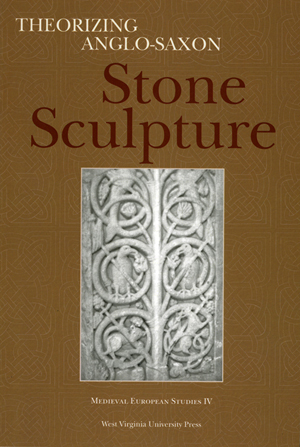
Theorizing Anglo-Saxon Stone Sculpture

Theorizing Anglo-Saxon Stone Sculpture

Edited by
Catherine E. Karkov and Fred Orton
2003
232pp
PB: 978-0-937058-79-4
$45.00

Summary

Theorizing Anglo-Saxon Stone Sculpture significantly advances the complex study of Anglo-Saxon carved monuments, such as the Ruthwell Cross, by adopting more explicit theoretical approaches to the subject. Scholars included here are explicit in describing how their approaches complement (or, more often, contradict) the work of others. This book comes as a shot across the bow of these vessels. Contributors include the best scholars on this subject matter in England, Ireland, and America.

Contents

  • List of Illustrations
  • List of Abbreviations
  • Preface
  • Introduction
      Richard N. Bailey
  • Reading Stone
      Jane Hawkes
  • Naming and Renaming: The Inscription of Gender in Anglo-Saxon Sculpture
      Catherine E. Karkov
  • Rethinking the Ruthwell and Bewcastle Monuments: Some Strictures on Similarity; Some Questions of History
      Fred Orton
  • "Innocent From The Great Offence"
      Richard N. Bailey
  • Ruthwell: Contextual Searches
      Ian Wood
  • Between Annunciation and Visitation: Spiritual Birth and the Cycles of the Sun on the Ruthwell Cross: A Response to Fred Orton
      Éamonn Ó Carragáin
  • Bibliography
  • Index

Reviews

"For too long the seas of [these] studies have been traversed by powerful vessels, steered by an assortment of scholars armed with liturgical, patristic, and iconographical instrumentation, who have totally ignored the fact that others are on parallel or collision courses with them." 
Richard Bailey, University of Michigan

"... produce[s] a valuable debate about the interpretation of and approaches to early Anglo-Saxon sculpture." 
Benjamin C. Withers, Indiana University

"The bulk of preconquest sculpture, which is Viking Age and mostly distinguished by its plant, animal, and interlace ornament, is... largely lost to sight. That said, this is a valuable book, which draws attention to the lively debates around the interpretation of an important category of the material remains of Anglo-Saxon culture." 
Elizabeth Coatsworth, Manchester Metropolitan University

EmailFacebookInstagramPinterestTwitter