Uncommon Vernacular: The Early Houses of Jefferson County, West Virginia, 1735-1835

Uncommon Vernacular

John C. Allen, Jr.
September 2011
384pp
HC/J  978-1-933202-87-7
$49.99

Summary

Within the picturesque borders of Jefferson County, West Virginia remain the vestiges of a history filled with Civil War battles and political rebellion. Yet also woven into the historical landscape of this small county nestled within the Shenandoah Valley is an unusual collection of historic homes. 

In this fascinating architectural exploration, John C. Allen, Jr. details his expansive seven-year survey of Jefferson County’s historic residences.  By focusing on dwellings built from the mid-eighteenth century to the arrival of the railroad and canal in 1835, Allen unfolds the unique story of this area’s early building traditions and architectural innovations. The 250 buildings included in this work—from the plantation homes of the Washington family to the log houses of yeomen farmers—reveal the unique development of this region, as Allen categorizes structures and establishes patterns of construction, plan, and style.

Allen’s refreshing perspective illuminates the vibrant vernacular architecture of Jefferson County, connecting the housing of this area to the rich history of the Shenandoah Valley. Varying features of house siting, plan types, construction techniques, building materials, outbuildings, and exterior and interior detailing illustrate the blending of German, Scots-Irish, English, and African cultures into a distinct, regional style.

Adorned with over seven hundred stylish photographs by Walter Smalling and elegant drawings, floor plans, and maps by Andrew Lewis, Uncommon Vernacular explores and preserves this historic area’s rich architectural heritage.

2011 ForeWord Book of the Year Award Finalist

Contents

  • Preface
  • Chapter One
      From Settlement to Refinement: Houses in Context
  • Chapter Two
      Early Farmhouses, 1735–1815
  • Chapter Three
      Later Farmhouses, 1815–1835
  • Chapter Four
      Outbuildings: Farm Structures Serve the House
  • Chapter Five
      Town Houses, 1780–1835
  • Chapter Six
      Siting and Construction
  • Chapter Seven
      Exterior Features
  • Chapter Eight
      Interior Detailing
  • Chapter Nine
      The End of Local: Arrival of the Railroad and Canal, 1835–1850
  • Conclusion
  • List of Houses Surveyed
  • Notes
  • Acknowledgments
  • Contributors
  • Index

Author

John C. Allen, Jr. works as a preservation coordinator and architectural historian near Shepherdstown, West Virginia. He serves as the chairman of the Historic Landmarks Commission of Jefferson County, West Virginia.

Andrew Lewis, the illustrator, is a licensed architect living in Rectortown, Virginia. His architectural work has been recognized with many awards over his twenty-four-year career.

Walter Smalling, Jr., a Washington architectural photographer,began his professional career with the National Park Service and has worked as a freelance photographer since 1988.

Reviews

During my career at the West Virginia State Historic Preservation Office I have realized that while great architecture exists within the state’s boundaries, not many people knew about it.  Now they will.  And, although I have visited many buildings included in this book or read their National Register of Historic Places nominations, I could never turn to a reference volume that provided a comprehensive review through floor plans, drawn elevations and photographs. Now I can.  John Allen has captured the wonderful architecture of Jefferson County in this, the first publication that documents in great breadth the character and quality of architecture found in West Virginia’s eastern panhandle region of the Shenandoah Valley.  Focusing on the period 1735-1835, Allen confirms that architecture found in Jefferson County embraced the popular architectural styles of the era.  Each building’s description and analysis is accompanied by meticulous drawings and rich photographs. Walter Smalling, Jr., photographer, and Andrew Lewis, illustrator, have created a wonderful record of this architecture. Both serious student and casual reader will enjoy exploring these pages.  I look forward to adding this volume to my collection and sharing it with others.
Susan M. Pierce, Deputy State Historic Preservation Officer

Within this handsomely presented book, author John Allen shares his rapture for the eighteenth and early nineteenth century architectural gems he has uncovered in Jefferson County, West Virginia. Some known, others discovered; some sophisticated for their time and place, others a unique marriage of English precedents from coastal Virginia and German influences that flowed south through the Shenandoah Valley. Beautifully supported by Walter Smalling’s handsome photographs and Andrew Lewis’s excellent elevation drawings and abundant floor plans, Uncommon Vernacular opens for the casual reader and scholar alike a rich though largely underappreciated vein of America’s architectural heritage. In so doing, Allen has struck pure gold."
Dr. William J. Murtagh, First Keeper of the National Register of Historic Places

“Detailed text, extensive photographic documentation, and meticulously drawn plans and renderings collectively present early and extant conditions in a manner that provides a comprehensive historical record.”
Joan M. Brierton, Historic Preservation Specialist

“This book is beautifully and engagingly written.”
Keith D. Alexander, Historic Preservation Program Coordinator, Shepherd University

Gallery

EmailFacebookInstagramPinterestTwitter

The Shenandoah

The Shenandoah

Julia Davis
Introduction by Christopher Camuto

October 2011
400pp
HC/J  978-1-933202-95-2
$24.99
PDF 978-1-933202-96-9
$24.99

Summary

In 1945, West Virginia author Julia Davis penned The Shenandoah as part of the Rivers of America Series, a landmark collection of books written by literary figures over a period of thirty years. In this classic reprint, now with an introduction by Christopher Camuto, Davis tells the history of the Shenandoah Valley and River, drawing on her own research and the experiences of ancestors who settled and lived in the area. Her book provides a poetic vision of both the river and the valley, preserving a fragment of America’s landscape.

Contents

  • Introduction
  •   Christopher Camuto
  • Map
  •   George Annand
     
  • Part I: Promise
  •   1. Song
  •   2. The Unrecorded Past
  •   3. Exploration
  •   4. Settlement
  •   5. Pioneers
  •   6. Washington
  •   7. Massacres
  •   8. Fort Loudoun
  •   9. Revolution
  •   10. Expansion
  •   11. Inventions
     
  • Part II: Holocaust
  •   12. The Fateful Lightning
  •   13. The Swift Sword
  •   14. Marching On
  •   15. The Invaded
  •   16. Valley Campaign I
  •   17. Valley Campaign II
  •   18. Valley Campaign III
  •   19. The Long Year
  •   20. The Burning
  •   21. The Starving Crows
     
  • Part III: The Recovery
  •   22. The Hero
  •   23. The Fait
  •   24. Fool’s Gold and True Gold
  •   25. Past Into Present
  •   26. Valley Tour I
  •   27. Valley Tour II
  •   28. Valley Tour III
  •   29. Epilogue
  •   30. Postscript
     
  • Acknowledgments
  • Bibliography
  • About the Author

Author

Julia Davis Adams (1901–1993) was born in Clarksburg, WV, attended Wellesley College, and graduated from Barnard College in 1922. She began her career as a reporter for the Associated Press in New York City, where she also headed the adoption service of the Children’s Aid Society in the early 1960s. She authored two dozen books.

Christopher Camuto is the author of a rough-hewn trilogy on the southern Appalachians—A Fly Fisherman’s Blue Ridge, Another Country: Journeying Toward the Cherokee Mountains, and Hunting from Home: A Year Afield in the Blue Ridge Montains—as well as Time and Tide in Acadia: Seasons on Mount Desert Island. He manages a biodiversity perserve, an 80-acre eco-restoration of old farm fields, woodlots, and wetlands, in Pennsylvania.

EmailFacebookInstagramPinterestTwitter

Ugly to Start With

John Michael Cummings
October 2011
144pp
PB  978-1-935978-08-4
$16.99
PDF  978-1-935978-09-1
$16.99
ePub 978-1-938228-34-6
$16.99

Summary

Jason Stevens is growing up in picturesque, historic Harpers Ferry, West Virginia in the 1970s. Back when the roads are smaller, the cars slower, the people more colorful, and Washington, D.C. is way across the mountains—a winding sixty-five miles away.

Jason dreams of going to art school in the city, but he must first survive his teenage years. He witnesses a street artist from Italy charm his mother from the backseat of the family car. He stands up to an abusive husband—and then feels sorry for the jerk. He puts up with his father’s hard-skulled backwoods ways, his grandfather’s showy younger wife, and the fist-throwing schoolmates and eccentric mountain characters that make up Harpers Ferry—all topped off by a basement art project with a girl from the poor side of town.

Ugly to Start With punctuates the exuberant highs, bewildering midpoints, and painful lows of growing up, and affirms that adolescent dreams and desires are often fulfilled in surprising ways.

Contents

  • The World Around Us
  • Two Tunes
  • Ugly to Start With
  • The Fence
  • We Never Liked Them Anyway
  • The Wallet
  • Rusty Clackford
  • Mountain Wake
  • John Brown the Quaker
  • Carter
  • Indians and Teddy Bears Were Here First
  • The Scratchboard Project
  • Generations

Author

John Michael Cummings is a short story writer and novelist from Harpers Ferry, West Virginia. He is the author of The Night I Freed John Brown, which won the 2009 Paterson Prize for Books for Young People (Grade 7-12) and was recommended by USA Today for Black History Month. His short story "The Scratchboard Project" received an honorable mention in The Best American Short Stories 2007. His novel, Don’t Forget Me, Bro, was excerpted in the Chicago Tribune. Mr. Cummings taught English at Seminole State College and was a reporter for The Fairfax Times.

Reviews

“Beautiful and gut-wrenchingly raw.”
Blake Nelson, author of Paranoid Park, Destroy All Cars, and Recovery Road

"The linked stories inUgly to Start With invite us into one boy's life on the margins of historic Harpers Ferry. With an appropriate balance of grit and wonder, John Cummings crafts a coming-of-age narrative of a son striving for the truest expression of his identity in the midst of a family and a place where he often feels like an outsider. These stories have a hard edge to them and a hard-earned wisdom, the sort we only get in retrospect if we're lucky."
Lee Martin, author of The Bright Forever and Break the Skin

"By turns tender, witty and unsettling, Ugly to Start With is a strong and memorable collection.  The stories are carried along by Cummings' graceful prose and pacing, and are charged with the class and racial tensions encoded in the DNA of the United States.  As a group they sketch a compelling portrait of a boy [adolescent?] trying to make sense of his town, his father, and ultimately himself."
Brendan Short, author of Dream City

"John Michael Cummings' prose is anything but Ugly to Start With - I read this book in two sittings, and  it was hilarious and melancholy and singular.  I've never read about a Harpers Ferry, or a family, like this, and their conversations, their houses, and their lives deserve a wide audience.  I can't wait to pass this book along."
Susan Straight is the author of seven novels, including Highwire Moon, a Finalist for the National Book Award and a Distinguished Professor of Creative Writing at University of California, Riverside.

"John Cummings’ collection of short stories, Ugly to Start With, breathes in the atmosphere of  Harper’s Ferry, West Virginia, which plays a central role in many of the conflicts over innocence and experience, development and preservation, insider and outsider, and nature and community.  In this lively and sufficient landscape are a trio—a young boy, his mother, and  his father, who face the complexities of  knowledge of place. Sometimes knowing is painful.  In other stories, there are momentary reprieves or insights provided by the boy’s sharp and wry view of life where “clocks had stopped long ago,” “one big tree” suffices to hide a multitude of sins, and in his crying he can hear his own future unhappiness echo through his body.  This a lovely, funny, melancholy, and important collection of coming-of-age stories."
Maxine Chernoff, author of A Boy in Winter

“In Ugly to Start With, John Michael Cummings has gathered a baker’s dozen of stories full of the warmth, innocence, and holy terrors of childhood. An auspicious debut.”
Peter Selgin, author of Drowning Lessons

“Pitch-perfect West Virginia voices.”
Enid Shomer, author of Tourist Season: Stories

“Like Faulkner, Cummings knows the strong undertow that blood exerts on ambition and self-preservation.”
Charlotte Holmes, Associate Professor, Penn State University. Her stories have appeared in many journals including Epoch, New Letters, Story, and The New Yorker

“Sparkling, deeply intelligent, and often heartbreakingly funny.”
Eileen Pollack, Director, MFA Program in Creative Writing, University of Michigan and author of The Rabbit in the Attic, In the Mouth, and Paradise

“Like Huck Finn and Holden Caulfield, John Michael Cummings’ teenage narrator reveals the troubled and tender and tough heart of a place both split and knit by class, race, and family.”
Wayne Karlin, author of Wandering Souls: Journeys With the Dead and the Living in Viet Nam and Prisoners

"In Ugly to Start With John Michael Cummings tells the story of a uniquely unhappy family with a gracious but disgruntled mother and an idiosyncratic, autocratic, sometimes brutal father who doesn’t believe in having guests or letting anything go to waste. The father with his extremism in self-reliance binds the family together for a while, but then is the cause of its flying apart. The stories embrace other painfully failed families and individuals– all richly human and somehow, seen though the eyes of the young main character, hopeful even in despair."
Meredith Sue Willis, author of Oradell at Sea

“John Cummings is a prolific American short story writer and among the most talented of the rising generation of new regionalists  who have inherited the mantle of Bobbie Ann Mason, Barry Hannah and Larry Brown.  In Ugly to Start With, a series of thirteen interrelated stories set in the eastern panhandle of West Virginia, he tackles the challenges of boyhood adventure and family conflict in a taut, crystalline style that captures the triumphs and tribulations of small-town life.  Not since John Brown's raid has Harpers Ferry generated such excitement for readers.   Cummings has a gift for transcending the particular experiences to his characters to capture the universal truths of human affection and suffering--emotional truths that the members of his audience will recognize from their own experiences of childhood and adolescence.  Cummings is a gifted author who has paid his literary dues, publishing numerous short stories in the nation's most prestigious journals.  As readers, we are fortunate that he has waited so long to produce a first collection, as he is now able to gather together the very best of his short prose  Needless to say, none of his stories disappoint.   Each story is a riveting psychological journey, a reminder of what it's like to be young and hopeful and uncertain.  This collection has defined West Virginia's eastern panhandle as Cummings country, as much as the Salinas Valley belongs to Steinbeck or working-class Albany belongs to William Kennedy. “
Jacob Appel, author of “Dyads” and “The Vermin Episode”

EmailFacebookInstagramPinterestTwitter

West Virginia: Its Farms and Forests, Mines and Oil-Wells
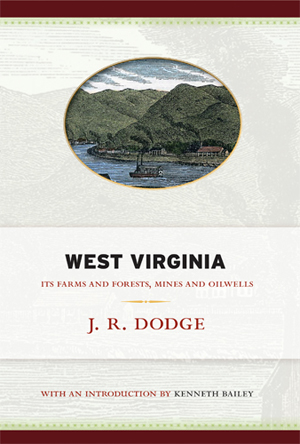

West Virginia

J.R. Dodge
Introduction by Kenneth R. Bailey

October 2011
304pp
HC/J  978-1-935978-11-4
$24.99
PDF 978-1-935978-12-1
$24.99

Summary

West Virginia: Its Farms and Forests, Mines and Oil-Wells celebrates the state of West Virginia. Originally published in 1865 as a series of studies on mineral resources, observations on agriculture, and interviews with businessmen, West Virginia details the industrial statistics, terrain, and population of a state during its infancy.

With no record of natural wealth or reported transactions of agriculture or geography prior to this overview, West Virginia sparked the curiosity of non-residents, enticing investment and settlement through descriptions of abundant natural resources and an agreeable industrial condition.

With an introduction by Kenneth Bailey, this new edition of West Virginia reminds us of the state’s alluring beginning and rich, yet often exploited development.

Contents

  • Introduction
  • Preface
  • CHAPTER I
  •   west virginia.—cradled in convulsion.—a sturdy race.—old jealousies.— reorganization.—new laws.—finances.—her boys in blue
  • CHAPTER II
  •   original settlement.—where virginians emigrate.—tobaccoand the blue laws.—lands.—the “tomahawk right.”—how thepioneers lived.—getting married.—progress.—population.
  • CHAPTER III
  •   location.—value of lands.—stock growing.—fertility.—no waste areas.— comparison with maryland, minnesota, andnew hampshire.
  • CHAPTER IV
  •   climate.—altitude.—temperature.—rain-fall.—salubrity.—scenery.
  • CHAPTER V
  •   topography and statistics of counties.—the valley group.
  • CHAPTER VI
  •   survey of counties continued.—the mountain group.
  • CHAPTER VII
  •   survey of counties continued.—the “panhandle.”
  • CHAPTER VIII
  •   survey of counties continued.—the river district.
  • CHAPTER IX
  •   survey of counties continued.—the kanawha valley.
  • CHAPTER X
  •   survey of counties continued.—the southern group.
  • CHAPTER XI
  •   survey of counties continued.—the central group.
  • CHAPTER XII
  •   statistics of production.
  • CHAPTER XIII
  •   internal improvement.—roads and turnpikes.—slackwaternavigation.—ohio and chesapeake canal.—baltimore and ohio railroad.—other railroads.
  • CHAPTER XIV
  •   mineral wealth.—coal.
  • CHAPTER XV
  •   iron. — salt.—limestone.—other minerals.
  • CHAPTER XVI
  •   petroleum.—its wide distribution.—discovery in west virginia.
  • CHAPTER XVII
  •   how originated.—popular and unpopular theories.
  • CHAPTER XVIII
  •   where found.—how to find it.
  • CHAPTER XIX
  •   uses.—quantity used.
  • CHAPTER XX
  •   well boring.—oil distillation.—refining.
  • CHAPTER XXI
  •   the era of oil wells.—the burning springs district.—the little kanawha.
  • CHAPTER XXII
  •   the hughes’ river region.—oil run of goose creek.—horseneck and cow creek.
  • CHAPTER XXIII
  •   the central and northern oil region.
  • CHAPTER XXIV
  •   the great kanawha oil basin.—the valleys of the guyandotte and big sandy.
  • CHAPTER XXV
  •   petroleum companies of west virginia.
  • CHAPTER XXVI
  •   petroleum prospects.

Author

Jacob Richards Dodge (1823–1902) was born in New Boston, NH. He was the first statistician for the US Department of Agriculture. When he began his work he had one clerk, and when he retired in 1893, there were sixty. He became known for his ability in gathering and presenting statistics. The government sent him on two trips to Europe to observe how other countries gathered data and to share his knowledge. He was given responsibility for compiling agricultural statistics for the Tenth Census in 1880, and in 1889 he was recognized by the international community of statisticians when he received a gold medal at the Paris Exposition for his illustrations of agricultural statistics. After retiring, Dodge became an editor of the Country Gentleman and wrote numerous articles and books. He died at age eighty at Nashua, NH.

Kenneth R. Bailey is professor emeritus at West Virginia University Institute of Technology, where he served as dean of the College of Business, Humanities and Sciences.
EmailFacebookInstagramPinterestTwitter

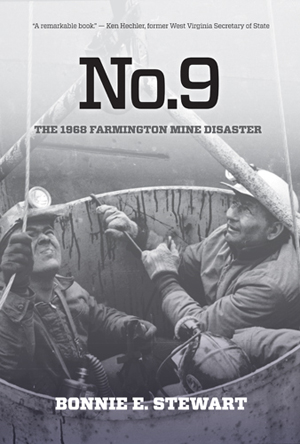
No.9: The 1968 Farmington Mine Disaster

No.9

Bonnie E. Stewart
Cover Photo by Bob Campione

November 2011
288pp
PB 978-1-933202-77-8
$22.99
PDF  978-1-935978-22-0
$27.99
PDF (120 Days)
$20.00

Purchase the Kindle Edition at Amazon


Summary

Ninety-nine men entered the cold, dark tunnels of the Consolidation Coal Company’s No.9 Mine in Farmington, West Virginia, on November 20, 1968.  Some were worried about the condition of the mine. It had too much coal dust, too much methane gas. They knew that either one could cause an explosion. What they did not know was that someone had intentionally disabled a safety alarm on one of the mine’s ventilation fans. That was a death sentence for most of the crew. The fan failed that morning, but the alarm did not sound. The lack of fresh air allowed methane gas to build up in the tunnels. A few moments before 5:30 a.m., the No.9 blew up. Some men died where they stood. Others lived but suffocated in the toxic fumes that filled the mine. Only twenty-one men escaped from the mountain.

No.9: The 1968 Farmington Mine Disaster explains how such a thing could happen—how the coal company and federal and state officials failed to protect the seventy-eight men who died in the mountain. Based on public records and interviews with those who worked in the mine, No.9 describes the conditions underground before and after the disaster and the legal struggles of the miners’ widows to gain justice and transform coal mine safety legislation.

Contents

    1. Introduction
    2. Good Night, Dad
    3. Dangerous History
    4. How Such Things Happen
    5. Rules of Survival
    6. A Beautiful Mine
    7. Methane Madness
    8. Dry and Dusty
    9. Warning Signs
    10. The Last Shift
    11. The Disaster Hits Home
    12. A Paralyzed Community
    13. Bungled Investigation
    14. Widows and Wildcat Strikes
    15. Body Production
    16. In Search of Justice
    17. Three More Men
    18. Hidden Evidence
    19. Ungodly Work
    20. Inundated by Death
    21. Who Can Stop Us?
    22. Business Is Business
    23. Widows’ Last Stand
    24. Acknowledgments
  • Appendices
    1. U.S. Coal Mine Deaths 1900-2009
    2. Victims of the No.9 Disaster Nov. 13, 1954
    3. Victims of the No.9 Disaster Nov. 20, 1968
    4. Chronology of Disasters and Federal Laws
    • Notes
    • Glossary
    • Bibliography
    • Index
    • About the Author
  • Photographs
    • Emilio Megna and Family
    • Frank Matish and Family
    • Mine Goats
    • Nails Illegally Driven through Shuttle Car Trailing Cable
    • Continuous Mining Machine
    • Methane Check
    • No.1 Fan Shaft and No.9 Preparation Plant
    • No.9 Preparation Plant
    • Shuttle Car
    • Coal Miners in Locomotive
    • Smoke from Llewellyn Portal on November 20, 1968
    • Gary Martin and Bud Hillberry in Rescue Bucket
    • Media Briefing in Consolidation Coal’s Company Store
    • Frank Matish
    • Pregnant Wife of Trapped Coal Miner
    • Woman Waiting for News
    • Red Cross Volunteers
    • Tony Boyle, UMWA President
    • William Poundstone, Consolidation Coal Executive Vice President
    • Bill Evans, Fairmont Times Editor
    • Letters to Mary Matish
    • Widows in Charleston
    • Workers Unseal Fan Shaft
    • Recovery Crew
    • Sara Kaznoski and Mary Matish
    • Uprooted Railway Tracks in Mine
    • Jeep Swept off Mine Railway
    • Larry Layne and Inspectors
    • John Brock and Recovery Team
    • David Mainella, Mine Foreman
    • Fallen Roof in No.9 Mine
    • John Toothman’s Possessions
    • Debris-covered Machine after Explosions
    • Families of Miners Killed
    • John Toothman’s Grave
    • Memorial to No.9 Disaster Victims
  • Maps
    • The No.9 Mine in 1954
    • Origin of 1954 Explosion
    • Central Marion County, West Virginia
    • Consolidation No.9, 1968
    • Consolidation No.9, 1Right-6North
    • Consolidation No. 9, 3Right-7North
    • Consolidation No.9, 4Right-8North
    • Consolidation No.9, 5Right-8North
    • Consolidation No.9, Llewellyn Run Shaft
    • Consolidation No.9, 3Right-7South
    • Consolidation No.9, 6Right-7South

Author

Bonnie E. Stewart  is an investigative reporter covering the environment for EarthFix at Oregon Public Broadcasting. Before moving to Portland, she taught journalism at West Virginia University, where she earned tenure and the rank of associate professor. She spent most of her reporting career at the Indianapolis News and the Indianapolis Star and reported in California for the Press-Enterprise in Riverside and was a copyeditor for the Business Journal Serving Greater Sacramento. She earned a master’s degree in English from California State University and earned a George Polk Award for metropolitan reporting and the National Society of Professional Journalists’ Sigma Delta Chi Award for Public Service.

Reviews

“Riveting. Chilling. Revealing. The story of Farmington Mine No.9 belongs on everybody’s book shelf. Seventy-eight miners died during a disaster that rocked West Virginia’s coal fields forty-three years ago—propelling front page headlines across the USA and a trail of safety concerns across the globe. Bonnie E. Stewart, a brilliant investigative reporter and university professor, refused to let the headlines fade away. Hail her tenacity.”
Bob Dubill, former Executive Editor, USA TODAY

“Bonnie Stewart has written a remarkable book which deserves wide circulation. She has exhaustively researched all the documentary evidence, bolstered with scores of personal interviews. Her evidence proves without a shadow of doubt that the seventy-eight coal miners who lost their lives in the November 20, 1968, Farmington Mine Disaster were killed because management ignored repeated personal testimony by the Farmington miners that the mine would blow up unless dangerous methane and huge collections of explosive coal dust were curbed. Those miners who repeatedly pointed out these dangers were humiliated for their efforts, and management in its greed for the almighty dollar put on intense pressure for increased production, even disabling alarm and warning systems. This book also provides fuel for those protesting mountain-top removal, by proving that the pressure for more coal must not over-ride the health and safety of human beings.”
Ken Hechler, former Secretary of State, West Virginia

“With seventy-eight dead and nineteen never recovered, the sheer magnitude of the Farmington mine disaster focused national attention on mine safety deficiencies and led to the enactment of the first major corrective legislation in several generations. In the wake of 2010’s Upper Big Branch disaster, Bonnie Stewart’s comprehensive account is a timely reminder that all mine explosions are preventable.”
Cecil E. Roberts, International President, United Mine Workers of America

EmailFacebookInstagramPinterestTwitter

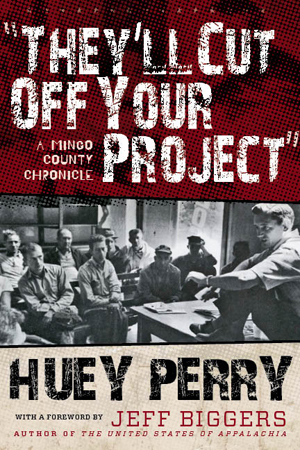
They’ll Cut Off Your Project: A Mingo County Chronicle

They'll Cut Off Your Project

Huey Perry
Foreword by Jeff Biggers

March 2011
288pp
PB  978-1-933202-79-2
$24.95
HC/J  978-1-933202-80-8
$74.95
PDF  978-1-933202-93-8:
$23.99

Summary

In old England, if a king didn’t like you, he would cut off your head. Now, if they don’t like you, they’ll cut off your project!

As the Johnson Administration initiated its war on poverty in the 1960s, the Mingo County Economic Opportunity Commission project was established in southern West Virginia. Huey Perry, a young, local history teacher was named the director of this program and soon he began to promote self-sufficiency among low-income and vulnerable populations. As the poor of Mingo County worked together to improve conditions, the local political infrastructure felt threatened by a shift in power. Bloody Mingo County, known for its violent labor movements, corrupt government, and the infamous Hatfield-McCoy rivalry, met Perry’s revolution with opposition and resistance.

In They’ll Cut Off Your Project, Huey Perry reveals his efforts to help the poor of an Appalachian community challenge a local regime. He describes this community’s attempts to improve school programs and conditions, establish cooperative grocery stores to bypass inflated prices, and expose electoral fraud. Along the way, Perry unfolds the local authority’s hostile backlash to such change and the extreme measures that led to an eventual investigation by the FBI. They’ll Cut Off Your Project chronicles the triumphs and failures of the war on poverty, illustrating why and how a local government that purports to work for the public’s welfare cuts off a project for social reform.

Author

Huey Perry, a native of Mingo County, WV, and the son of coal miner, was named Director, Mingo County Economic Opportunity Commission project at the age of twenty-nine. Later, he became the director of the Low-Income Housing Project for Tech Foundation of West Virginia Institute of Technology. He holds a BA from Berea College, KY, and an MA in Political Science from Marshall University, WV, and is an author, entrepreneur, teacher, student, volunteer, chairman, business owner, and farmer.

Jeff Biggers is the American Book award-winning author of The United States of Appalachia, and Reckoning at Eagle Creek: The Secret Legacy of Coal in the Heartland.

Reviews

“This is a wonderful account of the poverty wars of the 1960s as they unfolded in Mingo County, West Virginia. Inspired (and funded) by the federal war on poverty, the presumably apathetic Appalachian poor mobilized with gusto. And so did the challenged local power structure. Read this book to learn about this moment of American history.”
Frances Fox Piven, professor of political science and sociology, City University of New York, and author of Poor People’s Movements: How They Succeed, Why They Fail

“Huey Perry’s account of the War on Poverty in West Virginia is a classic. Nothing I have read gives such an insider’s account of both of the promise of LBJ’s initiative, and the way this hope was largely subverted by state and local politicians and coal companies. The book is, as well, a quirky, funny page-turner. I was hugely indebted to this book while writing my novel The Unquiet Earth. WVU Press is to be commended for keeping this important account available both to historians and the general public.”
Denise Giardina, author Storming Heaven and The Unquiet Earth

Praise for the first edition:

“Perry’s story, told simply and without polemics, shows how hard it is to do something that seems simple—get funds into the hands of the poor.”
Edward Magnuson, Time magazine

“This book is one of those unexpected delights that comes along every once in a while, but not often enough.”
 New Republic

EmailFacebookInstagramPinterestTwitter

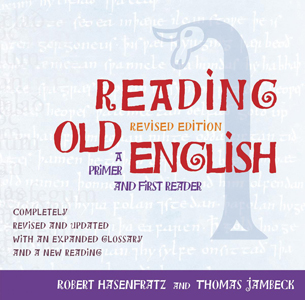
Reading Old English: A Primer and First Reader, Revised Edition

Reading Old English

Edited by
Robert Hasenfratz and
Thomas J. Jambeck

January 2011
578pp
PB  978-1-933202-74-7
$44.95


Summary

Revised, Updated, and Expanded!

With the immersion method dominating contemporary language learning, the knowledge of traditional grammar is at a low ebb, creating real barriers to any student wanting to learn dead or historical languages. This revised edition of Reading Old English aims to equip readers (advanced undergraduates, graduate students, and autodidacts) with the necessary tools to read the oldest recorded forms of the English language by explaining key language features clearly and methodically, without dumbing down or simplifying any of the core grammatical concepts. It includes a number of helpful exercises, a variety of interesting and unusual Old English texts to translate, as well as appendices covering the basics of traditional grammar and sound changes in Old English, along with an introduction to poetic structure.

Contents

  • PREFACE
  • HOW TO USE THIS BOOK
  • ACKNOWLEDGMENTS
  • ABBREVIATIONS
  • CHAPTER ONE (Old English Alphabets and Pronunciation)
    • Lesson One: Old English Alphabets
      • A Crash Course in Anglo-Saxon Paleography
    • Lesson Two: Pronunciation
      • The Briefest Possible Guide to Pronouncing Old English
      • Detailed Description of Old English Pronunciation
      • General Guidelines
        • Vowels
        • Old English/Modern Vowel Equivalents
        • International Phonetic Alphabet
        • Vowels and Diphthongs
        • Consonant Sounds
          • Voice
          • Classifying Consonants
          • Stops
          • Fricatives
          • Affricates
          • Liquids
          • Semivowels
          • Nasals
        • Old English Consonants
      • Exercise 1.9.1: Pronouncing OE Vowels
      • Exercise 1.9.2: Pronouncing OE Diphthongs
      • Exercise 1.9.3: Pronouncing OE Consonants
      • Exercise 1.9.4: IPA Exercise
      • Exercise 1.9.5: Pronounciation Practice
  • CHAPTER TWO (Getting Started: Nouns)
    • Lesson One: Nouns
      • Anatomy of a Sentence
      • What the Endings Do
      • Gender
      • Ælfric on the Concept of Gender
      • A Few Tips
      • The Definite Article (the)
      • Indefinitely (The Indefinite Article)
      • Pronoun Preview
    • Lesson Two: Main Noun Groups
      • Ælfric on Nouns
      • Regular Masculines
      • Regular Feminines
      • Regular Neuters
        • Short and Long Stems
        • Looking Up
          • Syncopate!
          • Dæġ / Dagas Alternation
        • O-Wo-Jo, A-Wa-Ja Stems
        • Exercise 2.1: Identifying Short and Long Stems
    • Lesson Three: The Concept of Case
      • Nominative
      • Accusative
      • Genitive
      • Dative
      • Instrumental
      • Ælfric on the Concept of Case
      • Exercise 2.2: Understanding Case
    • Exercise 2.3: Getting the Grammar Right
    • Reading II: Practice Sentences
      • Vocabulary for Reading
    • Lessons Learned
  • CHAPTER THREE (“Weak” Nouns and Regular Verbs)
    • Lesson One: Weak Nouns
      • Spotting Weak Nouns
      • Masculine Weak Nouns
      • Feminine Weak Nouns
      • Neuter Weak Nouns
      • Summary of Weak Noun Endings
      • Exercise 3.1: Understanding Case and Weak Nouns
    • Lesson Two: Weak Verbs
      • Ælfric on Verbs
      • Principal Parts of OE Weak Verbs
      • Verb Categorization
      • Classes of Weak Verbs
      • Weak Verb Endings (Conjugations)
        • Mood
          • Indicative
          • Imperative
          • Subjunctive
      • Weak Verbs of Class I
        • Collapsed Endings
        • Another Infinitive
        • -ing Forms (Present Participles)
        • Sound Changes and Class I Weak Verbs
      • Weak Verbs of Class II
      • Distinguishing Weak I from Weak II
      • Exercise 3.2: Weak Verb Spotting
      • Reading III.i: The Gospel of Luke
        • Vocabulary for Reading
    • Reading III.ii: Exeter Book Riddle #82
      • Vocabulary for Reading
    • Lessons Learned
  • CHAPTER FOUR (Weak Verbs Class III and Irregular Verbs)
    • Lesson One: Weak Verbs, Class III
      • Weak Verbs Class III: habban, hycgan, libban and secgan
      • Timesavers
        • Genitive Objects
        • Contractions
      • Exercise 4.1: Learning Weak III Verbs
        • Vocabulary for Exercise
      • Exercise 4.2: More Reverse Translation
        • Vocabulary for Exercise
      • Distinctive Endings
    • Lesson Two: Unusual and Irregular Verb Forms
      • Preterite (Past)-Present Verbs
        • Important Preterite-Present Helping Verbs
        • Other Important Preterite-Present Verbs
      • Timesavers
        • Negatives
      • Preterite-Present Verb Conjugation
        • Let’s Shall
      • Some Irregularities: Anomalous Verbs
      • Timesavers
        • Time and Being (wesan vs. bēon)
        • Negatives
      • Anomalous Verbs: dōn, gān
        • willan, nyllan
      • Timesavers
        • I-Mutation
        • Implied Motion
      • Exercise 4.3: How to Stop Worrying and Live with Preterite-Present and Irregular Verbs
      • Exercise 4.4: Translation Exercise
        • Vocabulary for Exercise
    • Reading IV: Wonders of the East (1)
      • Vocabulary for Reading
    • Lessons Learned
  • CHAPTER FIVE (Learning How to Translate)
    • Step 1: Locating Clauses
      • Subordination
      • Exercise 5.1: Locating Clauses
    • Step 2: Finding the Complete Verb
      • Verbs with a Complex
      • Having and Being
      • Timesavers
        • Weorðan
        • Helpful verbs
      • Some Small Exceptions
      • Compounding the Problem
      • A Practice Run
      • Tenses
      • Accusative with Infinitive Constructions
      • Another Wrinkle
      • Exercise 5.2: Translating Accusative with Infinitives
        • Vocabulary for Exercise
      • Summary
      • Exercise 5.3: Finding the Complete Verb
    • Step 3: Finding the Subject
      • A Practice Run
      • Exercise 5.4: Finding the Subject
    • Step 4: Sorting Out the Rest
      • Find the Direct Objects
        • A Practice Run: The Search for Objects
      • The Dative Rule
      • The Genitive Rule
      • Exercise 5.5: Applying the Dative and Genitive Rules
        • Vocabulary for Exercise
      • A Practice Run
      • Pulling it All Together
    • Exercise 5.6: Sorting Out the Rest
      • Vocabulary for Exercises
    • Reading V: Wonders of the East (2)
      • Latin Original
      • Vocabulary for Reading
    • Lessons Learned
  • CHAPTER SIX (Adjectives and Adverbs, Prepositions)
    • Lesson One: Adjectives
      • Strong Adjectives
        • Timesavers
          • Adjectives Ending in –u
      • Strong and Weak Adjectives
      • Weak Adjectives
      • Exercise 6.1: Recognizing “Strong” and “Weak” Adjectives
        • Vocabulary for Exercise
      • Participles as Adjectives
      • Exercise 6.2: Participles as Adjectives
        • Vocabulary for Exercise
    • Lesson Two: Comparative and Superlative Forms
        • Ælfric on Adjectives
        • Comparative + Personal Ending
        • Superlatives
        • “Than” Marker
        • Comparative as Intensifier
      • Irregular Adjectives with Different Roots
      • Exercise 6.3: Recognizing Comparatives and Superlatives
        • Vocabulary for Exercise
    • Lesson Three: Adverbs
      • Ælfric on Adverbs
      • Irregular Forms
        • Comparative and Superlative Forms
        • Irregular Forms
      • Exercise 6.4: Distinguishing Adverbs from Adjectives
        • Vocabulary for Exercise
    • Lesson Four: Prepositions
      • Exceptional
      • Post-Positions
      • Either/Or Prepositions
      • Instrumental
      • Exercise 6.4: Prepositional Phrases
        • Vocabulary for Exercise
      • A Puzzle
    • Reading VI: Wonders of the East (3)
      • Latin Original
      • Vocabulary for Reading
    • Lessons Learned
  • CHAPTER SEVEN (Personal Pronouns, Reflexives, Relatives)
    • Lesson One: Personal Pronouns
      • First Person
      • Second Person
      • Third Person
      • Agreements and Disagreements
      • Ælfric on Pronouns
      • Timesavers
        • Definite Article as Pronoun
        • Reduced Endings
      • Exercise 7.1: Personal Pronouns
        • Vocabulary for Exercise
      • Possessive
        • Timesaver
          • Datives of Possession
    • Lesson Two: Reflexive Pronouns
      • Verbs which Require a Reflexive
      • Exercise 7.2: Possessive and Reflexive Pronouns
        • Vocabulary for Exercise
    • Lesson Three: Who/Which (Relative Pronouns)
      • Three Alternatives
        • Indeclinable Particle þe
        • A Definite Article + þe
        • A Definite Article Alone
      • Headless Sentences
      • Exercise 7.3: Relative Pronouns
        • Vocabulary for Exercise
      • Why?: Interrogative Pronouns
      • This and That: Demonstrative Pronouns
      • Miscellaneous Pronouns
      • Whatever, Whoever
    • Reading VII.i: Prognostics (1)
      • Vocabulary for Reading
    • Reading VII.ii: Monastic Sign Language
      • Vocabulary for Reading
    • Lessons Learned
  • CHAPTER EIGHT (Strong Verbs I)
    • Lesson One: Definitions
      • Strong Verb Classes
      • Class 1 Strong Verbs
      • Class 2 Strong Verbs
      • Class 3 Strong Verbs
      • Class 4 Strong Verbs
      • Exercise 8.1: Conjugating Strong Verbs
    • Lesson Two: Conjugation of Strong Verbs
      • bītan and bēodan
      • bindan and brecan
    • Lesson Three: Summary of Base Forms
      • Timesavers
        • Syncopation and Assimilation
      • Mutating Vowels
      • Exercise 8.2: Understanding Class 1-4 Strong Verbs
      • Exercise 8.3: Recognizing Syncopation, Assimilation, and I-Mutation
      • Exercise 8.4: Translation Practice
        • Vocabulary for Exercise
    • Reading VIII.i: Prognostics (2)
      • Vocabulary for Reading
    • Reading VIII.ii: From Vercelli Homily IX (1)
      • Vocabulary for Reading
    • Lessons Learned
  • CHAPTER NINE (Strong Verbs II)
    • Lesson One: Classes 5-7
      • Class 5 Strong Verbs
      • Class 6 Strong Verbs
      • Class 7 Strong Verbs
    • Lesson Two: Conjugation of Strong Verbs
      • sprecan and standan
      • hātan and gangan
    • Lesson Three: A Few Exceptions
      • Some Irregular Strong Verbs
      • biddan, licgan, steppan, and wēpan
      • Exercise 9.1: Understanding Class 5, 6, and 7 Strong Verbs
      • Exercise 9.2: Infinitives
      • Exercise 9.3: Translation Exercise
        • Vocabulary for Exercise
    • Reading IX: Vercelli Homily IX (2)
      • Vocabulary for Reading
    • Lessons Learned
  • CHAPTER TEN (Rarer Noun Forms)
    • -/e/ in the Nominative
    • Endings with –w-
      • Masculines
      • Neuters
      • Feminines
    • Feminine –jo- Stems
    • Foot-Feet (I-Mutation) Nouns
    • Mother/Father Nouns
    • U-Nouns
    • Abstract Feminine Nouns in -þu /-þo
    • Children Nouns
    • Noun Stems Ending in –þ
    • Nouns from Present Participles
    • I-stem Nouns
      • Masculine, Neuter
      • Feminine
    • Exercise 10.1: Translation
      • Vocabulary for Exercise
    • Exercise 10.2: Translation
      • Vocabulary for Exercise
    • Reading X: Vercelli Homily IX (3)
      • Vocabulary for Reading
    • Lessons Learned
  • CHAPTER ELEVEN (Contract Verbs, Impersonal Constructions)
    • Lesson One: Contract Verbs
      • Contract Verbs by Class
      • Conjugation of Contract Verbs
        • þēon and tēon
        • sēon and fōn
      • Exercise 11.1: Understanding the Forms of Contract Verbs
      • Exercise 11.2: Infinitives
      • Exercise 11.3: Translating Contract Verbs
        • Vocabulary for Exercise
    • Lesson Two: Impersonals
      • Exercise 11.4: Recognizing Impersonal Constructions
        • Vocabulary for Exercise
    • Reading XI: The Human Fetus
      • Vocabulary for Reading
    • Lessons Learned
  • APPENDIX ONE: A Basic Introduction to Traditional Grammar
  • APPENDIX TWO: Summary of Sound Changes
  • ADDITIONAL READINGS
    • The Old English Gloss to Ælfric’s Latin Colloquy
    • Four /Lives/ of St. Æðeldryð
      • Account of St. Æðeldr ð in Bede’s Ecclesiastical History of the English People
      • Account of St. Æðeldr ð in the OE Translation of Bede’s Ecclesiastical History
      • The Brief Life of St. Æðeldr ð from the OE Martyrology
      • Ælfric’s Life of St. Æðeldr ð
      • Æðeldr ð in the News
    • A Quick Guide to Old English Poetry
    • The Wife’s Lament
  • MAIN GLOSSARY

Editors

Robert Hasenfratz and Thomas J. Jambeck are both Professors of Medieval Studies at University of Connecticut.

Reviews

"This is a book that will feed enthusiasm. Throughout the ten chapters in which the basics of Old English grammar are covered, cleverly chosen phrases and sentences of Old English gradually build a secure reading knowledge, leading the readers to translate confidently and idiomatically. Particularly impressive is the authors' willingness to confront readers with Latin."
Jane Roberts, Professor Emerita, King's College London and Senior Research Fellow, Institute of English Studies, University of London

"Other introductory texts seem reluctant to abandon the 'serious' philological and historical background to Old English, a reluctance that can have serious consequences for the subject's appeal to today's students. By focusing on the main goal of learning to translate Old English texts, students gain access to this fascinating body of literature much more quickly. Their confidence is bolstered, and as my experience has shown, many of them go on to learn more about the language and culture once they have mastered the basics. In short, this approach generates enthusiasm and a desire to learn, rather than stifling it."
David F. Johnson, Florida State University

EmailFacebookInstagramPinterestTwitter

Richard Kidwell Miller

Richard Kidwell Miller

Richard Kidwell Miller
Curated by John A. Cuthbert
January 2011
104pp
HC/J  978-0-975292-50-1
$29.95

Published by West Virginia University Libraries

Summary

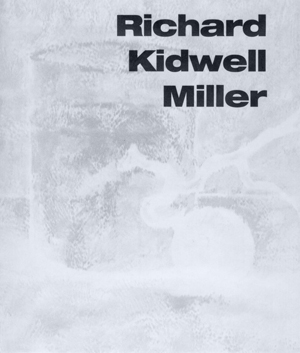
With striking contrasts, bold colors, and powerful textures and lines, Richard Kidwell Miller’s art is abstract, yet integrated and powerful, while sensuous.  Born in the coal-mining region of Fairmont, West Virginia during the Great Depression, Miller displayed artistic talent as a young boy, holding his first solo exhibition by the age of sixteen. As his artistic training progressed, his paintings took on an array of subjects and mediums. He explored realism, abstraction, collage, portraiture, still life and constructed works. The scale of his work varied as well, as he produced huge still life compositions that challenge the very nature of the subject and exquisitely layered canvas on canvas and wood on canvas structures that cross the border between traditional painting and relief sculpture.

In 2004, Richard Kidwell Miller’s work was displayed at West Virginia University. This lushly illustrated book encompasses that exhibit, as curator John A. Cuthbert narrates Miller’s development as a student, artist, and teacher. With over twenty-five beautifully reproduced paintings, spanning over forty years of artistic development, this collection brings attention to the life and work of a contemporary artist.

Contents

  • Foreword
  • Richard Kidwell Miller: "What's Next?"
  • Catalogue of the Exhibition
  • Artist's Statment
  • Appendices
  •   Selected Exhibitions
  •   Selected Collections
  •   Awards
  • Bibliography
  • Acknowledgements

Author

Richard Kidwell Miller has exhibited work in countless museums, including The Phillips Collection, Hirshhorn Museum and Sculpture, the Whitney Museum, and the Smithsonian Institution. He is a recipient of the National Society of Arts and Letters Lifetime Achievement Award. 

John A. Cuthbert is Curator of the West Virginia and Regional History Collection and Director of the West Virginia Historical Art Collection at the West Virginia University Libraries.

Reviews

“This is the first book to describe Miller’s oeuvre and it does so handsomely.”
E.H. Teague, University of Oregon

EmailFacebookInstagramPinterestTwitter

An Appalachian New Deal: West Virginia In the Great Depression

An Appalachian New Deal

Jerry B. Thomas

March 2010
332pp
PB  978-1-933202-51-8
$28.99
PDF  978-1-933202-97-6
$23.99
PDF  (120 Days)
$10.00


Summary

In this paperback edition of An Appalachian New Deal: West Virginia in the Great Depression, Jerry Bruce Thomas examines the economic and social conditions of the state of West Virginia before, during, and after the Great Depression. Thomas’s exploration of personal papers by leading political and social figures, newspapers, and the published and unpublished records of federal, state, local, and private agencies, traces a region’s response to an economic depression and a presidential stimulus program. This dissection of federal and state policies implemented under Franklin D. Roosevelt’s New Deal program reveals the impact of poverty and hardship upon political, gender, race, and familial relations within the Mountain State—and the entire nation. Through An Appalachian New Deal, Thomas documents the stories of ordinary citizens who survived a period of economic crisis and echoes a message from our nation’s past to a new generation enduring financial turmoil and uncertainty.

Contents

  • Preface to the Paperback Edition
  • Acknowledgments
  • Introduction
  • 1. On the Eve
  • 2. Drought and Depression
  • 3. A Search for Order
  • 4. A “Jump in the Dark”
  • 5. The Blue Eagle
  • 6. A Failed Experiment in Federal Relief
  • 7. Reshaping the Welfare System
  • 8. The New Deal and Mountain Agriculture
  • 9. The New Deal and Families in Distress
  • 10. Reluctant New Dealers
  • Epilogue: From Nearly Perfect to Almost Heaven
  • Notes
  • Bibliography
  • Index
  •  

Author

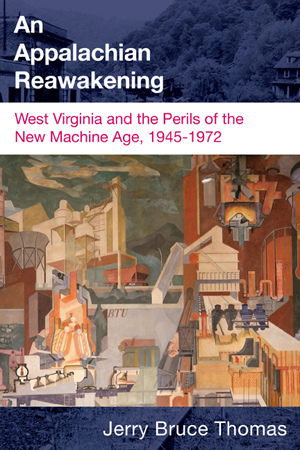
Jerry Bruce Thomas is professor emeritus of history at Shepherd University. He earned a BA in political science at West Virginia University and, after Peace Corps service in the Dominican Republic, an MA and PhD in history from the University of North Carolina at Chapel Hill. In addition to An Appalachian New Deal, he is the author of An Appalachian Reawakening: West Virginia and the Perils of the New Machine Age, 1945–1972 (also available from West Virginia University Press).

Reviews

“ . . . Thomas’s account of the Great Depression in West Virginia is a welcome edition to the historiography both of the New Deal and of Appalachia.”
Thomas Kiffmeyer, associate professor of history, Morehead State University

“This book is well-researched, well-written, and gives readers unparalleled insight into the New Deal in West Virginia from the perspectives of state leaders, federal officials, and the state’s poor.”
Richard D. Starnes, Creighton Sossomon Associate Professor and Department Chair, Western Carolina University

“Thomas makes a persuasive case that West Virginia, with its chronic poverty, is an important laboratory for examining state and national efforts to end the Great Depression.”
Douglas Carl Abrams, professor of history and chair of the Department of Social Studies Education, Bob Jones University

“Amazing as it may seem, there is no history of the New Deal in West Virginia. With its excellent research and clear narration, this book will stand as the major work on the New Deal in West Virginia for a long time to come. . . . A mature work of scholarship.”
Ronald L. Lewis, professor emeritus of history, West Virginia University

“An important book that anyone interested in Appalachia’s twentieth-century history will want to read. Thomas provides a gracefully written account of a crucial decade in West Virginia history.”
John Alexander Williams, professor of history, Appalachia State University

EmailFacebookInstagramPinterestTwitter

A Strike Like No Other Strike: Law and Resistance during the Pittston Coal Strike of 1989–1990

A Strike Like No Other Strike

Richard A. Brisbin, Jr.

August 2010
350pp
PB  978-1-933202-76-1
$24.95

Summary

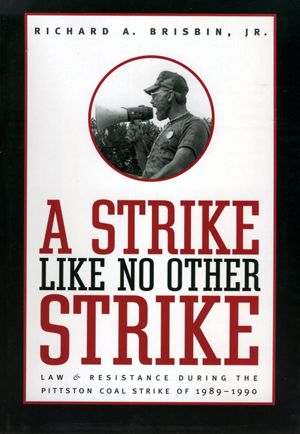
The miners’ strike against Pittston Coal in 1989–1990, which spread throughout southwestern Virginia, southern West Virginia, and eastern Kentucky, was one of the most important strikes in the history of American labor, and, as Richard Brisbin observes, “one of the longest and largest incidents of civil disorder and civil disobedience in the United States in the second half of the twentieth century.” The company aggressively sought to break the strike, and workers and their families used a variety of tactics—lawful and unlawful—to resist Pittston’s efforts as the situation quickly turned ugly.

In A Strike like No Other Strike: Law and Resistance during the Pittston Coal Strike of 1989–1990, Richard Brisbin offers a compelling study of the exercise of political power. In considering the legal significance of the strike, Brisbin asks the larger question of whether even extreme transgression or resistance can fracture the “imagined coherence of the law.” He shows how each party in the strike invoked the law to justify its actions while attacking those of the other side as unlawful. In the end, both sides lost; although the US Supreme Court ultimately ruled in favor of the union, most of the strikers faced elimination of their jobs and an ongoing struggle for pensions and health benefits.

Contents

  • List of Illustrations
  • Preface and Acknowledgements
  • 1. A Tale of a "Strke like No Other Strike"
  • 2. The United Mine Workers and the Legal Contitution of American Labor
  • 3. The Legal Complex and Union Power
  • 4. Union and Management Define Their Stratedgies
  • 5. The Union Plans a Social Drama
  • 6. The Union Stages a Social Drama
  • 7. Lawbreaking
  • 8. Competing Exlanations of Resistance
  • 9. The Domestication of Resistance
  • 10. Resistance and the Lives of the Strikers
  • 11. The Power of Law and the Effectiveness of Resistance
  • Notes
  • References
  • Index

Author

Richard A. Brisbin Jr. is an associate professor of political science at West Virginia University. He is the author of Justice Antonin Scalia and the Conservative Revival.

Reviews

“Richard Brisbin’s excellent book sits at the intersection of law, political science, sociology, and history . . .  Brisbin is utterly convincing in his conclusion that the miners were in the end reduced to Arendtian animals laborans who worked only for sustenance rather than for the joy of creation and integration into a community.”
Julie Novkov, Law and Politics Book Review

“The book brims with insights into the history of the Pittston strike and into a miner's way of life . . . [Brisbin] describes hanging out at the picketing shacks, protests led by Jesse Jackson and Cesar Chavez, militant priests and nuns, and mine takeovers, complete with dancing and live country music.”
Henry S. Cohn, The Federal Lawyer

“Brisbin does an admirable job not only of conveying the historical events and their context, but also of making explicit the evolution and development that occurred on both sides of the struggle.”
Gordon Simmons, Appalachian Heritage

“It is clear that Brisbin’s personal experience with the 'American worker' informs his interpretation of the Pittston coal strike, and he leaves the reader at once inspired and dismayed by the subjectivity of American law.”
Virginia Libraries

“Gives fascinating insights for those involved in directing collective bargaining activities, both as managers and union activists.”
Michael Wald, Monthly Labor Review

“This excellent study describes the 1989–1990 Pittston coal strike . . . Brisbin avoids offering a traditional narrative in favor of a deeper analysis of the dispute that explores the strike’s significance as an exercise in civil disobedience and oppositional culture . . . Brisbin is to be commended for dissecting what happened here with an eye toward its wider implications.”
Richard P. Mulcahy, Journal of American History

“A comprehensive account and analysis of the lengthy Pittston coal strike of 1989—1990, focusing on the effects of the law and its apparatus on the actions of Pittston Coal, the United Mine Workers union, judges, and the miners themselves.”
Choice

“This book tells the story of a very important but little known recent episode in the history of labor and its unfortunate fate at the hands of corporate power. Brisbin presents a powerful but balanced interpretive account informed by cutting edge theory and compelling judgment. I know of no other work that better develops theoretically and illustrates empirically the complex, multi-dimensional workings of law as does Brisbin’s study of the United Mine Workers’ tragic battle with Pittston.”
Michael McCann, University of Washington

“A useful read for any student of the Appalachian region.”
Mark S. Myers, West Virginia History

“Richard Brisbin has done a service in putting together this book . . . a welcome new resource.”
Fran Ansley, Journal of Appalachian Studies

EmailFacebookInstagramPinterestTwitter