
- Active Series
- Books
- Online
- Journals
- eBooks
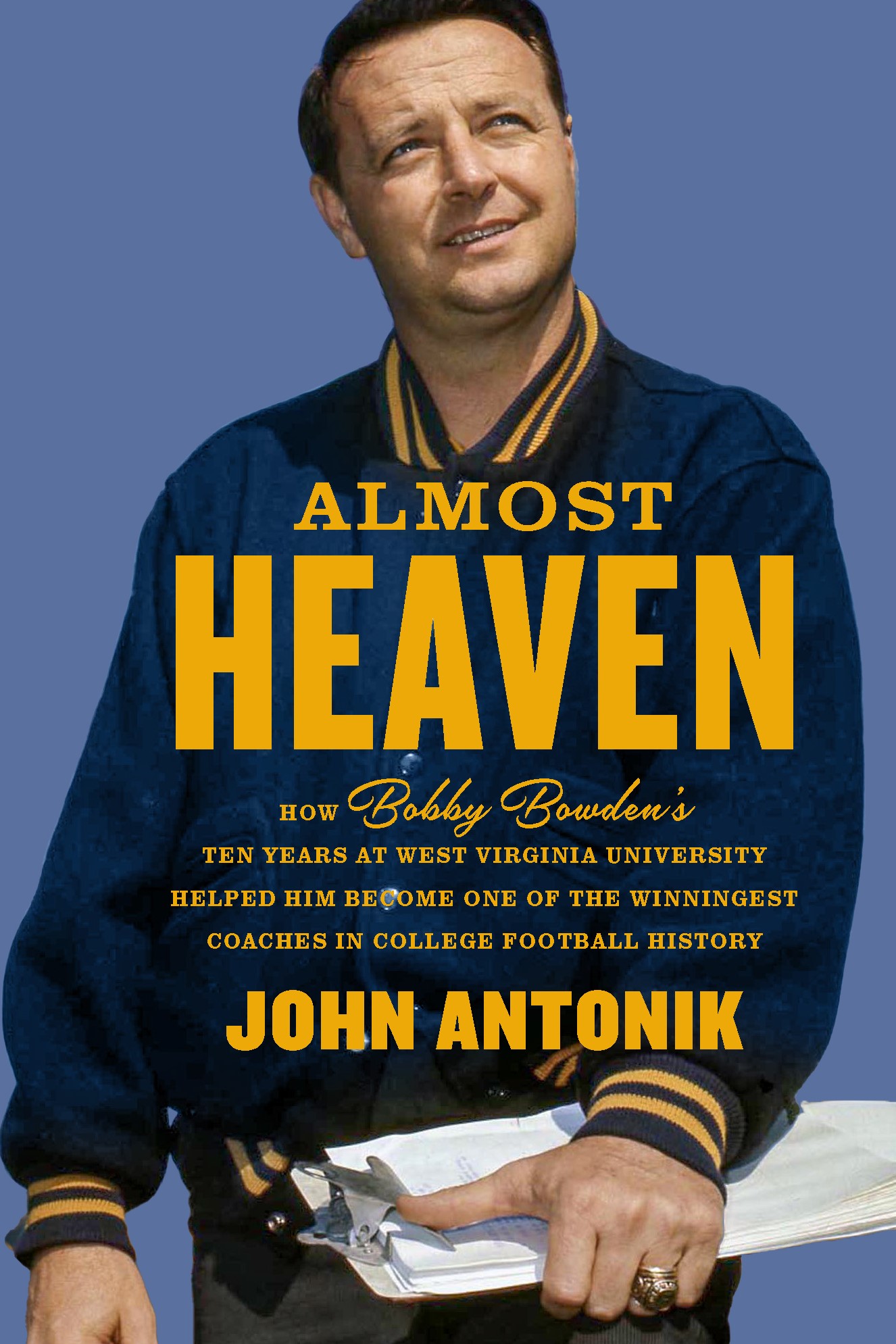
Almost Heaven
Petroforms

Helen Kapstein
Energy and Society Series
November 2025
182pp
PB 978-1-959000-56-3
$23.99
eBook 978-1-959000-57-0
$23.99
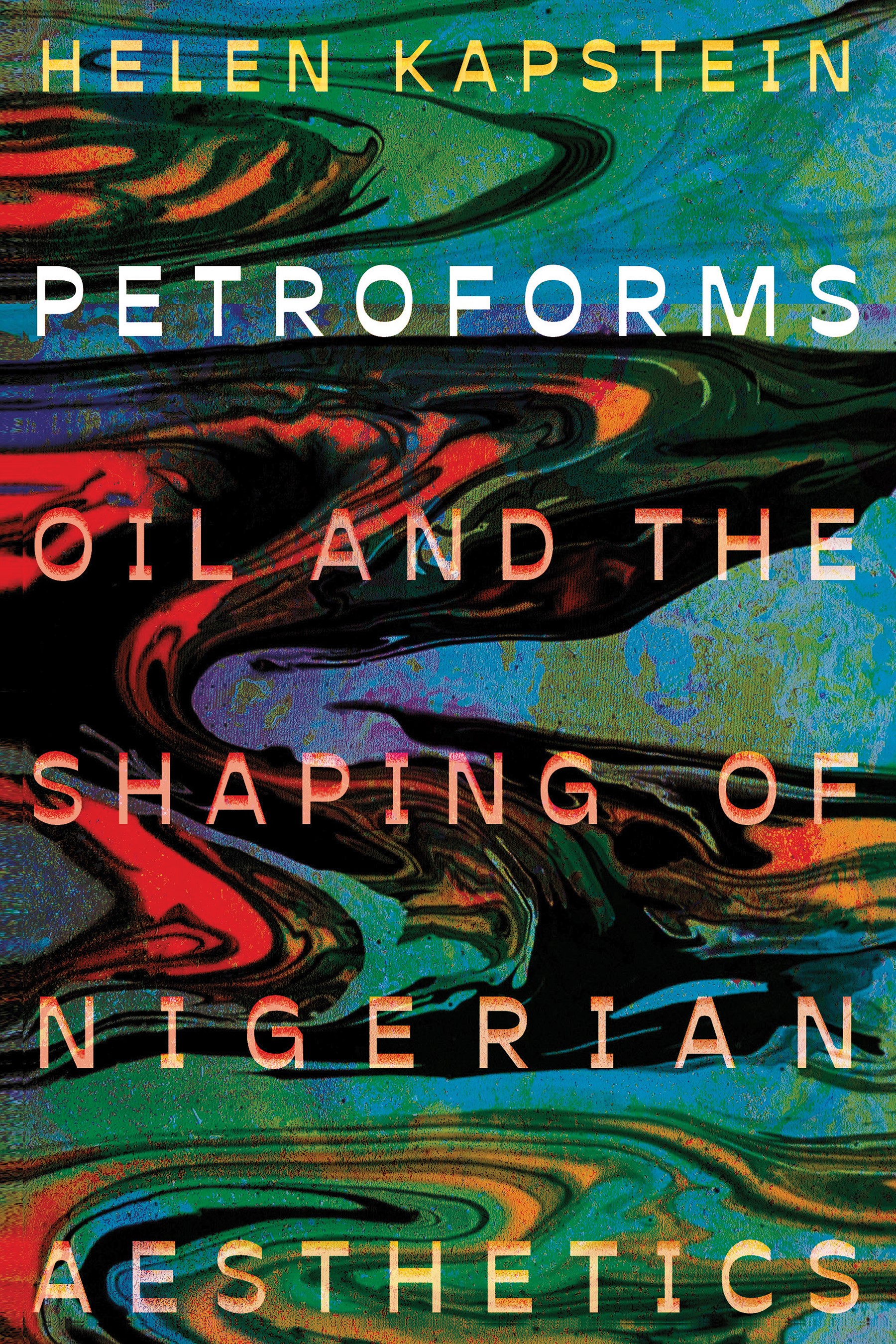
Petroforms
Oil and the Shaping of Nigerian Aesthetics
Summary
Petroforms contributes a much-needed theory of form and genre to the cutting-edge field of petrocriticism, itself an offshoot of developments in postcolonial ecocriticism. Studies of resource fiction and inquiries in the energy humanities have recently taken their rightful place as necessary reflections on the role of the literary imagination in intervening in the Anthropocene as we find ourselves precariously placed in the face of a fossil fuel crisis, climate change, and mass extinctions.
With Petroforms, Helen Kapstein undertakes close readings of a range of Nigerian aesthetic forms: short stories, romance novels, documentary film, the “Nollywood” film industry, fine art sculpture, and poetry. She uses these forms to argue that the demands of paying attention to petroleum extraction, production, consumption, and distribution in the creation of resource fictions must necessarily alter and affect conventional forms and structures. What results is a new set of genre-bending forms, like documentary film that we can read as horror, in response to the forceful and fluid demands of the petroleum industry and its master narrative.
Nigeria is one of the world’s largest oil-producing nations, in which that production is concentrated in the Niger Delta, resulting in a local environment that has been steadily degraded by oil spills, flares, pollution, and contamination, and a local culture shaped by false scarcity in a space of abundance, murderous politics, and escalating violence. At the same time as the Niger Delta grounds Kapstein’s argument in its own political realities and cultural responses, Nigeria’s participation in a global economy of petrodependency allows her theory of petroforms to be extended and applied more generally.
What Peter Hitchcock calls “oil’s generative law” is that it is “everywhere and obvious, it must be opaque or otherwise fantastic.” He means the coexistence of oil’s taken-for-granted qualities is something constitutive of every level of everyday life and its spectacular displays—gushers, spills, explosions. Oil’s nature, the fact that it is everywhere, unctuously oozing into every corner of everyday life, means that it constantly spills over out of our existing forms, genres, and systems, demanding accommodation. To try to contain it, we create new forms. Thus, a petroform is simultaneously reactionary (a necessary response to oil’s pressures, a by-product of the commodity itself) and resistant (an attempt at containment, at generating a retort to the very thing that shapes it). Each form figures oil and then configures and reconfigures itself in reaction to it.
Contents
List of Illustrations
Acknowledgments
Introduction
1. Crude Fictions
2. Petrofeminism
3. Petroart
4. Petrohorror
5. Petrocinema
6. Petrodrama
Conclusion
Works Cited
Author
Helen Kapstein is professor of English at John Jay College, The City University of New York. She is the author of Postcolonial Nations, Islands, and Tourism: Reading Real and Imagined Spaces (Rowman & Littlefield, 2017). Her work has appeared in Postcolonial Text, ISLE: Interdisciplinary Studies in Literature and Environment, and Safundi: The Journal of South African and American Studies. She holds a PhD in English and comparative literature from Columbia University.
Reviews
“Petroforms is a remarkable study of the manifold genres produced not merely by what we in the energy humanities term petromodernity; it attends to those ‘crude’ genres that arise organically from the extraction, refinement and distribution of petroleum within global markets. The central argument—that oil engenders its own forms, because it exceeds the ontological containers available through conventional literary-critical protocols—is one that has often been made in the context of reader reception but not necessarily in terms of artistic production.”
—Stacey Balkan, associate professor of Environmental Humanities at Florida Atlantic University, is the author of Rogues in the Postcolony: Narrating Extraction and Itinerancy in India and coauthor of Oil Fictions: World Literature and Our Contemporary Petrosphere
“Responding to the sense that oil encounters are difficult to capture in literature, Petroforms demonstrates how literary, filmic, sculptural, and pop-cultural forms from Nigeria stretch and change to represent oil. Helen Kapstein locates this formal stretching not only in documentaries and short stories that portray devastation in the Niger Delta but also in the other face of Nigerian oil: the romance––even the eroticism––of petromodernity for more privileged subjects in Lagos and beyond. Recognizing that petromodernity is classed and regionalized but also gendered, Kapstein foregrounds the ambivalent participation of Nigerian women as both protestors of oil extractivism and beneficiaries of petromodernity. Taking readers from short story to romance novel, sculpture, drama, and even sitcom, Petroforms illustrates the wide-ranging formal innovation prompted by Nigeria’s ongoing enmeshment with oil.”
—B. Jamieson Stanley, associate professor of English at the University of Delaware and author of Precarious Eating: Narrating Environmental Harm in the Global South
“[A]n urgent intervention into the cultural politics of energy, showing how Nigerian artists make visible and reckon with the costs, consequences, and contradictionsof life in oil zones.”
—Imre Szeman, coeditor of Power Shift: Keywords for a New Politics of Energy


The Keep

Henry T. Ireys and Priscilla M. Ireys
October 2025
302pp
PB 978-1-959000-52-5
$22.99
eBook 978-1-959000-53-2
$22.99
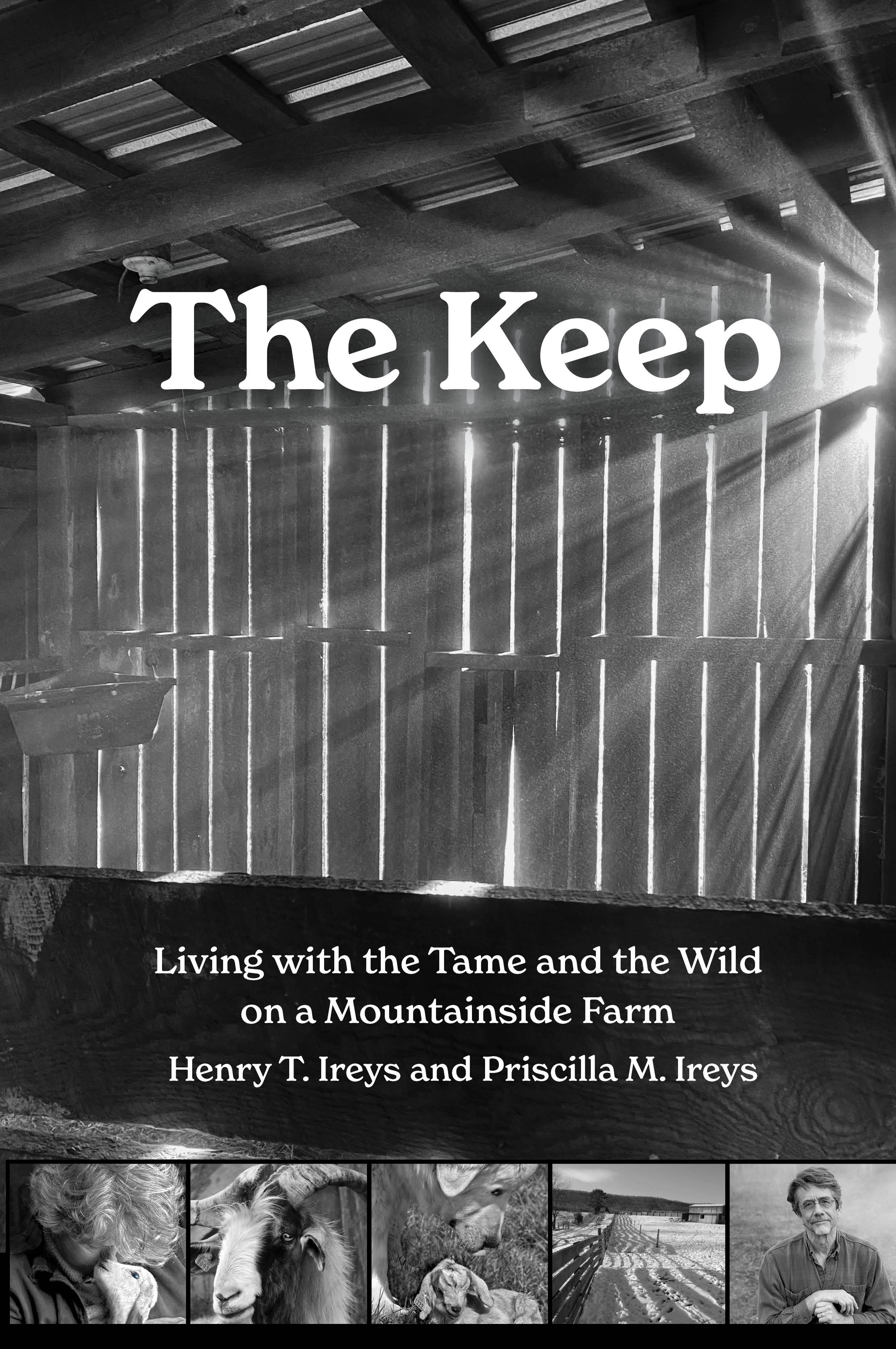
The Keep
Living with the Tame and the Wild on a Mountainside Farm
Summary
When a mid-life couple finds an old farm that promises refuge from hectic lives and encroaching illness, their world opens up to unexpected adventures: breeding heritage goats, hogs, and cattle; managing a half-dozen large guardian dogs; dealing with barn fires, rapacious logging, and the death of treasured animals. The farm and the surrounding forest also lead to surprising moments of beauty—from sublime sunsets and powerful connections with animals to an outpouring of help from neighbors.
Written separately by wife and husband with distinctly separate voices, the book’s essays illustrate different perspectives of life on a farm dedicated to the compassionate treatment of livestock and a deep appreciation of nature’s complexities. Priscilla embraces the intensity of loving animals; Henry explores the mysteries of living in a beautiful place. And, in telling their tales, the authors provide a glimpse into their own marriage—as complicated, improbable, and enduring as life itself. The Keep—the term for “the strongest or central tower of a castle, acting as a final refuge”—is a love letter to an unexpected place and adopted lifestyle.
Contents
Preface
Introduction
A Place to Love
Letter to Mom
Mud Between My Toes
Decisions
Tiny Tim
All that the Land Contains
Sid’s Twins
Mindful Meddling
The Dilemma of Loving Hogs
Surprises
Of These Mountains
Early Years
Hercules
Morels on the Mountain
Arnost and the Eagle
“Say What? No Way!”
Hog Gossip
The Duckness
Sex in the Pasture
Hat of Shame
From Power Take Off to Artificial Intelligence
Hard Times
Pedro
Death on the Farm
January 11, The Fire
January 12, The Fire
The Forgiving Land
The Old Oak
Gifts
Winter’s Wood
Unexpected Outcomes
Lucy
Izzy’s Bridge
Home Before Breakfast
Quiet Times
The Pond
On a Summer Breeze
A Fisher’s Solitude
Lovely October
Epilogues
The Near Final
Letter for Alice
Acknowledgements
Author
Henry T. Ireys has a forty-year career as a health policy researcher working for Vanderbilt University, Albert Einstein College of Medicine, and Johns Hopkins School of Public Health. He later became a senior researcher for Mathematica Policy Research in Washington, DC. He published numerous papers in health policy journals and, since his retirement, has been writing for The Hampshire Review about farming and the natural world. He holds a PhD from Case Western Reserve University. Priscilla M. Ireys attended the Pittsburg Institute of Art and FIT in New York. She designed and made stage clothes for country music stars such as Loretta Lynn. Under her own label, she sold expensive handmade scarves to Norstrom’s, Henri Bendel, and many high-end boutiques. She left the fashion industry after thirty years to focus on farming and the conservation of heritage breeds. She has written numerous stories for Small Farmer’s Journal. Together, Henry and Priscilla have lived on a farm in Hampshire County since 2001, tending a core herd of fifty Spanish and Savanna goats. The Keep is their first book together.
Reviews
“The Keep is honest and compelling storytelling told through the contrasting and complementarity of Priscilla’s and Henry’s individual voices. Priscilla has an intimate view of animal husbandry, while Henry is more prone to philosophizing; yet both are deeply engaged with the land, and both are thoughtful and lively storytellers. Neither shies away from complexities and challenges. In her accounts of raising goats and hogs, Priscilla captures both the necessary brutality and profound tenderness required for successful animal husbandry.”
—Arwen Donahue is the author of the graphic memoir Landings: A Crooked Creek Farm Year (Hub City, 2022) and the oral history collection This is Home Now: Kentucky’s Holocaust Survivors Speak (University Press of Kentucky, 2022). She lives on a farm in Kentucky.
“A delightful chronicle of a moment in time on a parcel in Appalachia. I enjoyed reading about this couple, their purchase of this land, the way they cared for it, raised a family on it, the hard work of raising goats, other interactions with the natural world and with their neighbors.”
—Gretchen Legler is the author of Woodsqueer: Crafting a Sustainable Rural Life (Trinity University Press, 2022); On the Ice: An Intimate Portrait of Life at McMurdo Station, Antarctica (Milkweed Editions, 2005); and All the Powerful Invisible Things: A Sportswoman’s Notebook (Milkweed Editions, 1995). She is professor of creative writing at the University of Maine Farmington. Legler holds a PhD in English and feminist studies and a master’s of divinity from Harvard Divinity School.


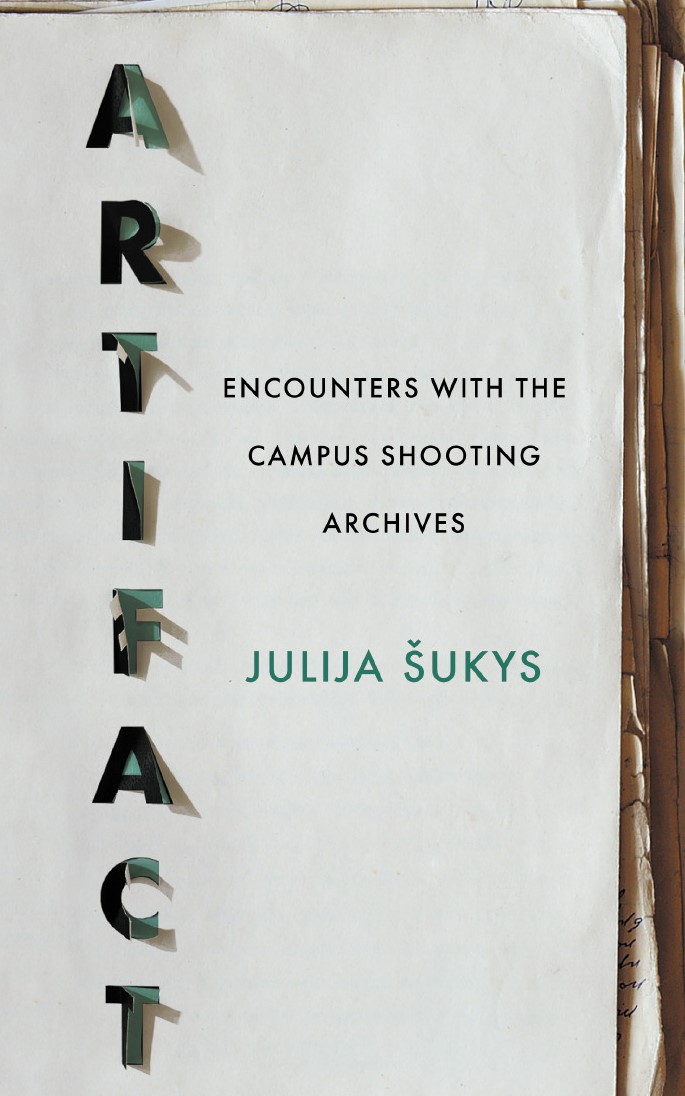
Artifact
Artifact
Encounters with the Campus Shooting Archives
Summary
Artifact is about the stories we tell ourselves after mass shootings. Each college campus shooting leaves a record: archival collections, monuments to the dead, government-led inquiries, internal university investigations, and lawsuits. Artifact: Encounters with the Campus Shooting Archives seeks to understand university and college campus shootings that involve students and faculty of those institutions. The book examines the aftermaths of such attacks by moving between university archives, memorials to victims, conversations with survivors, and beyond.
Julija Šukys examines a series of five North American university and college campus shootings between 1989 and 2015: the École Polytechnique in Montreal, Concordia University in Montreal, Virginia Tech, University of Alabama–Huntsville, and Umpqua Community College in Roseburg, Oregon. These attacks involved students and faculty as both victims and perpetrators—that is, all the shooters were either faculty members or (in one case, would-be) students of the institution where the killings took place.
Šukys arrives at each site long after the killings have taken place: by now, the teddy bears, flowers, and crosses have been cleared away. Prying journalists are long gone. She sorts through myriad objects left at makeshift memorial sites. She talks for hours with a professor who survived an attack only because her colleague’s gun jammed as it was pointed at her head. She wanders and documents the reconfigured buildings made unrecognizable after the horrors that occurred within them. She reads tedious court transcripts, officious government-commissioned reports, and a troubling memoir written by a shooter’s mother and sifts through the mathematics papers that one campus shooter publishes from his prison cell.
Artifact weighs what it means to live in a place where students and their teachers are gunned down on a seemingly regular basis. It asks how we can continue to learn, teach, and live when nothing changes in response to these deaths. It attempts to speak into silence, to look at the pain of those who have come through trauma, and to meet their gazes without platitudes or triumphalism. The result is a searching book about care, memory, forgiveness, and survival.
Contents
Acknowledgments
Scope and Contents
Box I: A Record of Violence
SERIES 1
Box II: 1989, L’École Polytechnique de Montréal (Montreal, QC)
Folder 1. Winter Storm
Folder 2. Monuments
Box III: 1992, Concordia University (Montreal, QC)
Folder 3. Trapped
Folder 4. Truthtellers
SERIES 2
Box IV: 2007, Virginia Tech (Blacksburg, VA)
Folder 5. Insiders/Outsiders
Folder 6. Root
Box V: 2010, University of Alabama (Huntsville, AL)
Folder 7. Vengeance Weapon
Folder 8. Forgiveness
SERIES 3
Box VI: 2015, Umpqua Community College (Roseburg, OR)
Folder 9. Timber Country
Folder 10. Bloom
Box VII: A Different Testimony
Notes
Works Cited
Index
Author
Julija Šukys is associate professor of English at the University of Texas, Austin, where she teaches the writing of memoirs, autobiographical writing, essays, and archival research methods. She is the author of Siberian Exile: Blood, War, and a Granddaughter’s Reckoning (University of Nebraska Press, 2017), Epistolophilia: Writing the Life of Ona Šimaitė (University of Nebraska Press, 2012), and Silence Is Death: The Life and Work of Tahar Djaout (University of Nebraska Press, 2007). Šukys holds a PhD in English from the University of Toronto.
Reviews
“But while despairing for change marks the concern for Artifact, despair is not the point. Šukys works through campus shootings to uncover the details of what happened, how it happened, even probing why it happened. Šukys digs into the archives of the event to find research, but also to secure the main motif of the book: If there is any hope that these shootings will stop, we can’t turn away from the situation. We need to dig deep into both the event and into the culture that allowed it to happen. The archives become a metaphor for how we might acknowledge, see, even experience in our own bodies, the causes and effects of these mass killings.”
—Nicole Walker, author of Processed Meats: Essays on Food, Flesh, and Navigating Disaster (Torrey House, 2021); Sustainability: A Love Story (Mad Creek Books, 2018); Egg (Object Lessons Series, Bloomsbury, 2017); and Micrograms (New Michigan Press, 2016). She is professor of English and MFA program director at Northern Arizona University.
“An elegant mixture of the personal and the historical. Šukys’s engaging journey invites the reader to feel the pull of the archive, and the many twists and turns of the search.”
—Philip Nel is author of How to Draw the World: Harold and the Purple Crayon and the Making of a Children’s Classic and is University Distinguished Professor of English at Kansas State University
Sukys


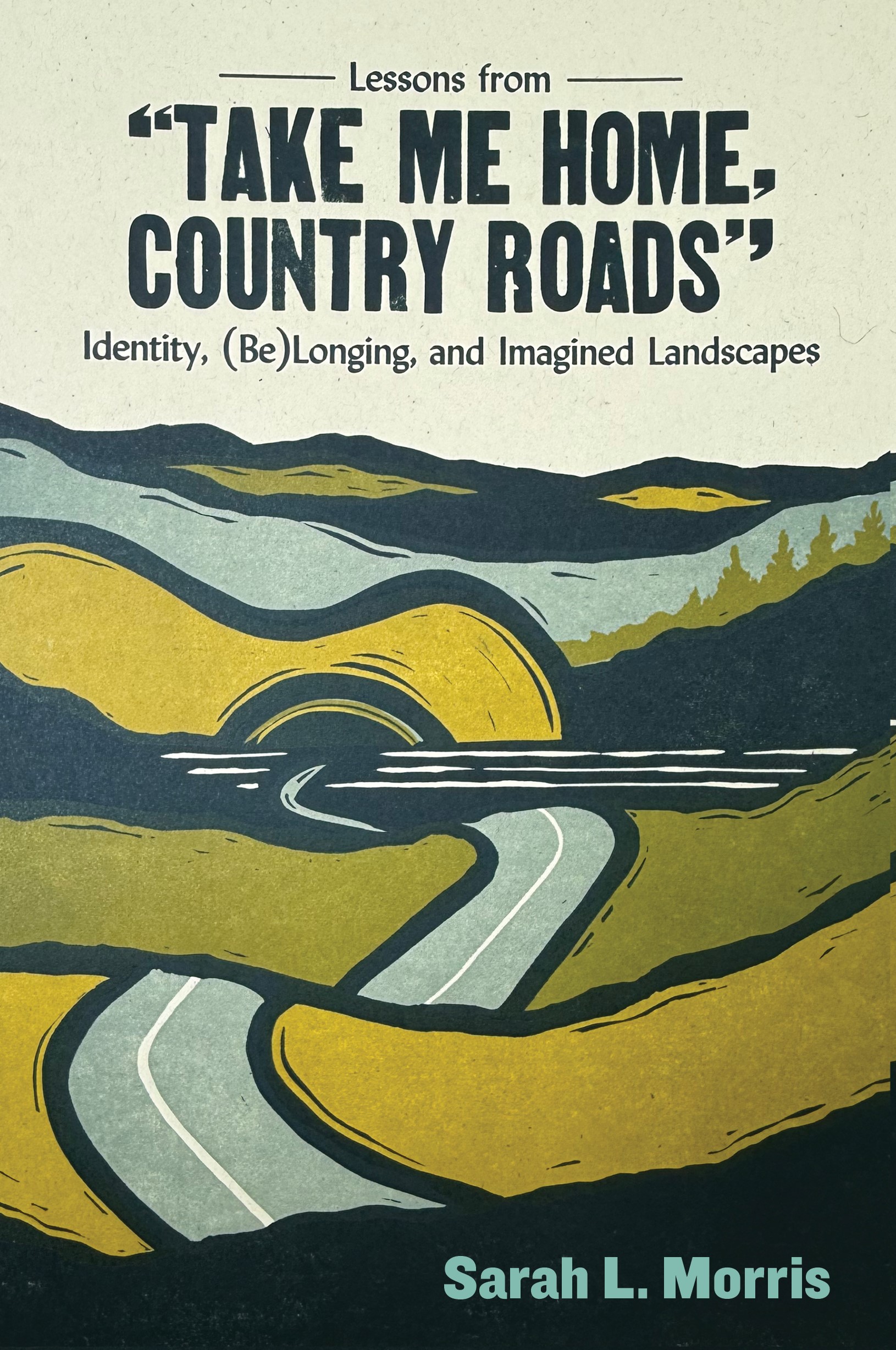
Lessons from "Take Me Home, Country Roads"
Identity, (Be)Longing, and Imagined Landscapes
Summary
You may have heard it at a football game, in an advertisement, or on the radio on a road trip far from home. You may have sung along on a rooftop in Thailand, at Oktoberfest in Belgium, or with a Japanese cover band. It may have moved you to dance at a wedding or cry at a funeral. Regardless of where it plays, the song “Take Me Home, Country Roads” is ubiquitous, unmistakable, universal. Written and recorded by Bill Danoff, Taffy Nivert, and John Denver in 1971, the song continues to resonate across cultures and audiences, carrying meaning beyond naming and inviting transformation for a range of rhetorical purposes in nearly 300 recorded English versions and in more than 20 languages.
This book examines “Country Roads” as it illuminates a universal sense of belonging to place even as it obscures the literality of the place it names. In examining “Country Roads” as anthem, text, artifact, and rhetoric, this work untangles ideas related to place, belonging, identity, and pedagogy. Sarah L. Morris uses the Welsh term hiraeth, which is an existential longing for an idealized, sometimes imaginary home, as a governing framework for this work. She explores the song in various contexts, such as how it pertains to West Virginia geography and heritage and the diversity of these beliefs, external perceptions of the state, concepts of home and belonging, and the song as a phenomenon across different media platforms. “Take Me Home, Country Roads,” while being about West Virginia, has registered as a global phenomenon.
Contents
Acknowledgments
Chapter 1
The Song Is a Memory (an Introduction)
Chapter 2
Hiraeth, Home, and West Virginian Rhetorics of Identity
Chapter 3
Placing “Country Roads” in Context
Chapter 4
A West Virginia State of Mind
Chapter 5
Evoking (and Marketing) Belonging and Home
Chapter 6
The Window, the Mirror, and the Lens: Pedagogical Implications
References
Index
Author
Sarah L. Morris is assistant professor in the department of English and coordinator of undergraduate writing at West Virginia University. She is also co-director of WVU’s National Writing Project. Morris holds an MA in English / Language Arts Teacher Education from WVU and a PhD in English from the University of Maryland. This is her first book.
Reviews
“This brilliant, heartfelt work belongs on the bookshelf of anyone interested in regional West Virginia and Appalachian studies. Morris’s thoughtful exploration of the ways we are shaped by music and public rhetoric has relevance for people in all places and all walks of life. I never knew how much ‘Country Roads’ could teach me about identity in all its complexities until I read this book.”
—Amanda E. Hayes, author of The Politics of Appalachian Rhetoric (WVU Press, 2018) and The Madison Women: Gender, Higher Education, and Literacy in Nineteenth-Century Appalachia (WVU Press, 2024)
"This book offers a compelling exploration of 'Country Roads' as a song of global resonance—tracing how a distinctly American ballad came to embody a universal sense of belonging and longing for home."
—Debra Lattanzi Shutika, author of Beyond the Borderlands: Migration and Belonging in the United States and Mexicoand associate professor of folklore at George Mason University


.jpg)