Ungrading: Why Rating Students Undermines Learning (and What to Do Instead)

Ungrading cover

Edited by Susan D. Blum
With a foreword by Alfie Kohn

December 2020
272pp
PB 978-1-949199-82-6
$26.99
CL 978-1-949199-81-9
$99.99
eBook 978-1-949199-83-3
$26.99

Teaching and Learning in Higher Education Series

Ungrading

Why Rating Students Undermines Learning (and What to Do Instead)

Summary

The moment is right for critical reflection on what has been assumed to be a core part of schooling. In Ungrading, fifteen educators write about their diverse experiences going gradeless. Some contributors are new to the practice and some have been engaging in it for decades. Some are in humanities and social sciences, some in STEM fields. Some are in higher education, but some are the K–12 pioneers who led the way. Based on rigorous and replicated research, this is the first book to show why and how faculty who wish to focus on learning, rather than sorting or judging, might proceed. It includes honest reflection on what makes ungrading challenging, and testimonials about what makes it transformative.

CONTRIBUTORS:
Aaron Blackwelder
Susan D. Blum
Arthur Chiaravalli
Gary Chu
Cathy N. Davidson
Laura Gibbs
Christina Katopodis
Joy Kirr
Alfie Kohn
Christopher Riesbeck
Starr Sackstein
Marcus Schultz-Bergin
Clarissa Sorensen-Unruh
Jesse Stommel
John Warner


Receive a 30% discount on orders of 10 or more copies of this title with code HIGHEREDBULK30 at checkout.

Contents

Foreword
Alfie Kohn

Introduction: Why Ungrade? Why Grade?
Susan D. Blum

Part I: Foundations and Models

1. How to Ungrade
Jesse Stommel

2. What Going Gradeless Taught Me about Doing the “Actual Work”
Aaron Blackwelder

3. Just One Change (Just Kidding): Ungrading and Its Necessary Accompaniments
Susan D. Blum

4. Shifting the Grading Mindset
Starr Sackstein

5. Grades Stifle Student Learning. Can We Learn to Teach without Grades?
Arthur Chiaravalli

Part II: Practices

6. Let’s Talk about Grading
Laura Gibbs

7. Contract Grading and Peer Review
Christina Katopodis and Cathy N. Davidson

8. Critique-Driven Learning and Assessment
Christopher Riesbeck

9. A STEM Ungrading Case Study: A Reflection on First-Time Implementation in Organic Chemistry II
Clarissa Sorensen-Unruh

10. The Point-less Classroom: A Math Teacher’s Ironic Choice in Not Calculating Grades
Gary Chu

Part III: Reflections

11. Grade Anarchy in the Philosophy Classroom
Marcus Schultz-Bergin

12. Conference Musings and The G Word
Joy Kirr

13. Wile E. Coyote, the Hero of Ungrading
John Warner

Conclusion: Not Simple but Essential
Susan D. Blum

Acknowledgments
Contributors
Index


Editor

Susan D. Blum is professor of anthropology at the University of Notre Dame. Her work on education builds on her academic specialties of linguistic, psychological, cultural, and educational anthropology. She is the author of My Word! Plagiarism and College Culture and “I Love Learning; I Hate School”: An Anthropology of College, among other works.

Reviews

“I love this book. It undermines the mythology around grading, helping us understand that (a) grading is a construction, and a relatively recent one at that, and (b) we’d be better off without it—as would our students.”
Paul Hanstedt, author of Creating Wicked Students: Designing Courses for a Complex World

“Nuanced and well balanced.”
Choice Reviews

EmailFacebookInstagramPinterestTwitter

Beyond Populism: Angry Politics and the Twilight of Neoliberalism


Edited by Jeff Maskovsky and Sophie Bjork-James

Now available!
February 2020
240pp
PB 978-1-949199-46-8
$26.99
CL 978-1-949199-45-1
$99.99

Beyond Populism

Angry Politics and the Twilight of Neoliberalism

Summary

Across the world, politics is lurching to the right, ethnic nationalism is on the rise, and people are furious. Beyond Populism critically examines the new destructive projects of resentment that have surfaced in the political spaces opened by neoliberalism’s failures, particularly since the financial collapse of 2008. It contextualizes the recent history of the Global North—notably Brexit and the Trump election—among wider comparative politics, with chapters on India, Colombia, Eastern Europe, the Philippines, Ethiopia, and other parts of the globe marked by populist insurgencies.

The essays collected here explore how global, regional, national, and local structures of power produce angry politics. They go beyond conventional academic debates about populism to explore the different kinds of anger that shape politics today and to make legible the multiplicity of forces, antagonisms, conflicts, and emergent political forms that mark the present. By examining the politics of anger, Beyond Populism also considers what is needed to transform anger from a reactionary to an emancipatory force.

Contents

Acknowledgments
1 – Introduction by Jeff Maskovsky and Sophie Bjork James
Part 1: The Roots of Rage
2 – Populism and Its Others: After Neoliberalism by Don Robotham
3 – Americanism, Trump, and Uniting the White Right by Sophie Bjork-James
4 – Make in India: Hindu Nationalism, Global Capital, and “Jobless Growth” by Preeti Sampat
5 – Blue Bloods, Parvenus, and Mercenaries: Authoritarianism and Political Violence in Colombia by Lesley Gill
Part 2: Multiplicities of Anger
6 – Frustrations, Failures and Fractures: Brexit and ‘politics as usual’ in the UK by John Clarke
7 – Postsocialist Populisms? by Gerald Creed and Mary N. Taylor
8 – Fascism, a Haunting: Spectral Politics and Resistance in Twenty-First-Century Italy by Lilith Mahmud
9 – Other People’s Race Problem: Trumpism and the Collapse of the Liberal Racial Consensus in the United States by Jeff Maskovsky
10 – Euphemisms We Die By: On Epochal Anxiety, Necropolitics, and “Green” Authoritarianism in the Philippines by Noah Theriault
Part 3: Unsettling Authoritarian Populisms
11 – Left Populism in the Heart of South America: From Plurinational Promise to a Renewed Extractive Nationalism by Carwil Bjork-James
12 – “Fed Up” in Ethiopia: Emotions, civics education and anti-authoritarian protest by Jennifer Riggan
13 – Islamophobic Nationalism and Attitudinal Islamophilia by Nazia Kazi
14 – Afterword, by Jeff Maskovsky and Sophie Bjork-James
List of Contributors
Index

Author

Jeff Maskovsky is professor of anthropology at the Graduate Center and professor of urban studies at Queens College, the City University of New York.

Sophie Bjork-James is an assistant professor of the practice in anthropology at Vanderbilt University and has appeared on the NBC Nightly News, on NPR’s All Things Considered, and in the New York Times.

Reviews

“This book, on one of the major conundrums of our time, refuses foreclosure and widens the horizon.”
Don Kalb, coeditor of Worldwide Mobilizations: Class Struggles and Urban Commoning

“A timely, engaged, and committed intervention that truly goes beyond existing scholarship on populism and produces insights of huge analytical and political potential.”
Paul Stubbs, coeditor of Making Policy Move: Towards a Politics of Translation and Assemblage

“This outstanding volume is an essential and timely engagement with one of the most important—and little understood—developments in the current crisis.”
Leith Mullings, coeditor of Let Nobody Turn Us Around: An African American Anthology

EmailFacebookInstagramPinterestTwitter

Storytelling in Queer Appalachia: Imagining and Writing the Unspeakable Other

Edited by Hillery Glasby, Sherrie Gradin, and Rachael Ryerson

July 2020
228pp
PB 978-1-949199-48-2
$29.99
CL 978-1-949199-47-5
$99.99
eBook 978-1-949199-49-9
$29.99

Storytelling in Queer Appalachia

Imagining and Writing the Unspeakable Other

Summary

In one of the first collections of scholarship at the intersection of LGBTQ studies and Appalachian studies, voices from the region’s valleys, hollers, mountains, and campuses blend personal stories with scholarly and creative examinations of living and surviving as queers in Appalachia. The essayists collected in Storytelling in Queer Appalachia are academics, social workers, riot grrrl activists, teachers, students, practitioners, scholars of divinity, and boundary crossers, all imagining how to make legible the unspeakable other of Appalachian queerness.

Focusing especially on disciplinary approaches from rhetoric and composition, the volume explores sexual identities in rural places, community and individual meaning-making among the Appalachian diaspora, the storytelling infrastructure of queer Appalachia, and the role of the metronormative in discourses of difference. Storytelling in Queer Appalachia affirms queer people, fights for queer visibility over queer erasure, seeks intersectional understanding, and imagines radically embodied queer selves through social media

Contents

Introduction
 
Part I: The Heart Over the Head: Queer-affirming Epistles and Queer-phobic Challenges

Part II: Queer Diaspora: Existence and Erasure in Appalachia
 
Part III: Both/And: Intersectional Understandings of Appalachian Queers
 
Part IV: Queer Media: Radical Acts of Embodiment and Resistance

List of Contributors

Index

Author

Hillery Glasby is an assistant professor in the writing, rhetoric, and American cultures department and a faculty fellow for the Center for Gender in Global Context at Michigan State University.

Sherrie Gradin is a professor of English at Ohio University.

Rachael Ryerson is the director of composition and a lecturer at Ohio University.

Reviews

Storytelling in Queer Appalachia offers us a beautifully disruptive way to rethink our understandings of a singular Appalachia—as a place, as a people, as an ideology. These insightful chapters approach queerness-in-place through a host of engaging lenses and frameworks.”
William P. Banks, coeditor of Approaches to Teaching LGBT Literature

EmailFacebookInstagramPinterestTwitter

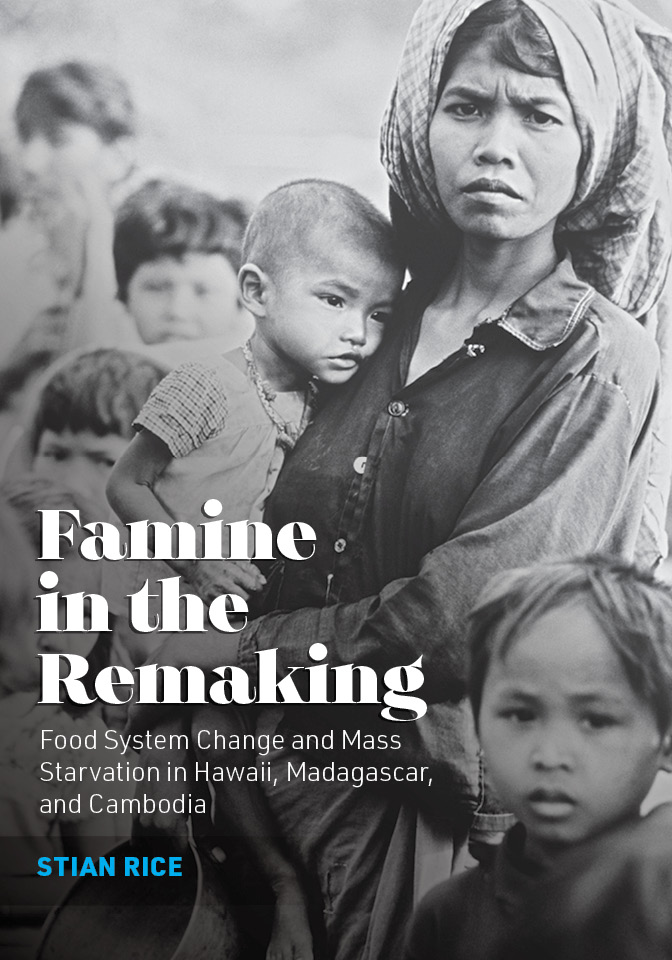
Famine in the Remaking: Food System Change and Mass Starvation in Hawaii, Madagascar, and Cambodia

Stian Rice

April 2020
264pp
PB 978-1-949199-34-5
$29.99
eBook 978-1-949199-35-2
$29.99

Radical Natures Series

Famine in the Remaking

Food System Change and Mass Starvation in Hawaii, Madagascar, and Cambodia

Summary

Mass starvation’s causes may seem simple and immediate: crop failure, poverty, outbreaks of violence, and poor governance. But famines are complex, and scholars cannot fully understand what causes them unless they look at their numerous social and environmental precursors over long arcs of history and over long distances.

Famine in the Remaking examines the relationship between the reorganization of food systems and large-scale food crises through a comparative historical analysis of three famines: Hawaii in the 1820s, Madagascar in the 1920s, and Cambodia in the 1970s. This examination identifies the structural transformations—that is, changes to the relationships between producers and consumers—that make food systems more vulnerable to failure. Moving beyond the economic and political explanations for food crisis that have dominated the literature, Stian Rice emphasizes important socioecological interactions, developing a framework for crisis evolution that identifies two distinct temporal phases and five different types of causal mechanisms involved in food system failure. His framework contributes to current work in famine prevention and, animated by a commitment to social justice, offers the potential for early intervention in emerging food crises.

Contents

Preface

Introduction

1. The Hawaiian Sandalwood Famines: 1820s

2. Madagascar’s “Cactus War”: 1924–30

3. War and Reconstruction Famine in Cambodia: 1970–79

4. Famine in the Remaking: The Structure of Food System Failure

Notes

References

Index

Author

Stian Rice is a food systems geographer whose research examines the slow-moving social and environmental changes to agricultural production and food consumption. He received a doctorate in geography from Kent State University and is currently with the Center for Urban Environmental Research and Education at the University of Maryland, Baltimore County.

Reviews

“Important and impressive scholarly work.”
Pritam Singh, University of Oxford

“An elegant and impassioned comparative account . . . At a moment when the specter of famine appears close, Stian Rice’s Famine in the Remaking is a compelling and welcome intervention into the origins of famine.”
Agricultural History
EmailFacebookInstagramPinterestTwitter

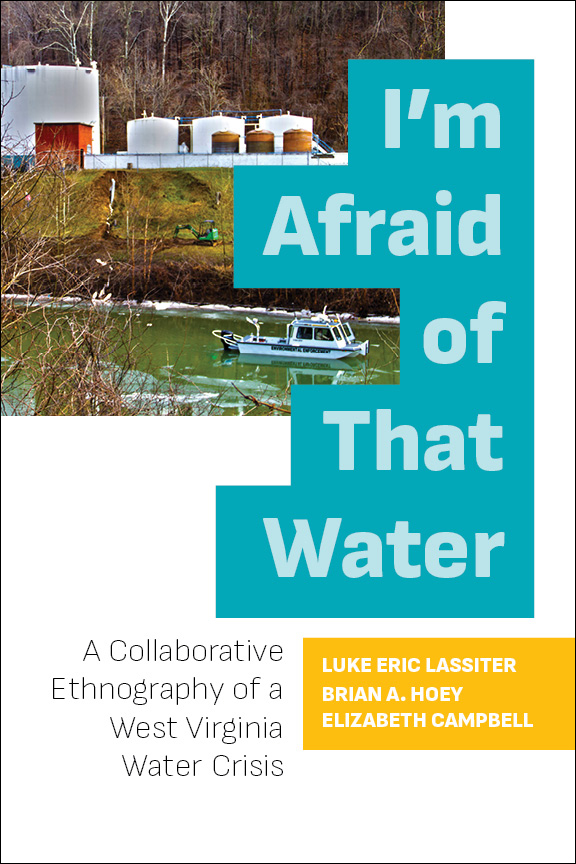
I’m Afraid of That Water: A Collaborative Ethnography of a West Virginia Water Crisis


Edited by Luke Eric Lassiter, Brian A. Hoey, and Elizabeth Campbell

April 2020
240pp
PB 978-1-949199-37-6
$29.99
CL 978-1-949199-36-9
$99.99
eBook 978-1-949199-38-3
$29.99

I'm Afraid of That Water

A Collaborative Ethnography of a West Virginia Water Crisis

Summary

Weatherford Award Winner, Nonfiction

On January 9, 2014, residents across Charleston, West Virginia, awoke to an unusual licorice smell in the air and a similar taste in the public drinking water. That evening residents were informed the tap water in tens of thousands of homes, hundreds of businesses, and dozens of schools and hospitals—the water made available to as many as 300,000 citizens in a nine-county region—had been contaminated with a chemical used for cleaning crushed coal.

This book tells a particular set of stories about that chemical spill and its aftermath, an unfolding water crisis that would lead to months, even years, of fear and distrust. It is both oral history and collaborative ethnography, jointly conceptualized, researched, and written by people—more than fifty in all—across various positions in academia and local communities. I’m Afraid of That Water foregrounds the ongoing concerns of West Virginians (and people in comparable situations in places like Flint, Michigan) confronted by the problem of contamination, where thresholds for official safety may be crossed, but a genuine return to normality is elusive.

Download a free copy of the book in the Free Book PDF tab.

Contents

Coming soon.

Editors

Luke Eric Lassiter is a professor of humanities and anthropology and director of the graduate humanities program at Marshall University. He is the author of Invitation to Anthropology, The Chicago Guide to Collaborative Ethnography, and, with Elizabeth Campbell, Doing Ethnography Today.

Brian A. Hoey is a professor of anthropology and associate dean of the honors college at Marshall University and author of Opting for Elsewhere.

Elizabeth Campbell is chair of the department of curriculum and instruction at Appalachian State University. She is the coeditor of Re-imagining Contested Communities and coauthor of Doing Ethnography Today.

Reviews

"A great example of a multiauthored and intersubjective ethnography of toxic suffering, this book is a model for future disaster ethnographies."
Peter Little, Rhode Island College

"A unique, moving, and highly readable account of community reactions to a technological disaster. Authors weave together powerful and highly personal narratives that reveal the tensions of coping with ongoing environmental uncertainty. With a novel, collaborative approach, they make meaningful connections between the experiences of local residents and the systems and institutions that produce and perpetuate disasters and their aftermaths. Readers of all stripes will find it as enlightening as it is poignant."
Melissa Checker, coeditor of Sustainability in the Global City: Myth and Practice

“In a perfect world, I'm Afraid of That Water would be required reading.”
Journal of Appalachian Studies


EmailFacebookInstagramPinterestTwitter

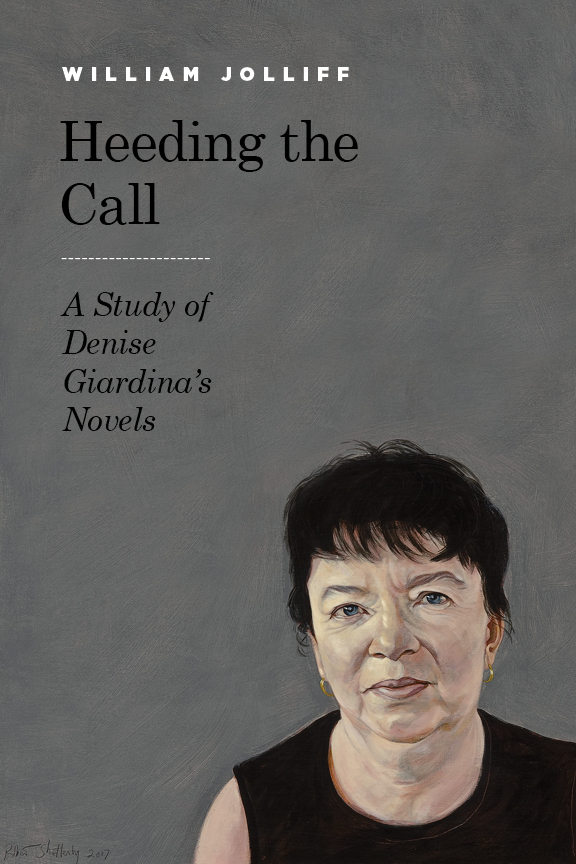
Heeding the Call: A Study of Denise Giardina’s Novels


William Jolliff

May 2020
204pp 
PB 978-1-949199-43-7
$29.99
CL 978-1-949199-42-0
$99.99
eBook 978-1-949199-44-4
$29.99

Heeding the Call

A Study of Denise Giardina’s Novels

Summary

In Heeding the Call, William Jolliff offers the first book-length discussion of West Virginia writer and activist Denise Giardina, perhaps best known for her novel Storming Heaven, which helped spark renewed interest in the turn-of-the-century Mine Wars. Jolliff proposes that Giardina’s fiction be considered under three thematic complexes: regional, political, and theological. Though addressing all three, Heeding the Call foregrounds the theological because it is the least accessible to most readers and critics.

In chapters devoted to each of Giardina’s novels, Jolliff attends to her uses of history, her formal techniques, and the central themes that make each work significant. What becomes clear is that while the author’s religious beliefs inform her fiction, she never offers easy answers. Her narratives consistently push her characters—and her readers—into more challenging and meaningful questions. Jolliff concludes by arguing that although Giardina’s initial fame has been tied to her significance as an Appalachian novelist, future studies must look beyond the regional to the deeply human questions her novels so persistently engage.

Contents

Coming soon.

Author

William Jolliff is a professor of English at George Fox University. He is the editor of The Poetry of John Greenleaf Whittier and author of Twisted Shapes of Light, a collection of poetry.

Reviews

“A needed book. Heeding the Call offers acute commentary on all of Giardina’s novels and ties them together with overarching themes. Educators, students, scholars, and readers alike will find it useful.”
Theresa L. Burriss, director of the Appalachian Regional and Rural Studies Center, Radford University

EmailFacebookInstagramPinterestTwitter

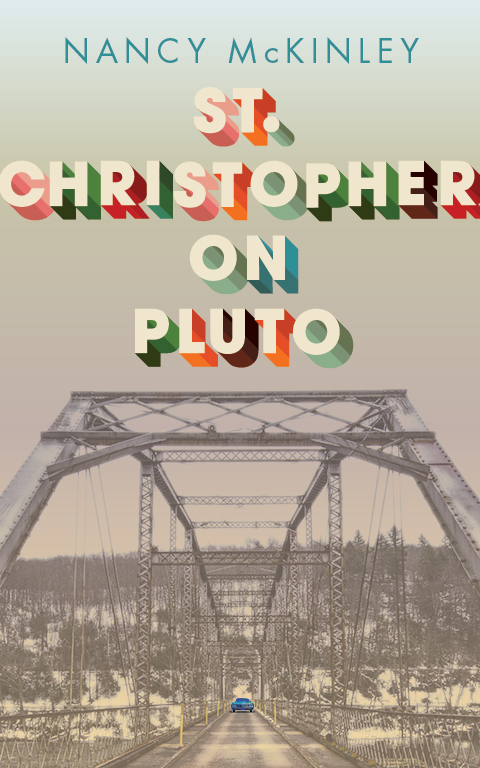
St. Christopher on Pluto

Nancy McKinley

February 2020
228pp
PB 978-1-949199-26-0
$18.99
eBook 978-1-949199-27-7
$18.99

St. Christopher on Pluto


Summary

2021 Colorado Book Awards Finalist, Literary Fiction

MK and Colleen get reacquainted while working at different stores in a bankrupt mall. Way back, the women went to Catholic school together and collaborated on racy letters to a soldier in Vietnam who thought they were much older than seventh graders—a ruse that typifies later shenanigans, usually brought on by red-headed Colleen, a self-proclaimed “Celtic warrior.”

After ditching Colleen’s car to collect the insurance, they drive from one unexpected event to the next in Big Blue, MK’s Buick clunker with a St. Christopher statue glued to the dash. The glow-in-the-dark icon guides them past the farm debris, mine ruins, and fracking waste of the northern brow of Appalachia. Yet their world is not a dystopia. Rather, MK and Colleen show why, amid all the desperation, there is still a community of hope, filled with people looking out for their neighbors and with survivors who offer joy, laughter, and good will.

Contents

St. Christopher on Pluto
Cara Dog
Navidad
Signed Sealed Delivered
Sweet the Sound
Yellow Tape
Less Said
Love, Masque, and Folly
Complicado
Hand against the Horn
Pixelated
Ramp
After All Danger of Frost
Damn Stitch
Liquidate
Acknowledgments

Author

Nancy McKinley is a founding fiction faculty member at Wilkes University, where she teaches at the Maslow Family Graduate Program in Creative Writing. She is the author of Travels with a Nuclear Whore, which won the Thayer Fellowship in the Arts, and is a recipient of the Newhouse Award from the John Gardner Foundation.

Reviews

St. Christopher on Pluto is good word medicine. I belly laughed and was so touched so many times, I had to keep tissues on hand. I will stock up and give this book to any friend overwhelmed by life.”
Beverly Donofrio, author of Riding in Cars with Boys

“Set amidst Pennsylvania small-town life, the linked stories in St. Christopher on Pluto tackle big subjects: war, faith, AIDS, female friendship, race, and aging. Gravitas and comedy are not an easy combination, but Nancy McKinley masterfully mixes the two in a moving, memorable, and inspiring collection.”
Steven Schwartz, author of Madagascar: New and Selected Stories

“A dazzling collection, recounted in multiple colloquial voices and acute imagery that conveys a palpable and cinematic sense of place.”
J. Michael Lennon, author of Norman Mailer: A Double Life

“This book is the real hillbilly elegy, this tour through an Appalachia whose female warriors mess up and flounder but somehow survive. Nancy McKinley’s stories are both sad and hilarious, and punctuated by unexpected wonder.”
John Vernon, author of The Last Canyon

“Warm, generous stories.”
Kirkus

St. Christopher on Pluto drew me in by its humor, but, like the best comic fiction, it’s constructed out of insider social observations that sting as much as they amuse. . . . It’s so entertaining to go along for the ride with MK and chatty Colleen, and, because of their wry, sometimes bumbling, suck-it-up resiliency, it’s also possible to take in these hard-luck landscapes and see some possibility amidst all the losses.”
Maureen Corrigan, Fresh Air


EmailFacebookInstagramPinterestTwitter

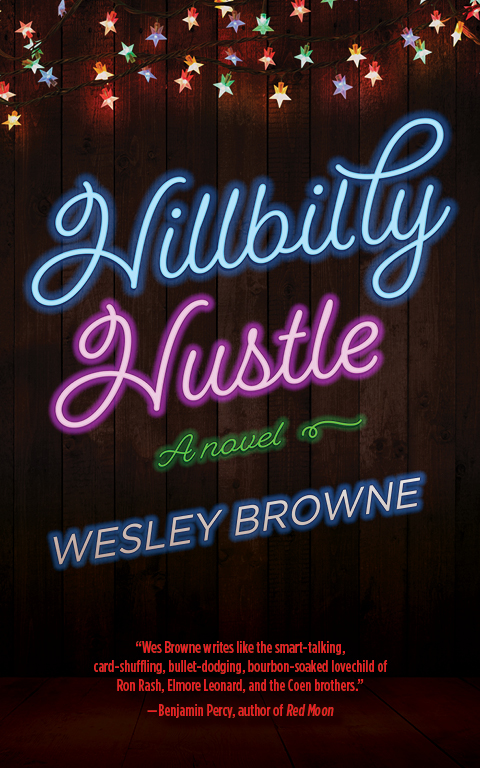
Hillbilly Hustle

Wesley Browne

March 2020
264pp
PB 978-1-949199-28-4
$19.99
eBook 978-1-949199-29-1
$19.99

Hillbilly Hustle


Summary

Knox Thompson thinks he’s working a hustle, but it’s a hustle that’s working him. Trying to keep his pizza shop and parents afloat, he cleans out a backroom Kentucky poker game only to be roped into dealing marijuana by the proprietor—an arrangement Knox only halfheartedly resists.

Knox’s shop makes the perfect front for a marijuana operation, but his supplier turns out to be violent and calculating, and Knox ends up under his thumb. It’s not long before more than just the pizza shop is at risk.


Author

Wesley Browne is the founder and host of Pages & Pints Reading Series at Apollo Pizza in Richmond, Kentucky. He lives with his wife and two sons in Madison County, where he practices law, co-owns and helps manage local restaurants and a music venue, and coaches sports. This is his debut book.

Reviews

"Hilarious, exhilarating, utterly gripping. I loved every minute of this book. Hillbilly Hustle is required reading."
Kayla Rae Whitaker, author of The Animators 

“This tour de force deftly walks the tightrope of being both a page-turner and a language-driven debut that firmly establishes a solid new voice. Cinematic, lyrical, and often very funny, Hillbilly Hustle is ripe with memorable characters and a vivid sense of place that sheds light on a whole new kind of Appalachia that’s never been seen before.”   
Silas House, author of Southernmost

“Witty, savvy storytelling at the crossroads of pizza, pot, and noir. Hillbilly Hustle is the impish spawn of that lost camping trip RoundersPineapple Express, and Breaking Bad took to the Kentucky outback last summer. Step aside, Avon Barksdale and Tony Montana. Burl Spoon is my new favorite drug lord. With Hillbilly Hustle, Wes Browne dishes up a smart, tasty debut delivered in an assured voice, one that is sure to create a buzz among readers who like their comedy dry and the pace of their tales brisk.”
Robert Gipe, author of Trampoline 

“Wes Browne’s Hillbilly Hustle is clever as hell, funny as hell, genuine as hell. Read it and feel alive.”
Hannah Pittard, author of Visible Empire

“A narrative rolled as expertly as Willie Nelson’s nightcap. It takes shape between breakneck page-turns and well-timed punchlines.”
David Joy, author of The Line That Held Us

"One of those literary Appalachian noir novels that, somehow, gives a nod to Raymond Chandler and Raymond Carver, to Robert B. Parker and Donald Ray Pollock.”
George Singleton, author of Staff Picks

"Wes Browne writes like the smart-talking, card-shuffling, bullet-dodging, bourbon-soaked lovechild of Ron Rash, Elmore Leonard, and the Coen brothers. He's clever as hell, a swift plotter with a heart-bruised sense of character and a brilliant ear for dialogue. I loved Hillbilly Hustle, and I'd gamble you will too."
Benjamin Percy, author of Suicide Woods

“A hell of a fun read. A sort of hillbilly Inherent Vice.”
Jesse Donaldson, author of On Homesickness

Wonder Boys meets Elmore Leonard.”
Amy Greene, author of Bloodroot 

"Holy Hell! Move over bible thumpers, Hillbilly Hustle is a religious experience to be read, taught, and talked about for years to come, piling on the conflict, the tension, and a cast of unforgettable rural Kentucky characters that are as authentic as the dialogue and the landscape that it’s rooted within. Wes Browne has written a satirical barn burner of a debut novel."
Frank Bill, author of The Savage

"With masterful pacing and brilliant dialogue, Wes Browne’s compelling debut novel Hillbilly Hustle renders the deadly terrain of Appalachian noir with humor and heart. Don’t miss this savage, tender, hilarious read."
Pamela Duncan, author of Plant Life

"If Wes Browne isn't the Richard Price of Appalachian literature he must be its John Kennedy Toole. This is Appalachia, and all its contradictions, observed with a loving precision and rendered in razor-sharp dialogue. A brilliant debut."
Mark Powell, author of Small Treasons

"A top-notch debut with a winning narrative voice and unexpectedly multidimensional characters."
Kirkus

EmailFacebookInstagramPinterestTwitter

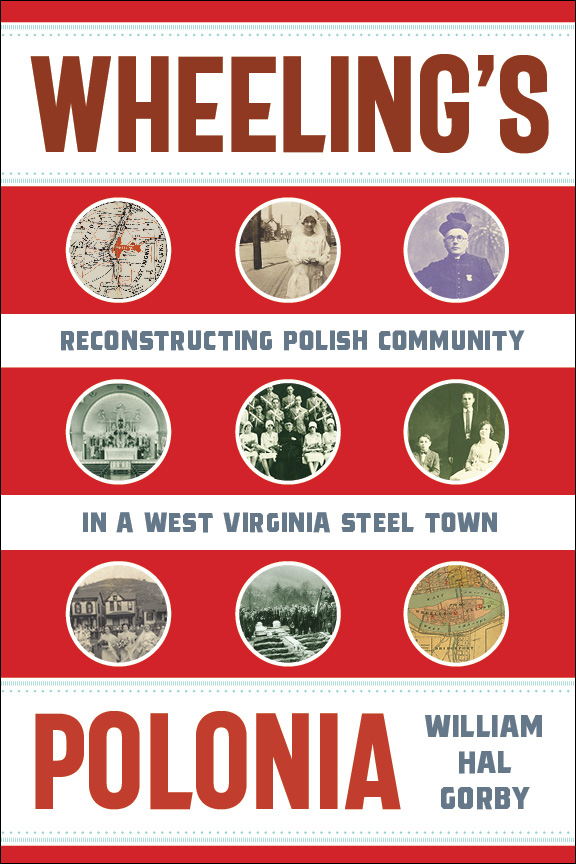
Wheeling’s Polonia: Reconstructing Polish Community in a West Virginia Steel Town


William Hal Gorby

May 2020
312pp
PB 978-1-949199-40-6
$32.99
CL 978-1-949199-39-0
$99.99
eBook 978-1-949199-41-3
$32.99

West Virginia and Appalachia Series

Wheeling's Polonia

Reconstructing Polish Community in a West Virginia Steel Town

Summary

William Hal Gorby’s study of Wheeling’s Polish community weaves together stories of immigrating, working, and creating a distinctly Polish American community, or Polonia, in the heart of the upper Ohio Valley steel industry. It addresses major topics in the history of the United States in the first half of the twentieth century, while shifting from urban historians’ traditional focus on large cities to a case study in a smaller Appalachian setting.

Wheeling was a center of West Virginia’s labor movement, and Polish immigrants became a crucial element within the city’s active working-class culture. Arriving at what was also the center of the state’s Roman Catholic Diocese, Poles built religious and fraternal institutions to support new arrivals and to seek solace in times of economic strain and family hardship. The city’s history of crime and organized vice also affected new immigrants, who often lived in neighborhoods targeted for selective enforcement of Prohibition.

At once a deeply textured evocation of the city’s ethnic institutions and an engagement with larger questions about belonging, change, and justice, Wheeling’s Polonia is an inspiring account of a diverse working-class culture and the immigrants who built it.

Contents

Acknowledgments
Introduction
1. “Wheeling Might Appropriately Be Called a Polish City”: A Local Look at the Polish Migration, 1870–1915
2. “There Has Always Been a Tough Element in That Section”: Work, Culture, and Society in South Wheeling and Benwood
3. The Heart of the Community: Polish Catholics at St. Ladislaus Parish, 1890–1917
4. Finding a Good Job and a Good Union for Polonia: Polish Workers within Wheeling’s Labor Movement, 1890–1915
5. Proving Their Loyalty: Wheeling’s Polish Immigrants during World War I
6. Struggling for Economic Security: Polonia during the 1919 Steel Strike and the Roaring Twenties
7. Polonia Adapts to the “New Era” of the 1920s
8. Moonshiners and Bootleggers: New Immigrants and the Selective Enforcement of Prohibition in Wheeling
9. Polonia in the Great Depression and the Rise of the CIO at Wheeling Steel
Conclusion
Notes

Author

William Hal Gorby is a teaching assistant professor of history and director of undergraduate advising at West Virginia University. He teaches courses on West Virginian, Appalachian, and American immigration history. He also consulted on the research and script editing for the Emmy-nominated PBS American Experience documentary The Mine Wars.

Reviews

Wheeling’s Polonia is an important work. Gorby skillfully makes the case for why this story is significant, not just for labor and working-class history but also (by implication) for today’s electoral map. He shows a sensitivity to these workers and to the various facets of their identity as they evolved over time that many scholars and pundits often lack.”
Donna T. Haverty-Stacke, author of America’s Forgotten Holiday: May Day and Nationalism, 1867–1960

EmailFacebookInstagramPinterestTwitter

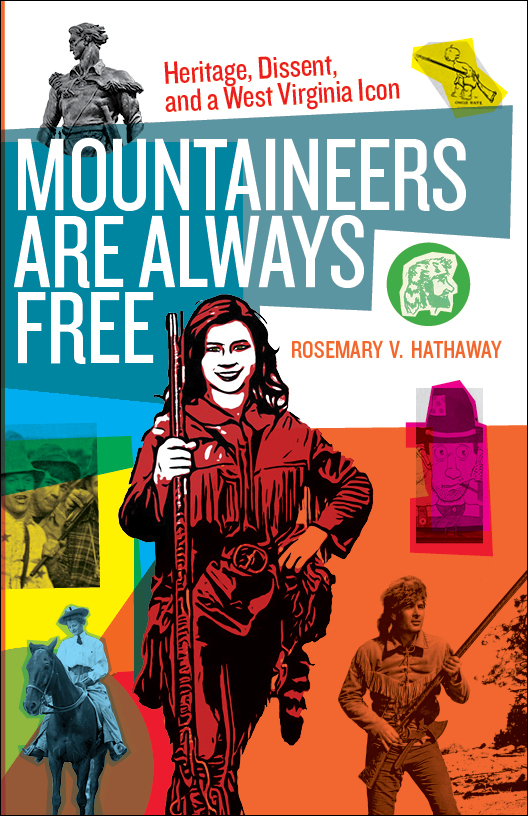
Mountaineers Are Always Free: Heritage, Dissent, and a West Virginia Icon

Rosemary V. Hathaway

March 2020
276pp 
PB 978-1-949199-31-4
$25.99
CL 978-1-949199-30-7
$99.99s
eBook 978-1-949199-32-1
$25.99

Mountaineers Are Always Free

Heritage, Dissent, and a West Virginia Icon

Summary

The West Virginia University Mountaineer is not just a mascot: it is a symbol of West Virginia history and identity embraced throughout the state. In this deeply informed but accessible study, folklorist Rosemary Hathaway explores the figure’s early history as a backwoods trickster, its deployment in emerging mass media, and finally its long and sometimes conflicted career—beginning officially in 1937—as the symbol of West Virginia University.

Alternately a rabble-rouser and a romantic embodiment of the state’s history, the Mountaineer has been subject to ongoing reinterpretation while consistently conveying the value of independence. Hathaway’s account draws on multiple sources, including archival research, personal history, and interviews with former students who have portrayed the mascot, to explore the complex forces and tensions animating the Mountaineer figure. Often serving as a focus for white, masculinist, and Appalachian identities in particular, the Mountaineer that emerges from this study is something distinct from the hillbilly. Frontiersman and rebel both, the Mountaineer figure traditionally and energetically resists attempts (even those by the university) to tame or contain it.

Contents

Introduction   
1. The Origins of the Mountaineer
2. From Slouch Hat to Coonskin Cap: The Hillbilly Mountaineer versus the Frontiersman
3. The Rifle and the Beard: The WVU Mountaineer in the 1960s
4. Policing the Student Body: “Mountain Dears” and (Sexy) Girls with Guns
5. Inclusion, Exclusion, and the Twenty-First-Century Mountaineer
Notes
Bibliography
Illustration Credits
Index

Author

Rosemary V. Hathaway is an associate professor of English at West Virginia University, where she teaches folklore, American literature, and young adult literature.

Reviews

“With her personal, familial connection to the subject and background as a folklorist, Rosemary Hathaway has written a well-crafted and thoroughly researched narrative with nuance, a strong historical foundation, and important analysis. Mountaineers Are Always Free has both relevance to the current political moment and the power to endure.”
Emily Hilliard, state folklorist and founding director of the West Virginia Folklife Program

“Folklorist Rosemary Hathaway’s well-researched and engaging book explores the evolution of the WVU ‘mascot’ the Mountaineer from its preindustrial origins to the present. Imaginatively analyzing personal, local, and national sources, Hathaway reveals how the ongoing transformations of the Mountaineer have both built upon and challenged regional and national stereotypes in ways that reflect competing conceptions of freedom and identity.”
Anthony Harkins, author of Hillbilly: A Cultural History of an American Icon

EmailFacebookInstagramPinterestTwitter