Radical Hope: A Teaching Manifesto

Kevin M. Gannon

April 2020
180pp
PB 978-1-949199-51-2
$19.99
CL 978-1-949199-50-5
$99.99
eBook 978-1-949199-52-9
$19.99

Teaching and Learning in Higher Education Series

Radical Hope

A Teaching Manifesto

Summary

Higher education has seen better days. Harsh budget cuts, the precarious nature of employment in college teaching, and political hostility to the entire enterprise of education have made for an increasingly fraught landscape. Radical Hope is an ambitious response to this state of affairs, at once political and practical—the work of an activist, teacher, and public intellectual grappling with some of the most pressing topics at the intersection of higher education and social justice.

Kevin Gannon asks that the contemporary university’s manifold problems be approached as opportunities for critical engagement, arguing that, when done effectively, teaching is by definition emancipatory and hopeful. Considering individual pedagogical practice, the students who are the primary audience and beneficiaries of teaching, and the institutions and systems within which teaching occurs, Radical Hope surveys the field, tackling everything from impostor syndrome to cell phones in class to allegations of a campus “free speech crisis.” Throughout, Gannon translates ideals into tangible strategies and practices (including key takeaways at the conclusion of each chapter), with the goal of reclaiming teachers’ essential role in the discourse of higher education.


Receive a 30% discount on orders of 10 or more copies of this title with code HIGHEREDBULK30 at checkout.

Contents

Acknowledgments
Introduction
1. Classrooms of Death
2. The Things We Tell Our Students
3. Cultivating Transformative Teaching
4. Teaching and Learning Inclusively
5. Making Access Mean Something
6. Encouraging Choice, Collaboration, and Agency 
7. A Syllabus Worth Reading
8. Pedagogy Is Not a Weapon
9. Platforms and Power
10. I Don’t Know . . . Yet.
Coda: Radical Hope, Even When It Seems Hopeless
Notes
Index

Author

Kevin M. Gannon is director of the Center for Excellence in Teaching and Learning and professor of history at Grand View University. He writes for the Chronicle of Higher Education, gives frequent talks and workshops, and appeared in the Oscar-nominated documentary 13th, directed by Ava DuVernay.

Reviews

“A full-throated defense of the humanities, a liberal education, and the power of education as a transformational force.”
Contingent Magazine

“A must-read for pedagogues and theorists alike. Gannon's explorations into history, power, and academia place students and the environments in which they learn front and center for the rest of us to consider. This work isn't about reform, but transformation, and Gannon's book pushes us in the right direction.”
José Luis Vilson, author of This Is Not a Test: A New Narrative on Race, Class, and Education

“This is the book I needed to read—it was a fresh drink of water in a time of turmoil and despair in education. Gannon grounds his calls for radical hope in the work of educational scholars like Freire, hooks, and Giroux, and offers helpful examples and recommendations based on his years of teaching experience. He tackles real issues we are facing at our institutions head-on without capitulating to clichés or trendy solutions often offered in books about higher education.”
Amy Collier, Middlebury College

“In a time of precariously employed professors, crushing student debt burdens, and cynically manufactured campus outrages, Radical Hope is a much-needed practical and principled reminder of the promise and possibility of education for liberation.”
Nikhil Pal Singh, author of Race and America's Long War and faculty director, NYU Prison Education Program

EmailFacebookInstagramPinterestTwitter

Victorian Poetry: Volume 57, Issues 1-4

Image

Victorian Poetry: Volume 57, Issues 1–4
Editor: John B. Lamb, West Virginia University
E-ISSN: 1530-7190
Print ISSN: 0042-5206

Click on listed price to corresponding product to order:
Institution (US): $115.00
Individual (US): $55.00
Institution (Outside US, including Canada): $155.00
Individual (Outside US, including Canada): $80.00


Education and Treatment of Children, Vol 42

Education and Treatment of Children

Editor: Dr. Bernie Fabry
E-ISSN: 0748-8491
Frequency: Quarterly
Click on listed price to corresponding product to order:
Volume 42: Institution (US): $125.00
Volume 42: Individual (US): $60.00
Volume 42: International Institution (Outside US): $140.00
Volume 42: International Individual (Outside US): $75.00

The Black Butterfly: Brazilian Slavery and the Literary Imagination
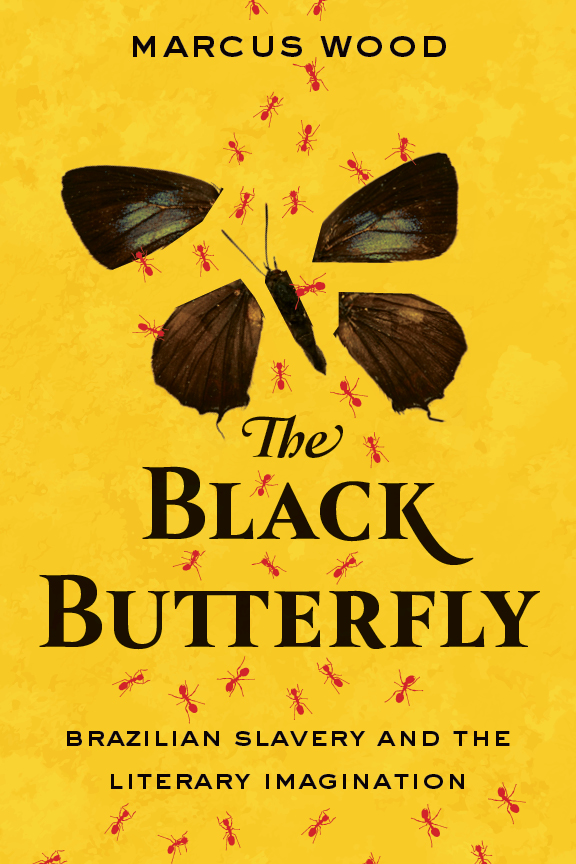

Marcus Wood

October 2019
360pp
PB 978-1-949199-03-1
$32.99
CL 978-1-949199-02-4
$99.99
eBook 978-1-949199-04-8
$32.99

Summary

The Black Butterfly focuses on the slavery writings of three of Brazil’s literary giants—Machado de Assis, Castro Alves, and Euclides da Cunha. These authors wrote in the late nineteenth and early twentieth centuries, as Brazil moved into and then through the 1888 abolition of slavery. Assis was Brazil’s most experimental novelist; Alves was a Romantic poet with passionate liberationist politics, popularly known as “the poet of the slaves”; and da Cunha is known for the masterpiece Os Sertões (The Backlands), a work of genius that remains strangely neglected in the scholarship of transatlantic slavery.

Wood finds that all three writers responded to the memory of slavery in ways that departed from their counterparts in Europe and North America, where emancipation has typically been depicted as a moment of closure. He ends by setting up a wider literary context for his core authors by introducing a comparative study of their great literary abolitionist predecessors Luís Gonzaga Pinto da Gama and Joaquim Nabuco. The Black Butterfly is a revolutionary text that insists Brazilian culture has always refused a clean break between slavery and its aftermath. Brazilian slavery thus emerges as a living legacy subject to continual renegotiation and reinvention.

Contents

List of Illustrations     

Introduction   

1. Castro Alves, O Navio Negreiro, and a New Poetics of the Middle Passage        

2. Castro Alves, Voices of Africa, and the Paulo Affonso Falls: From African Monologic Propope-ia to Brazilian[[AU: chapter title does not include “Brazilian”—add there, or delete here?]] Planta-tion Anti-Pastoral

3. Obscure Agency: Machado de Assis Framing Black Servitudes    

4. “The child is father to the man”: Bad Big Daddy and the Dilemmas of Planter Patriarchy in Memórias Póstumas de Brás Cubas        

5. Magnifying Signifying Silence: Afro-Brazilians and Slavery in Euclides da Cunha, Os Sertões     

6. After-Words and After-Worlds: Freyre, Llosa, Slavery and the Cultural Inheritance of Os Sertões         

Conclusion      

Notes

Index

Author

Marcus Wood is professor of English at the University of Sussex and the author of several books, including Black Milk: Imagining Slavery in the Visual Cultures of Brazil and America and The Horrible Gift of Freedom: Atlantic Slavery and the Representation of Emancipation. His book Blind Memory: Visual Representations of Slavery in England and America was awarded the best book prize from the Society for Historians of the Early American Republic.

Reviews

“A groundbreaking interpretation of Brazilian literature in the context of transatlantic slavery and studies of race.”
Aquiles Alencar Brayner, the British Library

The Black Butterfly is written in an accessible, engaging, and indeed sometimes almost poetic prose, which should make it a compelling read for the general public. The book also makes a significant contribution to Brazilian literary studies, and . . . comparative race studies, Black Studies, and African Diaspora Studies, as well as Comparative Literature.”
Luso-Brazilian Review

EmailFacebookInstagramPinterestTwitter

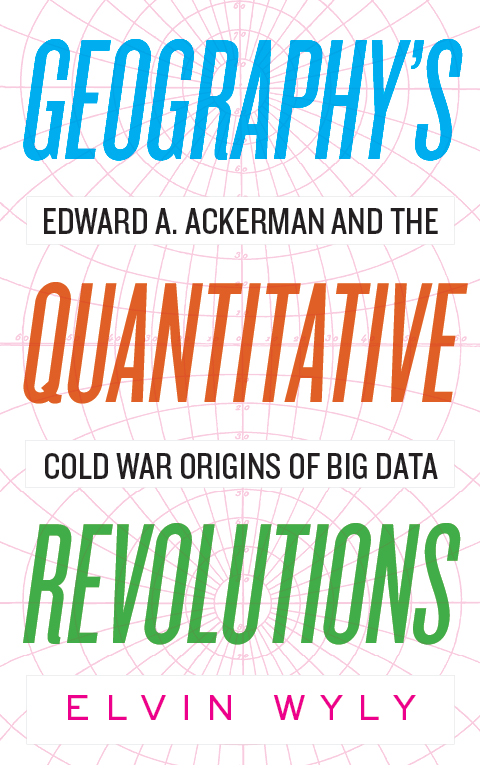
Geography’s Quantitative Revolutions: Edward A. Ackerman and the Cold War Origins of Big Data


Elvin Wyly

November 2019
168pp
PB 978-1-949199-09-3 
$22.99
eBook 978-1-949199-10-9
$22.99

Summary

Do you have a smartphone? Billions of people on the planet now navigate their daily lives with the kind of advanced Global Positioning System capabilities once reserved for the most secretive elements of America’s military-industrial complex. But when so many people have access to the most powerful technologies humanity has ever devised for the precise determination of geographical coordinates, do we still need a specialized field of knowledge called geography?

Just as big data and artificial intelligence promise to automate occupations ranging from customer service and truck driving to stock trading and financial analysis, our age of algorithmic efficiency seems to eliminate the need for humans who call themselves geographers—at the precise moment when engaging with information about the peoples, places, and environments of a diverse world is more popular than ever before. How did we get here? This book traces the recent history of geography, information, and technology through the biography of Edward A. Ackerman, an important but forgotten figure in geography’s “quantitative revolution.” It argues that Ackerman’s work helped encode the hidden logics of a distorted philosophical heritage—a dangerous, cybernetic form of thought known as militant neo-Kantianism—into the network architectures of today’s pervasive worlds of surveillance capitalism.

Contents

Preface           

Acknowledgments     

1. Ackerman’s Frontier          

2. The Ackerman Sample      

3. Contradictions of “Mental Structuring”    

4. Militant Neo-Kantianism   

5. The New Evolution of Geographic Thought?        

6. Notes on Desk        

Notes 

Index

Author

Elvin Wyly is a professor of geography and chair of the Urban Studies Coordinating Committee at the University of British Columbia, Canada, and former editor in chief of the journal Urban Geography.

Reviews

“Full of revelatory answers to how, why, when, and where human geography evolved and came into its own during and after World War II. . . . Highly recommended.”
CHOICE

“Wyly’s approach is sweeping in scope yet detailed in its discussion of the archival evidence. He places great store in sociopolitical and disciplinary context, and makes strong linkages between the past and the present intellectual contexts. The scholarship is meticulous. The writing is fluid and lively.”
Audrey Kobayashi, Queen’s University

“An excellent, concise, critical study.”
Joel Wainwright, coauthor of Climate Leviathan: A Political Theory of Our Planetary Future

EmailFacebookInstagramPinterestTwitter

Energy Culture: Art and Theory on Oil and Beyond


Imre Szeman and
Jeff Diamanti

November 2019
276pp
PB 978-1-949199-12-3
$34.99
CL 978-1-949199-11-6
$99.99

Energy and Society Series

Summary

Energy Culture is a provocative book about oil’s firm grip on our politics and everyday lives. It brings together essays and artwork produced in a collaborative environment to stimulate new ways of thinking and to achieve a more just and sustainable world.

The original work collected in Energy Culture creatively engages energy as a social form through lively arguments and artistic research organized around three vectors of inquiry. The first maps how fossil fuels became, and continue to be, embedded in North American society, from the ideology of tar sands reclamation projects to dreams of fiber optic cables running through the Northwest Passage. The second comprises creative and artistic responses to the dominance of fossil fuels in everyday life and to the challenge of realizing new energy cultures. The final section addresses the conceptual and political challenges posed by energy transition and calls into question established views on energy. Its contributions caution against solar capitalism, explore the politics of sabotage, and imagine an energy efficient transportation system called “the switch.” Imbued with a sense of urgency and hope, Energy Culture exposes the deep imbrications of energy and culture while pointing provocatively to ways of thinking and living otherwise.

Contents

Acknowledgments     

Introduction / Imre Szeman and Jeff Diamanti         

Part I: Mapping Energy Culture

1          Oil on Water / Ernst Logar     

2          Trespassage / Mél Hogan      

3          The Ocean and the Cloud: Material Metaphors of Hidden Infrastructure / Jayne Wilkinson          

4          Walking Matters: A Peripatetic Rethinking of Energy Culture / Mary Elizabeth Luka          

5          Several Documents Pertaining to the Cascade Energy (transition) Park Corporation Corporation (CORPCORP) / Marissa Benedict, Cameron Hu, Christopher Malcolm, and David Rueter

6          Sustaining Petrocultures: On the Politics and Aesthetics of Oil Sands Reclamation / Jordan Kinder           

Part II: Figuring Energy Culture

7          Capitalism in the Corpse of a Whale / Ackroyd and Harvey 

8          Tilting at Windfarms: Towards a Political Ecology of Energy Humanism and the Literary Aesthetic / David Thomas        

9          Embodied Actants, Fossil Narratives / Maria Michails, Interviewed by Andrea Zeffiro

10        The Energy Apparatus / Am Johal     

11        Aeolian Survey / Hannah Imlach and Thomas Butler

12        Anecdotal Encounters on Driveways: The Aesthetics of Oil in Northern Alberta and Newfoundland / Megan Green       

13        Energy Meets Telepathy Aesthetics and Materialist Consciousness / Jacquelene Drinkall 

Part III: The Politics of Energy Culture

14        Rejecting Solar Capitalism / Jenni Matchett 

15        The Switch / Keller Easterling

16        Beyond Carbon Democracy: Energy, Infrastructure, and Sabotage / Darin Barney  0

17        Strike / Antonio Negri

18        Energized Antagonisms: Thinking Beyond “Energy Culture” / Matthew Huber       

19        Vortex of Light (Ice Memoriam) / Maya Weeks        

Contributors

Index

Author

Imre Szeman is University Research Chair of Communication Arts at the University of Waterloo. His recent books include On Petrocultures: Globalization, Culture, and Energy (WVU Press), After Oil (WVU Press), Energy Humanities: An Anthology, and Fueling Culture: 101 Words for Energy and Environment.

Jeff Diamanti teaches literary and cultural analysis at the University of Amsterdam. He is the editor of Contemporary Marxist Theory, Materialism and the Critique of Energy, and The Bloomsbury Companion to Marx, as well as a special issue of Reviews in Cultural Theory on energy humanities and a double issue of Resilience: A Journal of the Environmental Humanities on climate realism.

Reviews

“An exemplary multidisciplinary approach to entangled questions of energy, politics, and aesthetics. Energy Culture should excite and inspire an interdisciplinary community of scholars, artists, and activists; it not only points to possible ways forward for thinking and acting, but also offers tangible, provocative examples of what our creative and critical practices might do.”
Thomas S. Davis, author of The Extinct Scene: Late Modernism and Everyday Life

EmailFacebookInstagramPinterestTwitter

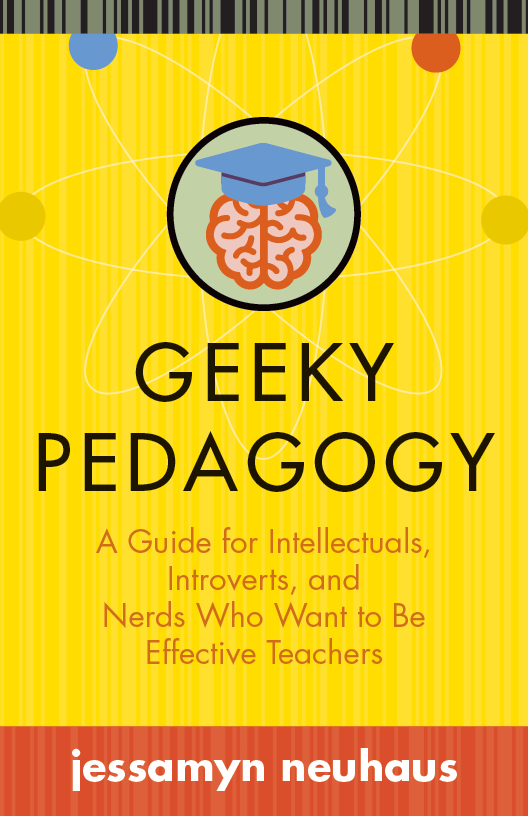
Geeky Pedagogy: A Guide for Intellectuals, Introverts, and Nerds Who Want to Be Effective Teachers

Jessamyn Neuhaus

September 2019
264pp
PB 978-1-949199-06-2
$26.99
eBook 978-1-949199-07-9
$26.99

Teaching and Learning in Higher Education Series

Summary

Geeky Pedagogy is a funny, evidence-based, multidisciplinary, pragmatic, highly readable guide to the process of learning and relearning how to be an effective college teacher. It is the first college teaching guide that encourages faculty to embrace their inner nerd, inviting readers to view themselves and their teaching work in light of contemporary discourse that celebrates increasingly diverse geek culture and explores stereotypes about super-smart introverts.

Geeky Pedagogy avoids the excessive jargon, humorlessness, and endless proscriptions that plague much published advice about teaching. Neuhaus is aware of how embodied identity and employment status shape one’s teaching context, and she eschews formulaic depictions of idealized exemplar teaching, instead inviting readers to join her in an engaging, critically reflective conversation about the vicissitudes of teaching and learning in higher education as a geek, introvert, or nerd. Written for the wonks and eggheads who want to translate their vast scholarly expertise into authentic student learning, Geeky Pedagogy is packed with practical advice and encouragement for increasing readers’ pedagogical knowledge.


Receive a 30% discount on orders of 10 or more copies of this title with code HIGHEREDBULK30 at checkout.

Contents

Acknowledgements     

Introduction     

1. Awareness  

2. Preparation 

3. Reflection    

4. Support       

5. Practice        

Glossary          

Notes   

Index   

Author

Jessamyn Neuhaus is a professor of US history and popular culture at SUNY Plattsburgh, a scholar of teaching and learning, and a recipient of the SUNY Chancellor’s Award for Excellence in Teaching. She is the author of Manly Meals and Mom’s Home Cooking: Cookbooks and Gender in Modern America and Housework and Housewives in American Advertising: Married to the Mop.

Reviews

“Every college professor should read this book. It is useful, accessible, lively, and humorous. It is not ideological or pedantic, but is instead a practical guide to becoming a better professor for those of us who never desired to read a book about pedagogy.”
David Arnold, Columbia Basin College

EmailFacebookInstagramPinterestTwitter

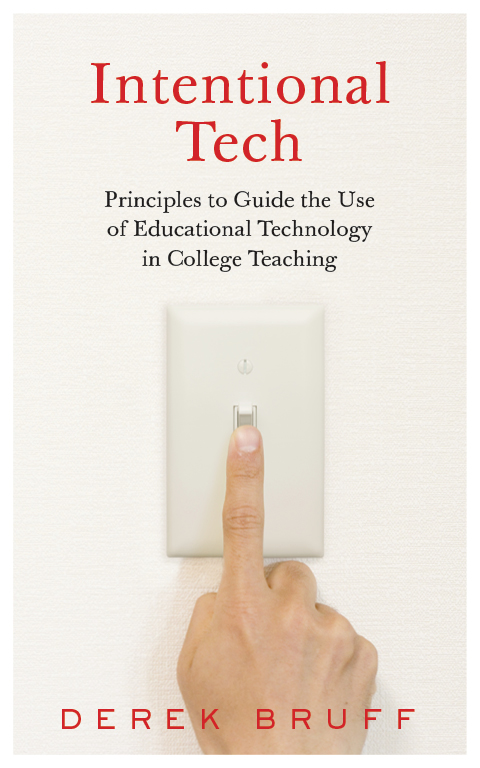
Intentional Tech: Principles to Guide the Use of Educational Technology in College Teaching


Derek Bruff

November 2019
240pp
PB 978-1-949199-16-1 
$24.99
CL 978-1-949199-15-4
$99.99
eBook 978-1-949199-17-8
$24.99

Teaching and Learning in Higher Education Series

Summary

Chalkboards and projectors are familiar tools for most college faculty, but when new technologies become available, instructors aren’t always sure how to integrate them into their teaching in meaningful ways. For faculty interested in supporting student learning, determining what’s possible and what’s useful can be challenging in the changing landscape of technology.

Arguing that teaching and learning goals should drive instructors’ technology use, not the other way around, Intentional Tech explores seven research-based principles for matching technology to pedagogy. Through stories of instructors who creatively and effectively use educational technology, author Derek Bruff approaches technology not by asking “How to?” but by posing a more fundamental question: “Why?”


Receive a 30% discount on orders of 10 or more copies of this title with code HIGHEREDBULK30 at checkout.

Contents

Acknowledgements                                                                                                                       

Introduction                                                                                                                                   

1. Times for Telling                                                                                                                     

2. Practice and Feedback                                                                                                              

3. Thin Slices of Learning                                                                                                            

4. Knowledge Organizations                                                                                                         

5. Multimodal Assignments                                                                                                         

6. Learning Communities                                                                                                           

7. Authentic Audiences                                                                                                               

Conclusion                                                                                                                                   

Notes                                                                                                                                               

References                                                                                                                                    

Index                                                                                                                                               

Author

Derek Bruff is the director of the Vanderbilt University Center for Teaching, where he helps faculty and other instructors develop foundational teaching skills and explore new ideas in teaching and learning. He is the author of Teaching with Classroom Response Systems: Creating Active Learning Environments.

Reviews

“Derek Bruff is an engaging—and often charming—guide throughout this concise book. The stories he tells keep things moving at a crisp pace and offer pedagogical inspiration. His principles provide a useful framework and establish a clear foundation for his practical advice.”
Peter Felten, coauthor of The Undergraduate Experience: Focusing Institutions on What Matters Most

EmailFacebookInstagramPinterestTwitter

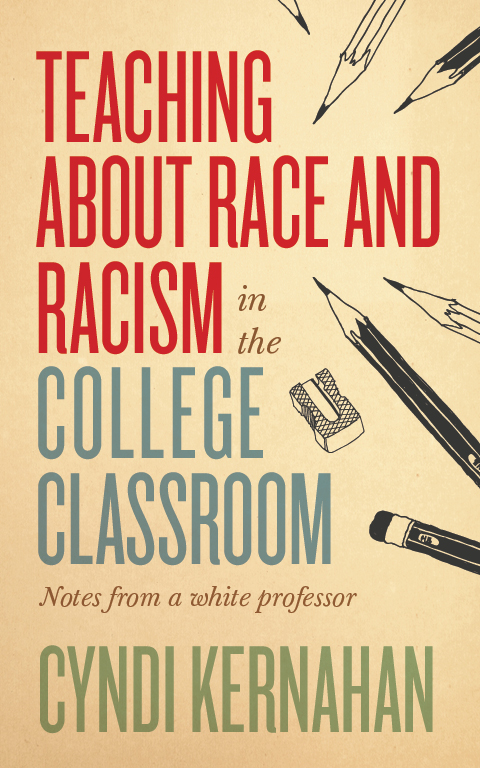
Teaching about Race and Racism in the College Classroom: Notes from a White Professor


Cyndi Kernahan

December 2019
228pp
PB 978-1-949199-24-6
$24.99
CL 978-1-949199-23-9
$99.99
eBook 978-1-949199-25-3
$24.99

Teaching and Learning in Higher Education Series

Summary

Teaching about race and racism can be a difficult business. Students and instructors alike often struggle with strong emotions, and many people have robust preexisting beliefs about race. At the same time, this is a moment that demands a clear understanding of racism. It is important for students to learn how we got here and how racism is more than just individual acts of meanness. Students also need to understand that colorblindness is not an effective anti-racism strategy.

In this book, Cyndi Kernahan argues that you can be honest and unflinching in your teaching about racism while also providing a compassionate learning environment that allows for mistakes and avoids shaming students. She provides evidence for how learning works with respect to race and racism along with practical teaching strategies rooted in that evidence to help instructors feel more confident. She also differentiates between how white students and students of color are likely to experience the classroom, helping instructors provide a more effective learning experience for all students.


Receive a 30% discount on orders of 10 or more copies of this title with code HIGHEREDBULK30 at checkout.

Contents

Acknowledgements

Introduction: Why Is It So Hard?   
                                                                                              
1. Naïve Understandings: How We Differ from Our Students                                                      

2. Struggling Students: How and Why Resistance Happens                                                        
3. Getting Yourself Together: Developing a Secure Teacher Identity                                          
4. Belonging in the Classroom: Creating Moments of Positivity and Connection                      
5. Expectations: From Ground Rules to Growth Mindsets                                                            
6. Course Content: Problems and Solutions                                                                                  
Conclusion and Summary of Ideas                                                                                               
Appendix: Suggested Reading for Historical Understanding                                                        
References                                                                                                                                   
Index   

Author

Cyndi Kernahan is a professor of psychology at the University of Wisconsin–River Falls, where she is also the assistant dean for teaching and learning in the College of Arts and Sciences. Her research and writing are focused primarily on teaching and learning, including the teaching of race, inclusive pedagogy, and student success.

Reviews

“An unflinching look at the realities of teaching about race. This book is destined to sit proudly next to such classics as Even the Rat Was White and Why Are All the Black Kids Sitting Together in the Cafeteria?
Regan A. R. Gurung, Oregon State University

“Kernahan’s honest, compassionate, and evidence-based discussions are a bracing antidote to the often stilted, evasive, and anxiety-ridden discourses around race’s intersections with teaching and learning. Those of us who teach about race and racism need this book on our shelves.”
Kevin Gannon (@TheTattooedProf), Grand View University

"This insightful and accessible resource is recommended for educators in any discipline, at any level, who want to speak more effectively about race and racism."
Library Journal (starred review)

EmailFacebookInstagramPinterestTwitter

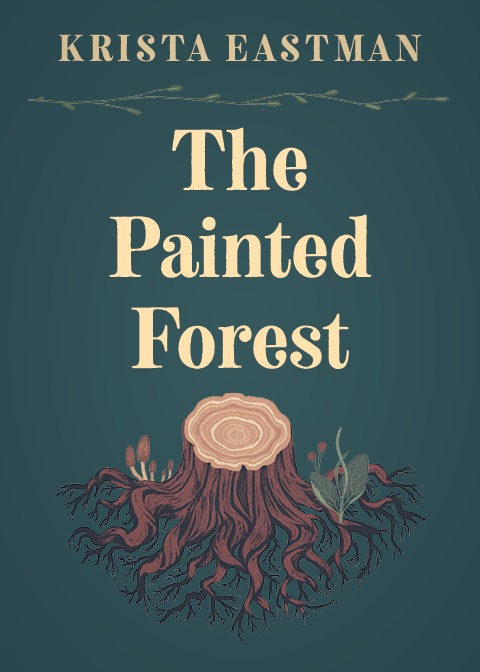
The Painted Forest


Krista Eastman

October 2019
144pp
PB 978-1-949199-19-2
$19.99
eBook 978-1-949199-20-8
$19.99

In Place Series

Summary

Council for Wisconsin Writers, Norbert Blei/August Derleth Nonfiction Book Award winner

In this often-surprising book of essays, Krista Eastman explores the myths we make about who we are and where we’re from. The Painted Forest uncovers strange and little-known “home places”—not only the picturesque hills and valleys of the author’s childhood in rural Wisconsin, but also tourist towns, the “under-imagined and overly caricatured” Midwest, and a far-flung station in Antarctica where the filmmaker Werner Herzog makes an unexpected appearance.

The Painted Forest upends easy narratives of place, embracing tentativeness and erasing boundaries. But it is Eastman’s willingness to play—to follow her curiosity down every odd path, to exude a skeptical wonder—that gives this book depth and distinction. An unlikely array of people, places, and texts meet for close conversation, and tension is diffused with art, imagination, and a strong sense of there being some other way forward. Eastman offers a smart and contemporary take on how we wander and how we belong.


Author

Krista Eastman's writing has earned recognition from Best American Essays and appeared in The Georgia ReviewThe Kenyon Review (KROnline), New Letters, and other journals. She lives in Madison, Wisconsin. Learn more at https://kristaeastman.com/.

Reviews

“Thoughtful and elegant. . . . Eastman's deep fascination with and love of her home state, in all its complexity and eccentricity, permeate this moving book and will live on in the reader’s mind.”
Publishers Weekly

“Gorgeously written and meticulously researched, it would be perfect for lovers of creative nonfiction—especially those with an affinity for nature writing and ecocriticism. . . . A continuing tour led by a bright, fascinating guide who reminds us that adventure is born from the possibility of self-discovery.”
Rain Taxi

The Painted Forest is a singular and visionary portrait of the Midwest, one that defies familiar caricatures of the region. Eastman puts rural towns and hamlets too often dismissed as 'nowhere' definitively on the map, and reveals that they are far more uncanny, complex, and bizarre than our wildest imaginings.”
Meghan O'Gieblyn, author of Interior States

The Painted Forest is a surprising and tender book in which a reader might be reminded of the considered natural observations of Annie Dillard, the unrelenting gaze of Lia Purpura, or the masterful storytelling of Jo Ann Beard. Eastman is interested in interrogating the history and ethos of several specific places, including her own home state of Wisconsin, as well as elegantly demonstrating the ways in which landscapes shift and morph through generations and recall.”
Caryl Pagel, author of Twice Told

“In this shimmering collection, Krista Eastman blends imagined scene with researched fact to bring us fresh visions of places we thought we knew. From examinations of home to 'laughter from nowhere,' from the Wisconsin Dells to Antarctica’s McMurdo Station, from an itinerant painter’s elliptical masterwork to gestation’s feral undertow, Eastman casts a spell that renders us 'still captive to the mystery in distance, still loyal to the pledge found in story.'”
Joni Tevis, author of The World Is On Fire: Scrap, Treasure, and Songs of Apocalypse

EmailFacebookInstagramPinterestTwitter