

Lee Maynard
April 2012
180pp
PB 978-1-935978-50-3
$16.99
ePub 978-1-935978-42-8
$16.99
PDF 978-1-935978-59-6
$16.99
Purchase the Kindle Edition at Amazon
Summary
Crum Trilogy, Part 1
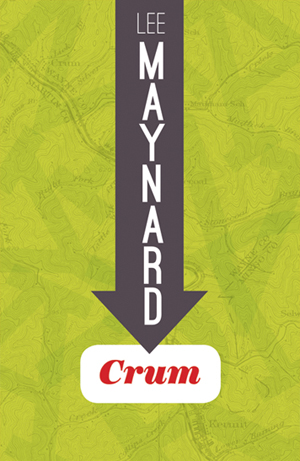
In Crum, a gritty coal town on the West Virginia-Kentucky border, the boys fight, swear, chase and sometimes catch girls. The adults are cramped in and clueless, hemmed in by the mountains. The weight of wonder, dejection, and even possibility loom over this tiny, suffocating town. This story is the tale of Jesse Stone, who doesn’t know where he’s going, but knows he is leaving, and whose rebellion against the people and the place of his childhood allows him to reject the comfort and familiarity of his home in search of his place in a larger world.
Learn more about the Crum trilogy.
Contents
INTRODUCTION
Meredith Sue Willis
Crum
SUMMER
AUTUMN
WINTER
SPRING
SUMMER . . . AGAIN
Looking for Benny
Author
Lee Maynard was born and raised in the ridges and mountains of West Virginia, an upbringing that darkens and shapes much of his writing. His work has appeared in such publications as Columbia Review of Literature, Kestrel, Reader’s Digest, The Saturday Review, Rider Magazine, Washington Post, Country America, and The Christian Science Monitor. Maynard gained public and literary attention for his depiction of adolescent life in a rural mining town in his first novel Crum and received a Literary Fellowship in Fiction from the National Endowment for the Arts to complete Screaming with the Cannibals. Maynard serves as President and CEO of The Storehouse, an independently funded, nonprofit food pantry in Albuquerque, New Mexico. He received the 2008 Turquoise Chalice Award in honor his dedication to this organization.
Learn more about Lee Maynard here.
Visit Lee Maynard's website.
Reviews
"The first couple of pages, I'm cringing. I'm tempted to put it down. I imagine a schoolteacher somewhere in the Midwest having all of these awful stereotypes about us confirmed. Yet, despite myself, I continue to read, and I am moved. It is literature. Its voice is true. It's a wonderful portrait of rural America. The book wins me over."
John O'Brien, author of At Home in the Heart of Appalachia
"Each time I read Lee Maynard’s Crum, I ask myself why this foul-mouthed, sexist, scatological, hillbilly-stereotyping novel is one of my all-time favorites."
Meredith Sue Willis, author Oradell at Sea
"Crum is great. Lee Maynard is a genius. No writing has captured rural America this well since Mark Twain. A masterpiece."
Stephen Coonts, author Flight of the Intruder
"It's a tale of growing up in and moving away from Crum, a jumble of shacks on the Tug River in the state's God-forsaken southern coal fields. As tales about coming of age in rural America go, Crum isn't that much out of place on a shelf next to Mark Twain and Harper Lee."
David Bean, The Charleston Gazette
"Maynard presents a portrait of a young man's psyche which ranks just a small notch below great American portrayals of adolescence - Huckleberry Finn and The Catcher in the Rye."
Michael Shannon Friedman, The Charleston Gazette
"Whatever you do, don't read Crum."
Jack Cawthon, Hur Herald
"For all its faults, Crum creates a hilarious, poignant, recognizable picture of a place and time, and of people I've known."
Rodger Cunningham, Journal of Appalachian Studies
"[Maynard] writes like Jean Shepherd on acid...Crum is one twisted little novel."
Robert Beveridge, Critic
"Maynard is a Gonzo Mountaineer..."
Pops Walker, musician and writer